
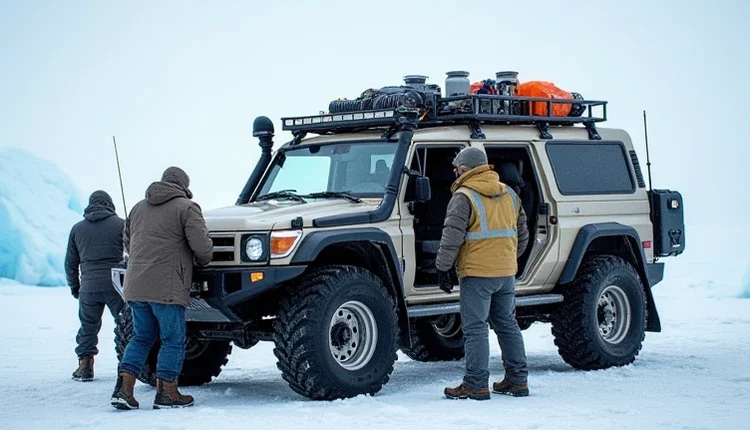
Travel to the Polar Regions: Choosing a Car and Preparing for an Expedition ❄️🚗
Traveling through the polar regions is a unique adventure that requires careful preparation and a special approach to choosing a vehicle. Extreme weather conditions and difficult road conditions pose a number of specific challenges for travelers. Choose a car for traveling through the polar regions here.
Features of cars for polar regions 🚙❄️
Cross-country ability and reliability
The choice of a car for a trip to the polar regions should be based on its cross-country ability and reliability. It is important that the car can easily overcome snow drifts and icy areas, and also has a high degree of reliability in extreme conditions.
Insulated interior and autonomous heating
Given the low temperatures, an insulated cabin and an independent heating system are necessary. This will ensure comfort during long journeys and protection from hypothermia in case of unforeseen situations.
Reinforced suspension and extreme cold tires
To ensure safety and confidence on the road, it is important to choose a vehicle with reinforced suspension and special tires designed to operate in extreme cold and ice conditions.
Preparing for your trip: equipment and planning 🧭🧳
Technical Service
Before driving, it is necessary to carefully check the technical condition of the car, especially the battery, brake system and heating system.
Navigation Equipment
Given the difficulty of navigation in polar regions, it is important to equip your vehicle with reliable navigation systems, including satellite navigation and additional maps.
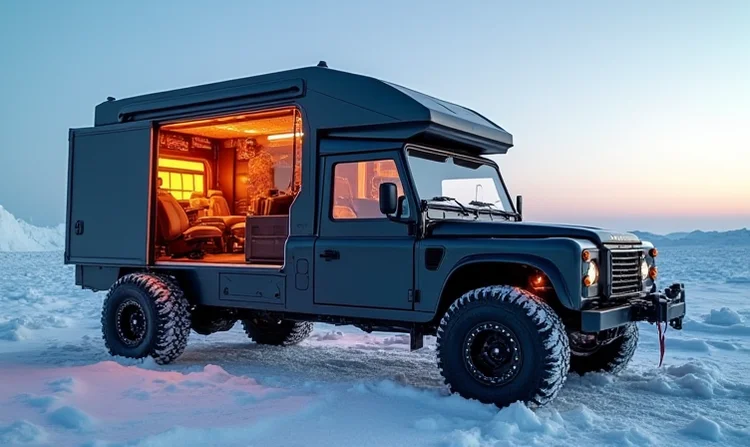
Emergency Ration and First Aid Kit
It is important to have emergency food and a first aid kit in your car to ensure safety in case of an emergency.
Table: Best Cars for Traveling in the Polar Regions 🚗❄️
Note: The table serves as a guide when choosing a car and is not exhaustive.
The right choice of clothing and equipment 🧤🧣
Warm Clothes and Shoes
One of the key aspects of preparing for a trip to the polar regions is choosing warm, waterproof and windproof clothing, including thermal underwear, a jacket, pants, gloves and warm boots.
Bedding and Tent
It is important to ensure that your bedding and tent are designed for use in extreme cold conditions to ensure comfort and safety during your overnight stay.
Lighting and Electrical Equipment
Given the short daylight hours in the polar regions, it is important to have an adequate supply of light sources such as flashlights, as well as spare batteries and chargers for electronics.
Safety measures and communication 📞🆘

Satellite Phone and Walkie Talkie
In conditions of limited mobile coverage, a satellite phone or radio becomes a necessary means of communication for emergencies or for coordination with a group.
Emergency evacuation plan
An emergency evacuation plan should be developed, including local emergency services contacts and information on the nearest aid stations.
Practical tips for traveling to the polar regions 🌐📝
Study of the Route and Weather Conditions
Careful study of the route, weather conditions and regional features will help to avoid many problems and dangers along the way.
Conservation of Energy and Resources
Conservative use of fuel, food and other resources is critical in environments where replenishment may be difficult.
Teamwork
Traveling to polar regions often requires coordination and cooperation, so it is important to maintain team spirit and be prepared to help other group members.

Conclusions and results of the trip 📖✅
Traveling to the polar regions is an unforgettable experience that requires careful preparation and a responsible approach. The right choice of vehicle, equipment, clothing and safety precautions will ensure comfort and safety on your adventure. Remember that nature in these regions is beautiful but unpredictable, and your preparation is the key to successfully exploring these amazing places.
