
Combat amphibians: unknown floating vehicles of the Second World War
In 1805, the American Oliver Evans built the world's first steam-powered barge wagon with a rear paddle wheel drive, which became the leader in future military floating self-propelled vehicles. They were followed by efficient and practical amphibians, for which military affairs became the main field of application.
Talents named Christy (1921-1924)
At the beginning of the 20th century, another talented American engineer, inventor, designer and race car driver, John Walter Christie, assembled front-wheel drive high-speed cars with transverse engines and two-wheel tractors for fire pumps. Further it will be even more interesting.
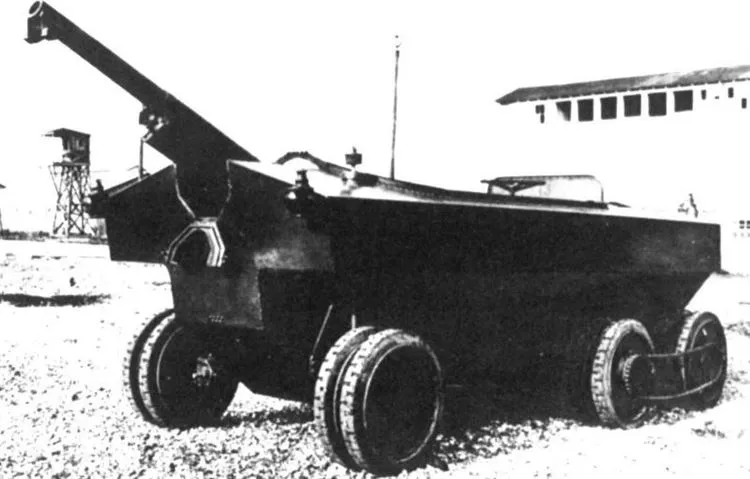
One of the first floating wheeled armored vehicles – a weapon carrier with a Walter Christie medium drive axle. 1922
In the early 1920s, Christie built a dozen and a half three- and four-axle 90-horsepower amphibious armored personnel carriers of various designs with combat crews and ammunition for artillery systems of caliber from 75 to 155 mm. The front non-driving wheels were steerable, and propellers were used to move through the water. Cars on sponge tires weighed 6-8 tons, on wheels they developed a speed of 48 km / h, afloat – 12 km / h. They all turned out to be cumbersome, impractical, useless, and Christie switched to tanks.
Floating Kubelwagens (1941-1944)
We have already talked about land staff vehicles VW-82 of the German company Volkswagen, produced in excess of 50 thousand copies. Now it's time to talk about the lesser known light floating army amphibians.
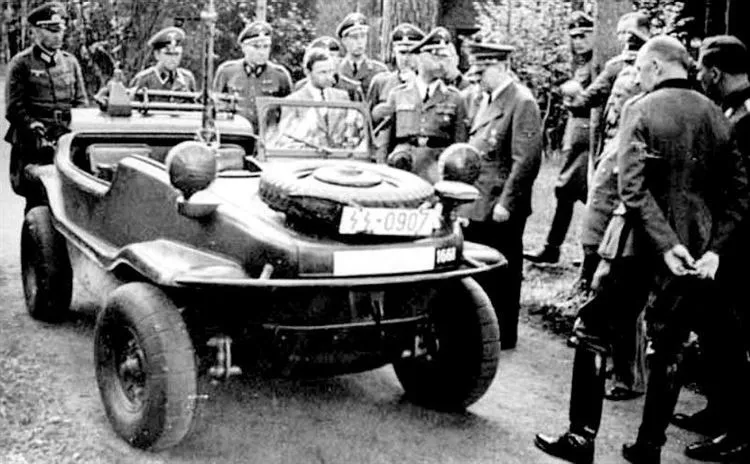
The highest ranks of the German military command inspect the fifth most successful prototype of the Volkswagen-128/5. 1941
In the summer of 1941, six samples of floating Volkswagen-128 (4×4) cars with four-seater bodies without doors, resembling a bath on wheels, were tested and presented to the Wehrmacht. A boxer 1.1-horsepower engine with 25 forces was placed in a sealed rear compartment. In the block, a four-speed gearbox with an auxiliary gearbox and differential locks worked with him.
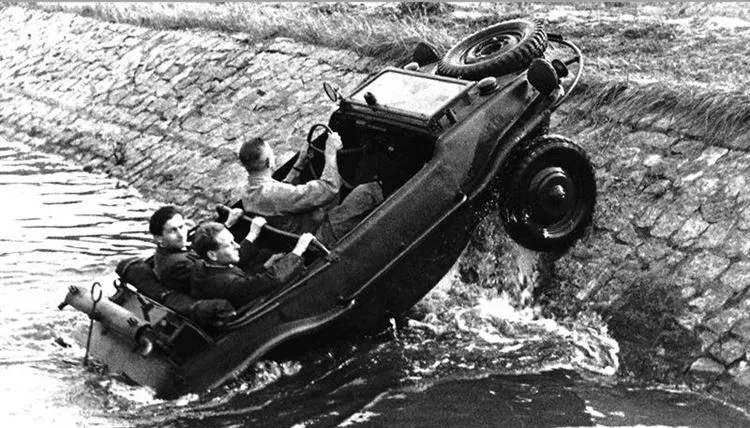
Leak testing of the Volkswagen-128 trial floating vehicle with a rear compartment with a propeller
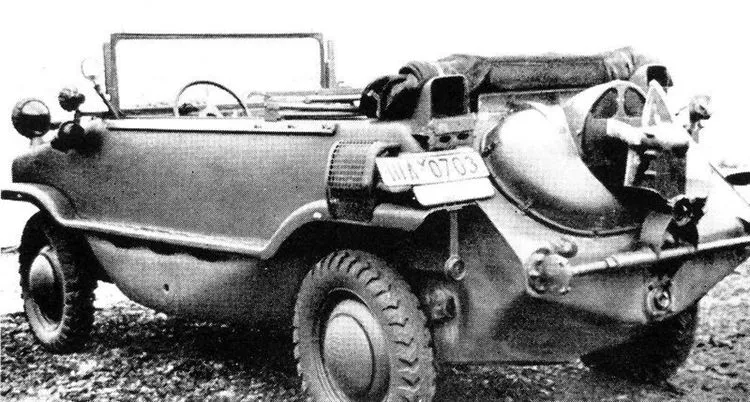
An example of the most practical prototype VW-128/5 with a sloping rear cover for tilting propellers
All wheels had independent torsion bar suspensions with oscillating axle shafts. On the cover of the rear wall of the body, experimental versions of the mechanisms for tilting the propellers up and driving their options were mounted. The collected 30 copies entered the sapper units, but in practice they turned out to be bulky, unstable and unsuitable for military use.
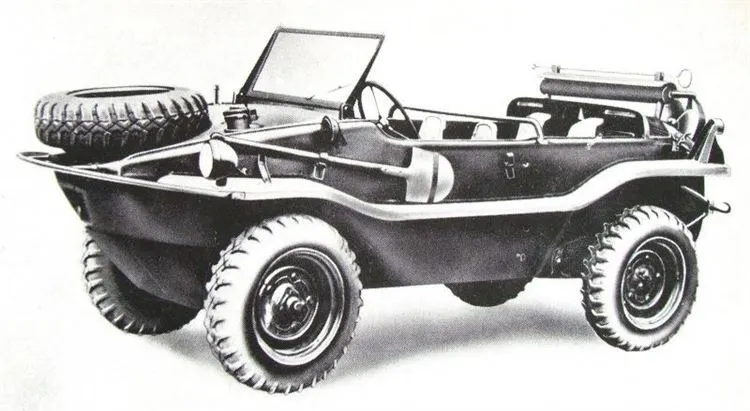
The world's first light amphibian Volkswagen-166 serial production in the military version Kfz.1 / 20. 1942
In March 1942, upgraded versions of the Volkswagen-166 (4×4) were presented, in which most of the changes and improvements came down to the introduction of more compact machine elements, improved weight and size data. The main “achievement” was considered to be the reduction of the wheelbase from 2.4 to exactly 2 meters, the length of the cars by 375 mm and the reduction of both tracks.
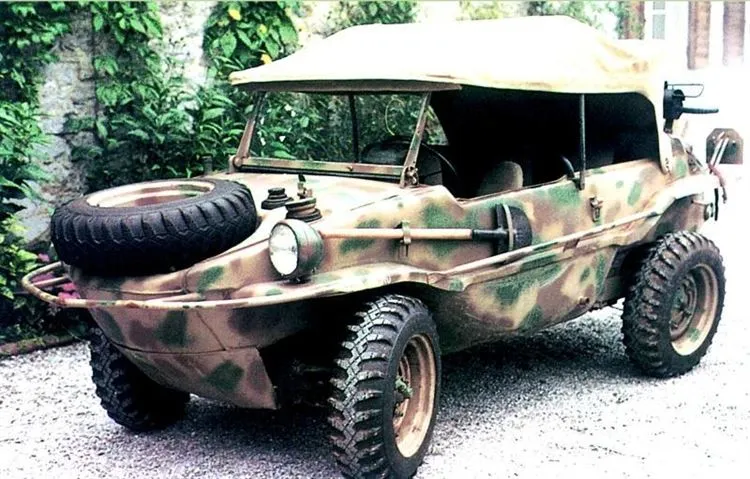
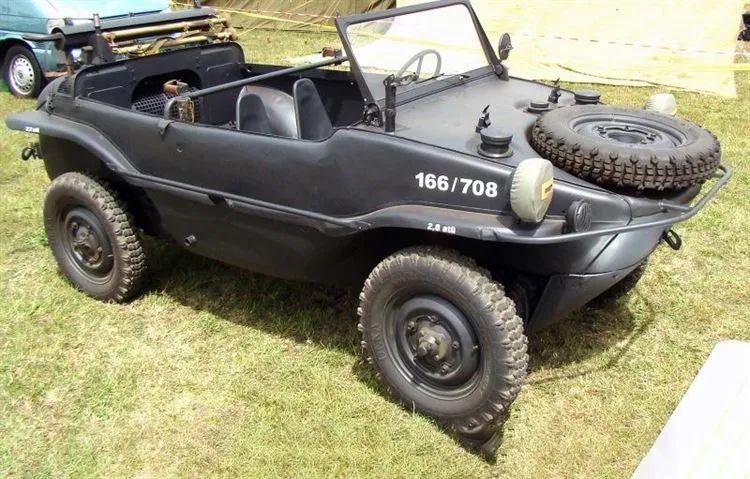
Restored amphibians Volkswagen-166 complete and painted for the Wehrmacht (above) and the Air Force
The updated car received a compact displacement body with a rounded egg-shaped tail in the engine compartment lid. The same three-bladed propeller with a diameter of 330 mm was placed on a hinged bracket on the rear wall of the body. When it was fixed in the lower position, the screw was driven directly from the engine crankshaft through a clutch and a triple chain drive. When moving on land, the screw rose up and was fastened with leather straps to the body.
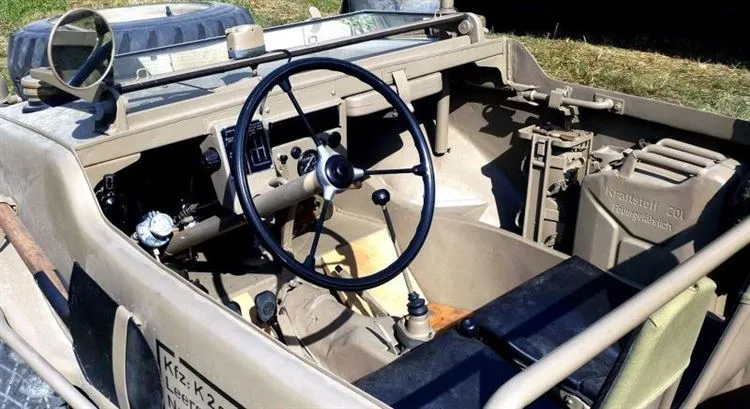
The interior of a floating Volkswagen-166 car with a cramped driver's seat, spare canisters and an awning
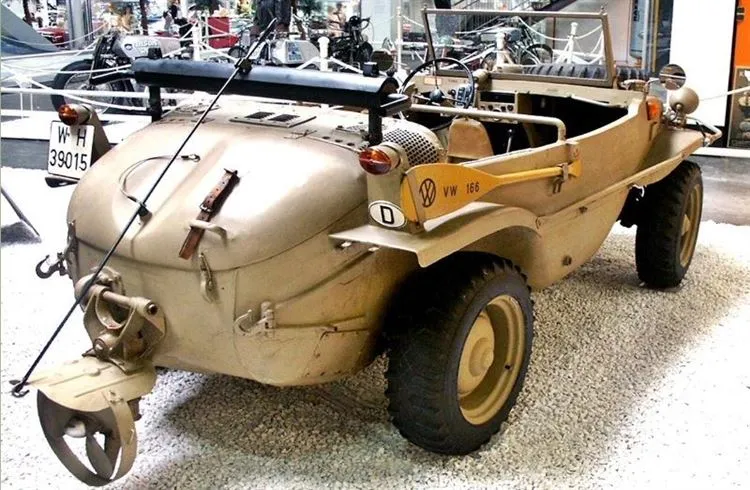
Rear view of an amphibious VW-166 with rounded “trunk”, lowered propeller and transverse silencer
Through grilles in the upper part of the engine compartment, the exhaust gases entered a massive cylindrical muffler with a replaceable filler, and a thin long dipstick served to measure the oil level in the engine. The disadvantages of the machines included a cramped body, a large draft of the hull, the impossibility of moving on a high wave and low speed afloat with a load.
At the end of 1942, the production of the most famous German amphibians VW-166 began at the Wolfsburg plant. Until October 1944, they were built in the amount of 14.3 thousand vehicles.
Pro-fascist Trippel (1937-1944)
Hauptsturmführer Hanns Trippel, an active figure in the National Socialist movement and the captain of the SA assault squads, was the only designer in Germany who devoted his whole life to the creation of small amphibians, most of which remained on the battlefields. His cars served in the SS troops, in the Navy and in the paramilitary construction units of Todt.
In pre-war times, Trippel independently developed and assembled test samples of the SG6 (4×4) amphibian with an engine from a 38-horsepower Adler Trumph passenger car, open five-seater bodies with headlights recessed into them and short sealed doors.
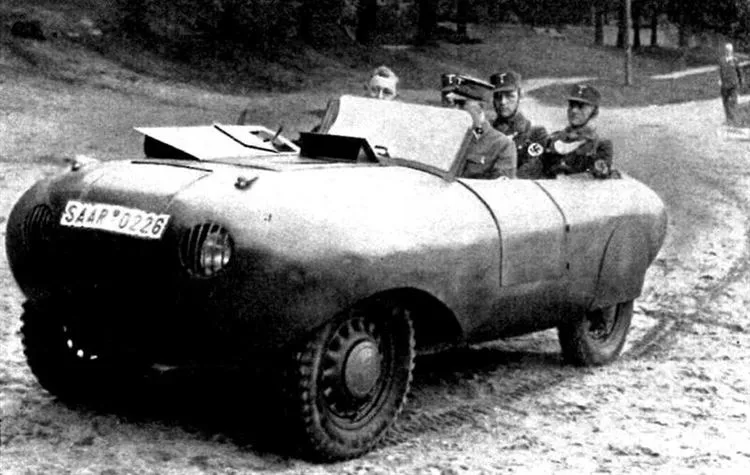
One of Trippel's first amphibious vehicles was the SG6 with an Adler engine and a streamlined hull. 1937-1939
In 1938, more advanced cars of the SG6 / 38 series appeared, which used an overhead valve 55-horsepower engine from the Opel Kapitän passenger model with a four-speed gearbox, independent suspension on all wheels and 18-inch tires. In January 1941, during the occupation of France, a small company Trippel Werke was formed in the Saar town of Homburg, which was later transferred to the well-known Bugatti company in Molsheim.
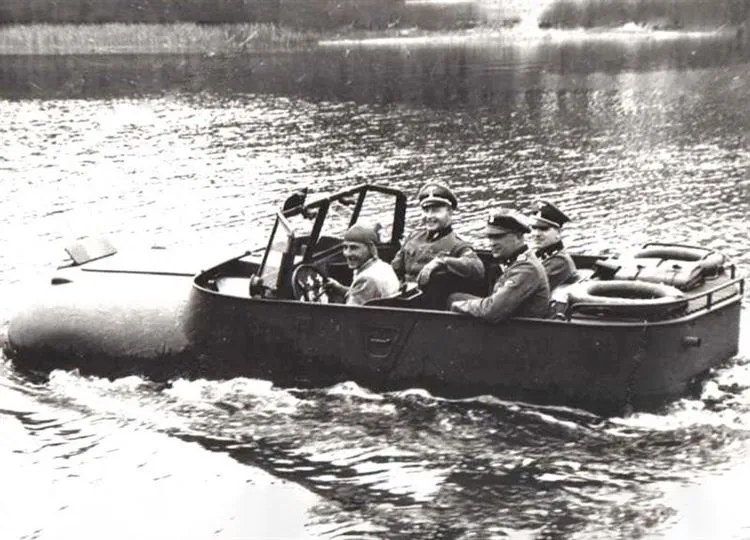
Quadruple amphibious SG6/38 with a device against high waves, built for the German colonies
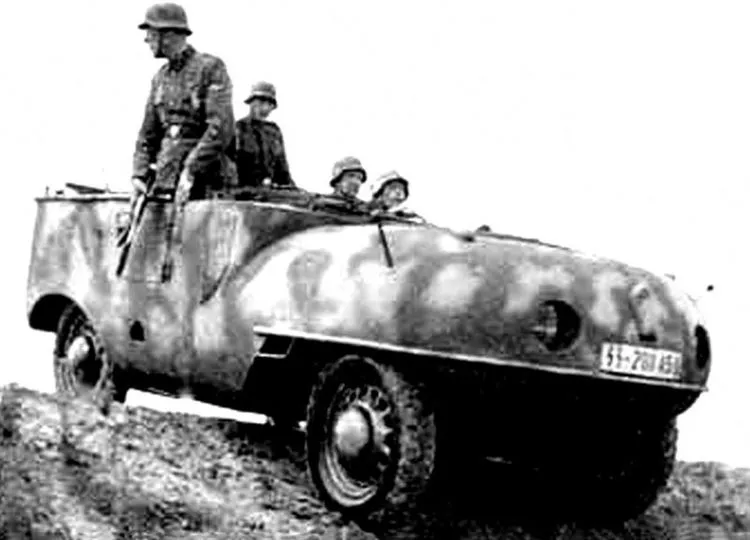
Trippel SG6 / 38 utility vehicle with a rear compartment for transporting personnel. 1938-1943
Distinctive features of Trippel's work were peripheral side structures against the effects of high waves, the average location of one or two radiators between the engines and the passenger compartment, four-seater cargo-passenger vehicles with floating trailers, as well as elongated versions of the Pioneer for transporting up to 16 soldiers and weapons.
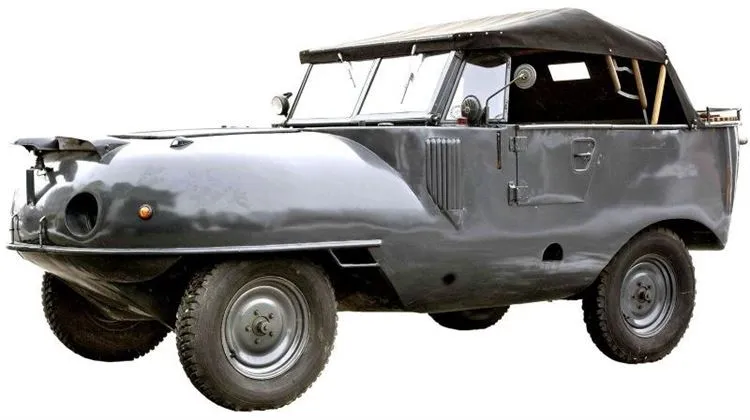
Restored amphibian Trippel SG6/38 with central radiator and short side doors
Since 1941, the Trippel plant has been producing a modest amphibian SG6 / 41, in which units from Opel fit in the bow, and self-locking differentials, hydraulic brakes and folding propellers with a diameter of 380 mm were moved to the aft niche of the hull. On the highway, the car developed a speed of 72 km / h, afloat – 12-13 km / h.
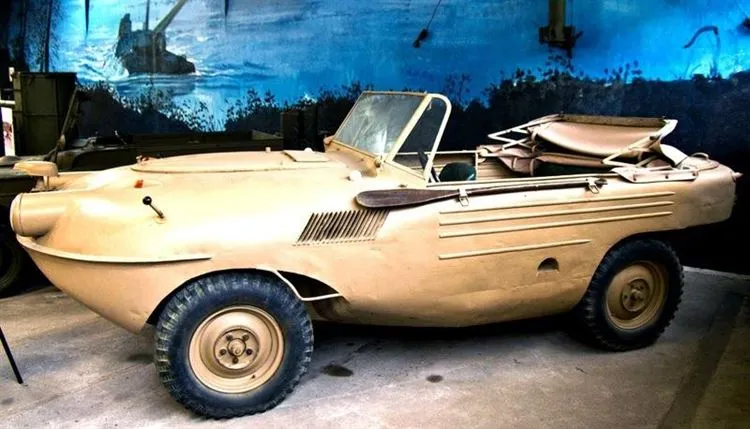
Open 55-horsepower amphibious SG6 / 41 with a track width of 2.5 meters and a spring suspension, created by order of the Navy.
Until 1944, in total, Trippel assembled about 800 military amphibians of the SG6 series.
Under the beautiful name Aqua Cheetah (1941-1943)
In the early 40s, under the beautiful name Aqua Cheetah (“Sea Cheetah”), an American light reconnaissance amphibian was hidden for some time, which in history was considered the ideological prototype of Ford GPA military all-wheel drive vehicles.
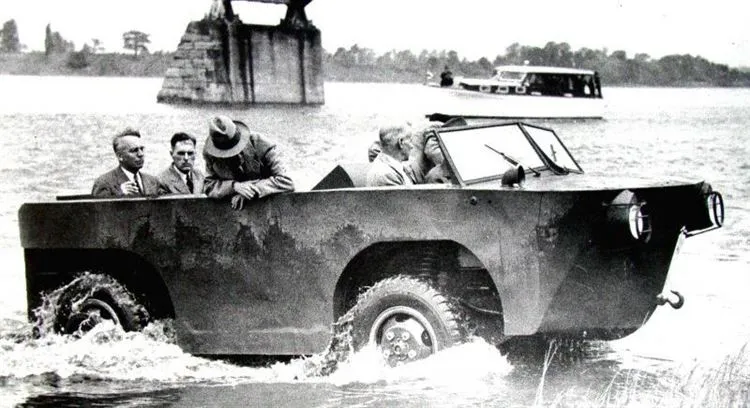
Tests of the amphibian “Sea Cheetah” (4×4) with a six-seater hull and a central engine. 1941
Inventor Roger Hofheins presented his unusual car at military trials in May 1941. The six-seat amphibian Aqua Cheetah was equipped with an automobile engine installed in the central part of the displacement hull, a small propeller, individual chain drive wheels and single-spring suspensions.
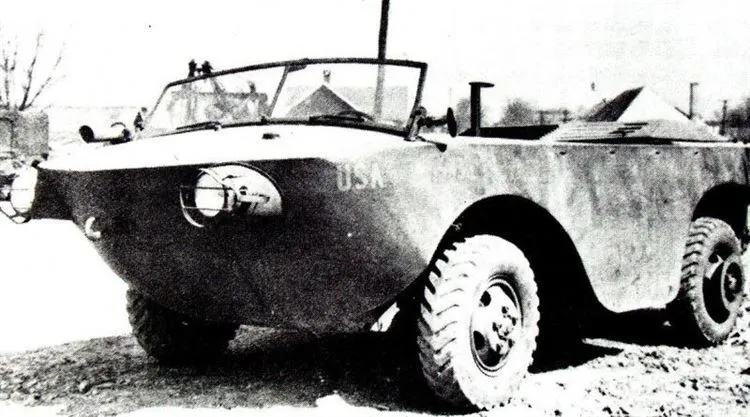
The second four-seater version of the Aqua Cheetah XAC-2. May 1942
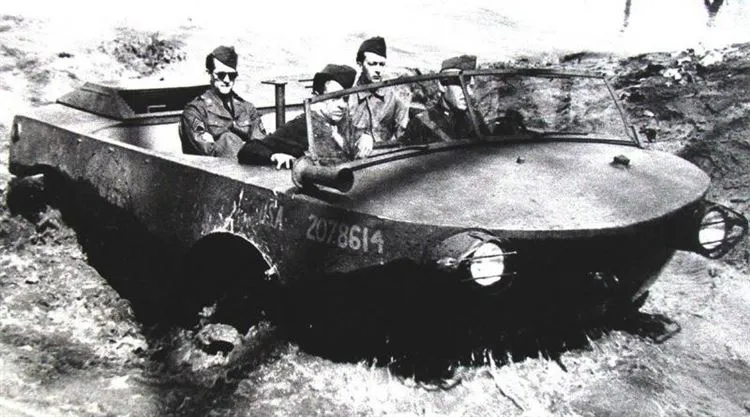
The third improved floating machine Aqua Cheetah XAC-3. 1943
To expand these works, the Amphibian Car Co. was formed, where they assembled a promising XAS-2 model with a rear-mounted 99-horsepower Dodge engine, gearboxes and axles from American all-terrain vehicles, as well as drums for self-pulling cars ashore. In 1943, units from Dodge T215 all-terrain vehicles were used on the XAS-3 variant. In total, built up to 12 amphibians.
Waterfowl Trivia: Dutch DAF
Since its birth in 1932, the Dutch Van Doorne Brothers Trailer Factory (Van Doorne's Aanhangwagenfabriek, DAF) has not been involved in cars, but has been distinguished by the release of various universal joints and light jeeps for them.
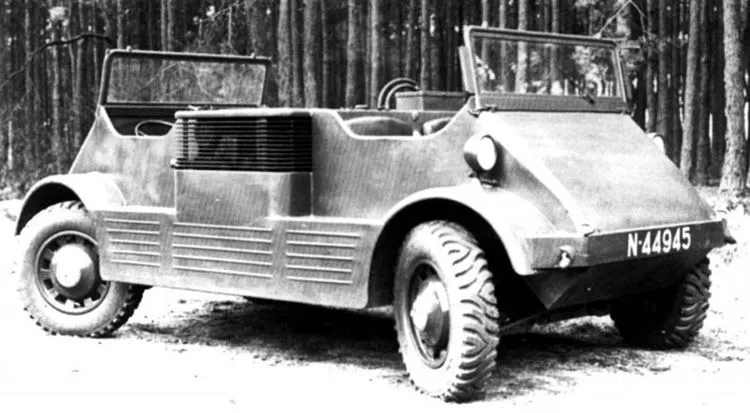
Unique military amphibian DAF MS-139 of symmetrical shape with all driving and steering wheels
Only in 1939 did its own military vehicle appear. It was a light machine DAF MS-139 (4×4) with four “working” wheels and two control posts. The Citroen-7CV engine with 48 forces and the gearbox were placed transversely in the center of the chassis, and double seats were located in front and behind, back to back. The strange car moved forward or reverse at speeds up to 70 km/h.
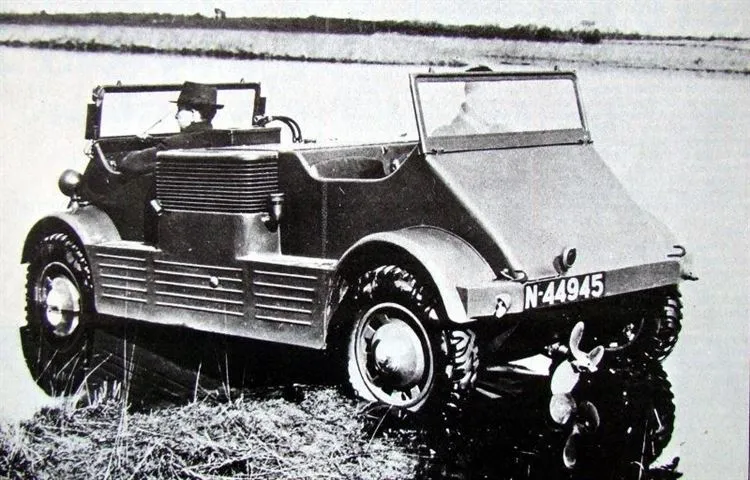
After the surrender of the Dutch armed forces, further development of the DAF amphibian was discontinued. May 1940
Waterfowl Trivia: The British Hexonaut
In 1940, the English company Humber built three unusual Hexonaut (6×6) compact amphibious landing amphibians with onboard traverse systems. Each was equipped with two sets of three large-diameter drive side wheels mounted on both sides of the vehicle. To control the machine by braking the wheels of one or another caterpillar, two Hillman 14HP engines served, each of which drove one of the sides of the car.
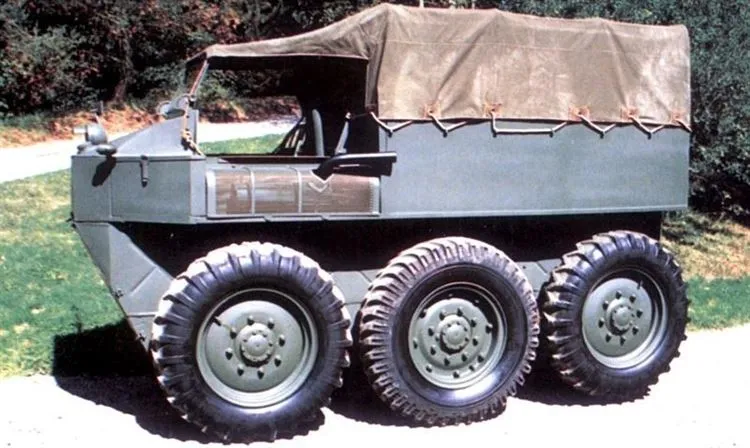
A compact Humber Hexonaut floating tractor with two 50-horsepower engines from the collection of the Victory Memorial Museum. 1940
With a length of 3.4 meters, Hexonaut had a width of only 1.3 meters, but weighed about three tons. The machines turned out to be too complex and heavy, they did not go into production and never landed from aircraft.
British heavy amphibious Terrapin (1943-1944)
In 1942, Thornycroft began developing four-ton wheeled military amphibians. The prototype Terrapin Mk-I (8×8) appeared in June of the 43rd, and in July the issue was handed over to Morris-Commercial. It was immediately named the world's first heavy serial floating machine, surpassing the American 2.5-ton amphibian GMC DUKW-353.
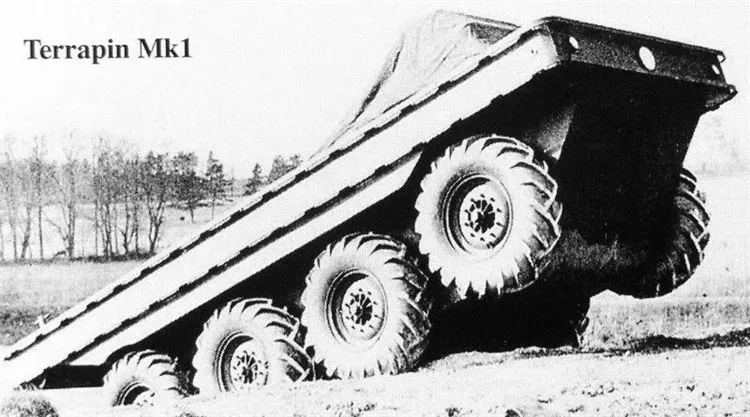
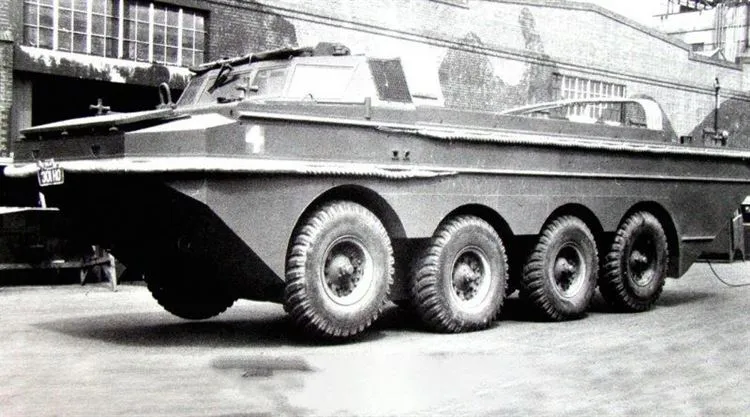
Heavy amphibians Thornycroft Terrapin Mk-I, manufactured by Morris-Commercial
In the central part of the welded body of the car, two Ford V8 engines of 85 forces were placed, two onboard transmissions, the main worm gears of each wheel and the simplest rubber suspension. The raised installation of the front and rear pairs of drive wheels was included in the work only on rough terrain and in the coastal strip. On the highway, she moved on four medium wheels and maneuvered onboard. Movement afloat was provided by two propellers.
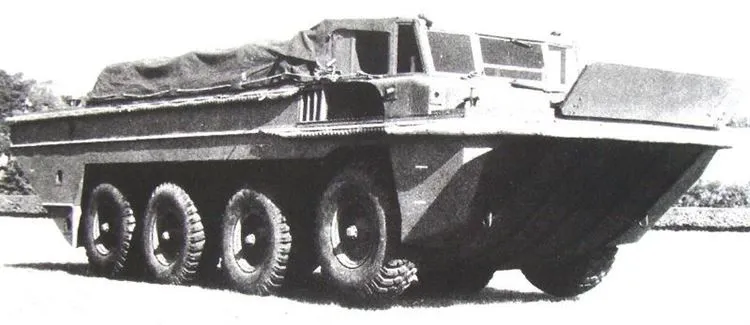
One of 500 built Terrapin Mk-I with two motors, onboard transmission and steering system. 1943-1944
The main drawback of the Terrapin was instability afloat, so in November 1944 one experimental five-ton version of the Terrapin Mk-II was built with a front engine, tire pressure control and an evacuation crane for reloading artillery systems up to 57 mm caliber.
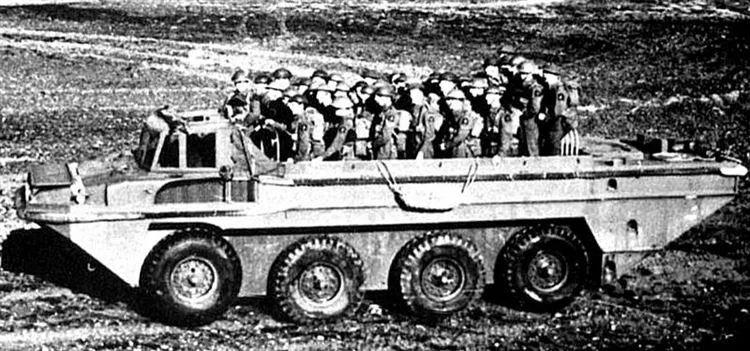
The only five-ton amphibian Terrapin Mk-II, designed for use in the Pacific Ocean. 1944
Floating German octopuses (1940-1942)
Secret work on multi-axle trucks in Germany was carried out from the mid-1920s as part of the creation of powerful standardized vehicles for the Wehrmacht, followed by amateur floating chassis cars.
In 1938, the MAN company introduced its revolutionary 120-horsepower truck with eight single-wheel drive wheels. To prove the inexhaustible possibilities of multi-axle vehicles in 1940-1941, two such vehicles were converted into amphibians with an 8×8 wheel formula.
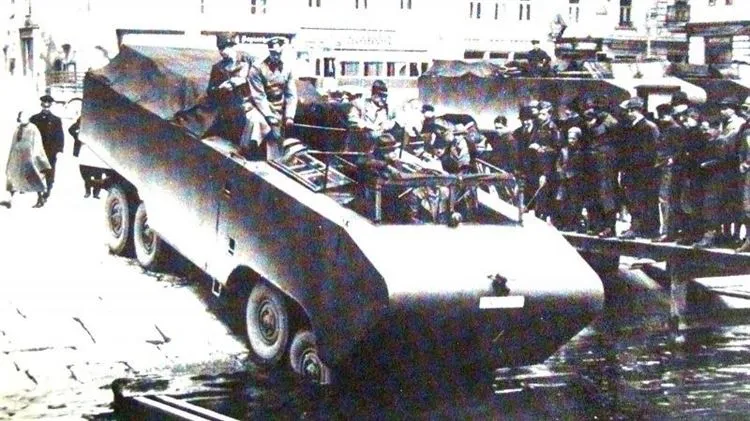
The first specialized 150-horsepower MAN amphibian is being tested in the Austrian city of Gmünden. 1941-1942
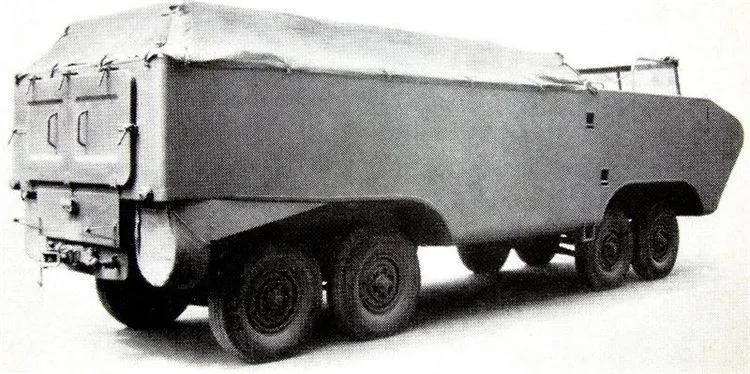
MAN floating machine with an all-metal frame hull, awning and rear double doors
Unique cars were equipped with open displacement hulls with a 150-horsepower diesel engine, a transmission with power take-off gearboxes for two propellers, two drum winches with a total pulling force of 40 tf, hard flooring on the upper surface of the body and chains on wheels.
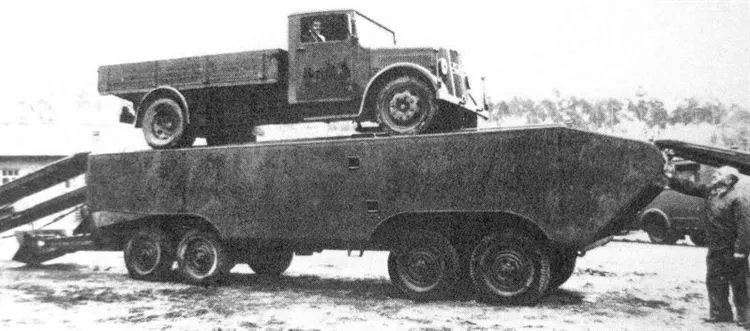
Trial loading on the roof of an amphibious civilian 70-horsepower truck MAN E3000 using two ramps. 1942
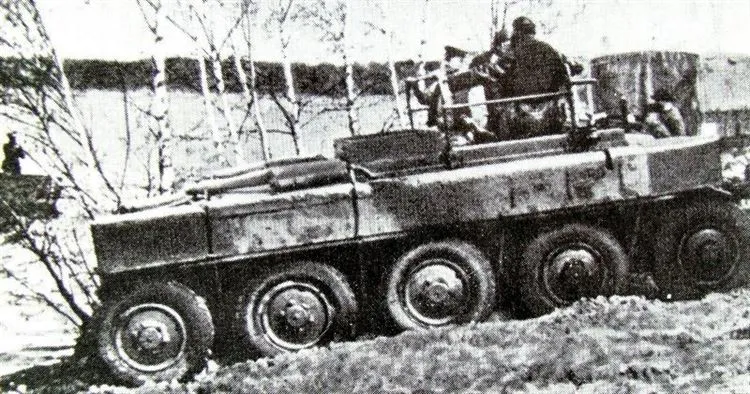
The most amazing German amphibian is the Büssing-NAG (10×10) chassis car with an onboard steering system. 1932
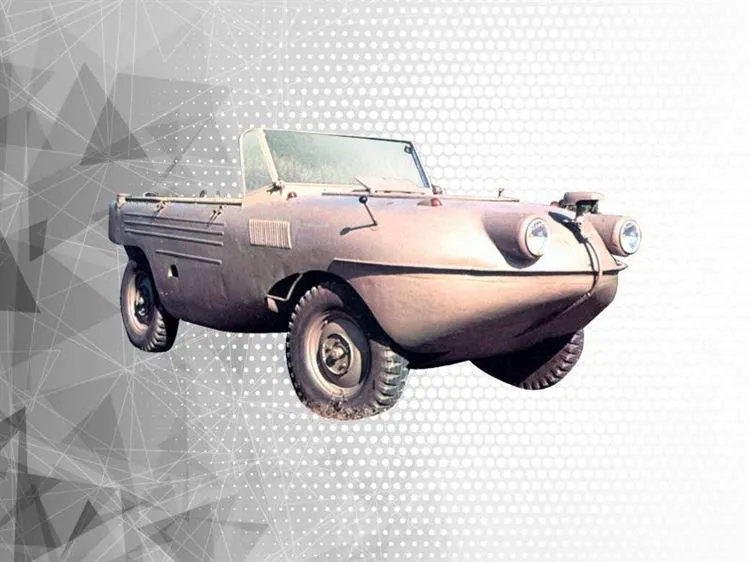
The title photo shows a late German military amphibian Trippel SG6 / 41, preserved in the French Museum of Armored Vehicles in Saumur.
The article uses authentic black and white illustrations, full-scale color photographs were taken by the author.
