
Connecting rod bearing: device, purpose, specifications, features of operation and repair
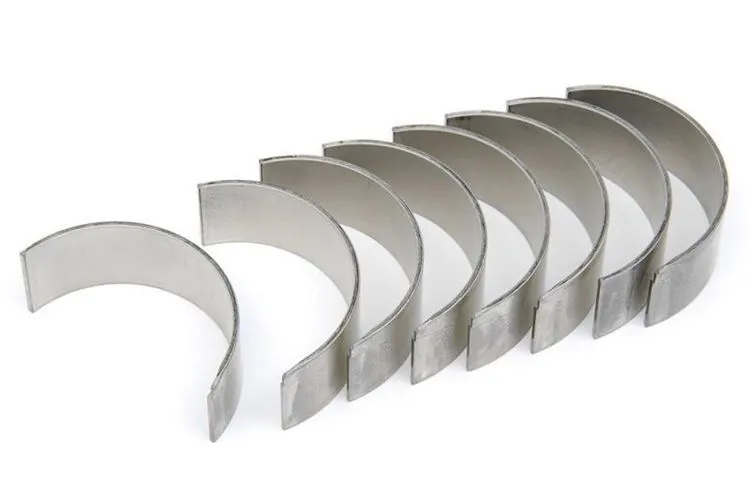
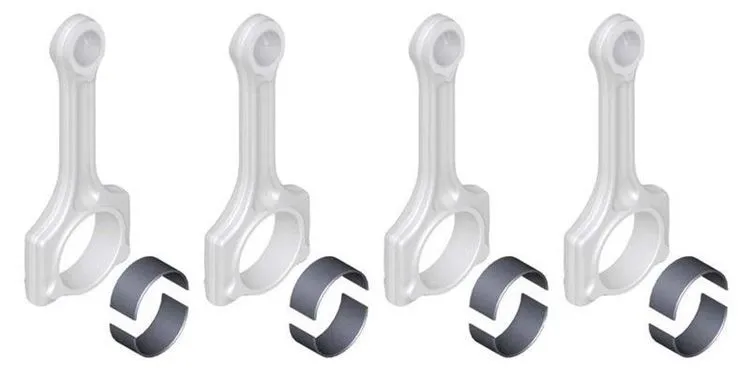
An internal combustion engine works by rotating the crankshaft. It rotates under the action of connecting rods, which transmit forces to the crankshaft from the translational movements of the pistons in the cylinders. In order for the connecting rods to work in conjunction with the crankshaft, a connecting rod bearing is used. This is a sliding bearing in the form of two half rings. Provides the possibility of rotation of the crankshaft and long-term operation of the engine. Let's take a closer look at this detail.
general description
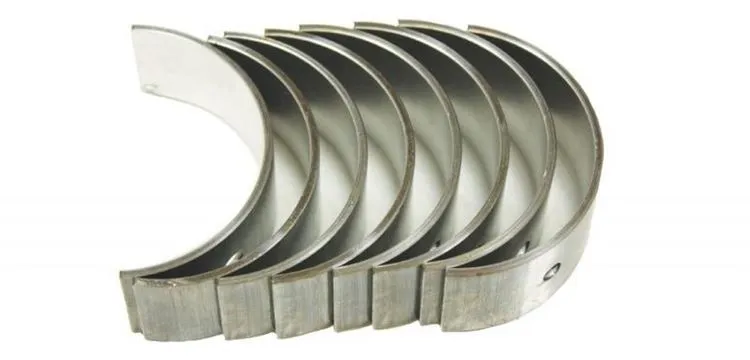
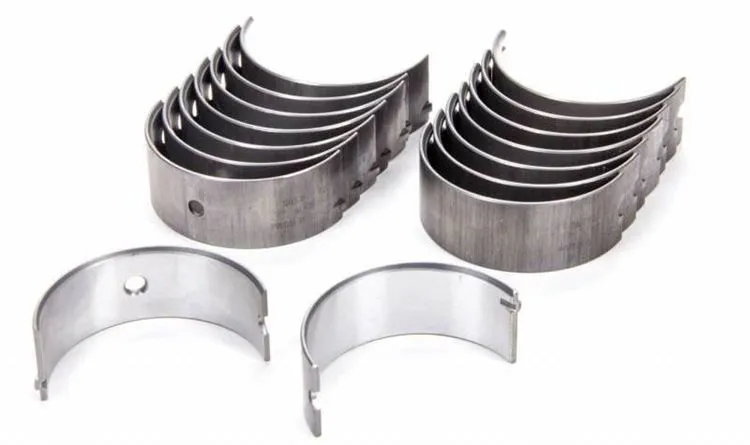
The connecting rod bearing (also known as the bushing) is a sleeve bearing. It is installed in the lower head of the connecting rod and closes the neck of the crankshaft. The part consists of two steel half-rings with a special coating that reduces friction. Half rings have grooves for lubrication, and one half ring has an oil supply hole.
The connecting rod bearing does not have direct contact with the crankshaft journal. Parts rub in a special hydrodynamic way due to the oil film formed in the space between the shaft journal and the bearing.
Operating conditions of engine liners
Due to the formation of an oil film, a local concentration of charges is prevented. But if certain conditions are created, then the normal hydrodynamic regime of the bearing will change to a mixed one. This can happen if there is not enough oil pressure in the engine, the assembly is under heavy loads, the viscosity of the oil is low, the lubricant is overheated and the roughness on the shaft and bearing surface increases. Also, mixed mode can occur due to dirty oil, deformation of bearings and geometrical defects.
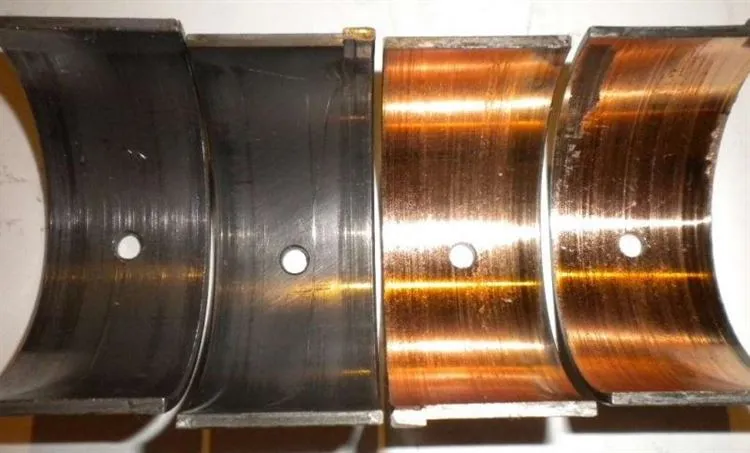
In this mixed mode, the connecting rod bearing can contact the surface of the crankshaft journal, which can lead to scuffing, increased wear and sintering of the shaft with the bearing.
Materials and their characteristics
The materials for the manufacture of these parts must have many characteristics and properties that sometimes contradict each other. In general, the material determines the reliability and quality of the bearing. The difference between different models lies in the material and anti-friction coating.
Therefore, the material must have sufficient fatigue resistance: these are the maximum cyclic loads that the element can withstand for an unlimited number of cycles. If this load is exceeded, cracks will begin to appear due to metal fatigue.
Another important property is the resistance of the material to setting. This is the ability of the material of the main and connecting rod bearings to resist sintering with the metal of the shaft in direct contact.
Wear resistance is the property of a material to maintain its geometric dimensions, despite the presence of abrasives in the lubricant, and also under the condition of direct contact with the crankshaft. The material must be functional. This means that the bearing must compensate for minor defects in the crankshaft and connecting rod seat through localized wear or deformation. The material must be able to trap abrasive and dirt circulating in the oil. Another important quality is corrosion resistance.
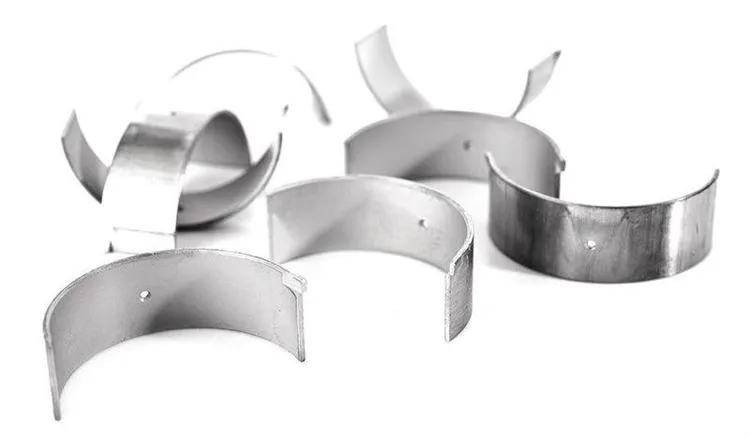
Long, reliable operation of engine connecting rod bearings is achieved only by combining high-strength materials with the smoothness of specialists. The lining should be soft and hard at the same time. It may seem paradoxical, but modern products combine all these features.
Bearing device
In fact, the material from which these parts are made is much more important than geometric characteristics. The plain bearing consists of several layers. There are bimetallic elements and trimetallic elements.
The semi-bearings of the connecting rod are made of a steel base. Steel provides the parts with the necessary rigidity, as well as tightness.
Then comes the second layer – anti-friction coating. It is quite thick: the thickness is 0.3 millimeters. The thickness of this layer is very important for the bearing. It can be rolled even with large shaft defects. The bearing has high absorbing properties. The composition of the anti-friction layer includes six to twenty percent tin, as well as two to four percent silicon. The alloy may also contain elements such as nickel, copper, manganese, vanadium.
Here, in addition to the steel base, there is also a copper layer: in addition to copper, it contains up to 25% lead and up to 5% tin. The anti-friction coating is made of an alloy based on tin and lead. The coating is not thick, about 20 microns. Such a thickness provides fatigue strength, but antifriction properties are reduced. Also, between the main and intermediate layers, the coating is coated with nickel; the thickness does not exceed 2 µm.
Operation features
During operation, the connecting rod bearing wears out, and this is the first reason why it is changed. No matter how hard the car owner tries to protect these items, the laws of physics take their toll and this cannot be avoided. The anti-friction layer is erased, the crankshaft has free play, the oil pressure and the amount of lubricant are reduced. As a result, due to increased friction, breakdowns occur.
Another situation is the rotation of the liners. This is also a reason to replace. The liner is simply glued to the crankshaft neck. The engine stops. Among the reasons are thick grease with a large amount of residues, lack of oil, non-observance of the tightening torques of the connecting rod bearings.
Conclusion
As you can see, liners are small parts, but very important for the engine's trouble-free operation. Without them, the engine simply would not work. These are technological products capable of withstanding heavy loads, high temperatures and exorbitant speeds. And it is precisely because of the presence of coatings in the engine that you need to change the oil more often – dirt kills bearings. The elements themselves are not so expensive, but to replace them, you must completely disassemble the engine. This work is not easy, it requires knowledge, experience and a lot of time.
