
Accident Prevention Technologies: An Overview of Innovations
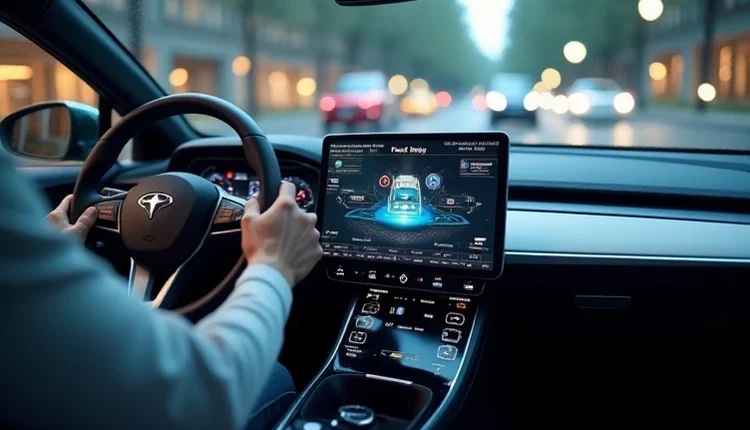
Every day, automotive technology is becoming more advanced, especially in the area of safety. In this article, we will look at innovative safety technologies that help prevent accidents on the road. Modern cars are equipped with a variety of systems, ranging from simple warning signs to complex algorithms that can automatically respond to dangerous situations.
🚗 Automatic braking in emergency situations
Automatic emergency braking (AEB) is a system that uses various sensors to determine a potential collision with another vehicle or object. If the system detects an imminent collision and the driver does not react, it automatically applies the brakes to prevent or mitigate the consequences of the accident. This technology has already proven its effectiveness in reducing the number of accidents on the roads.
🚦 Blind Spot Monitoring Systems
Blind spot monitoring systems significantly improve safety when changing lanes and driving in lanes. Sensors and cameras installed in the car monitor areas that are traditionally inaccessible to the driver's view and warn him of other vehicles in the blind spots. This is especially useful on highways, where traffic speeds are high and it is important to quickly react to changes in the surrounding environment.
🌐 Lane Keeping Assistance Systems
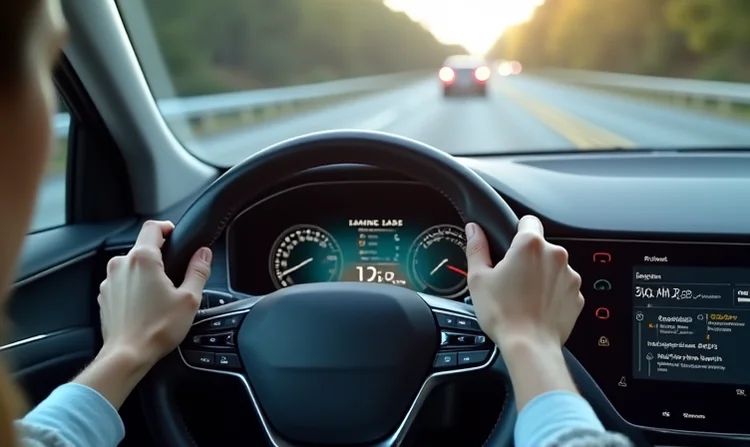
Lane keeping assist systems help drivers avoid accidentally drifting out of their lane. These systems use cameras to monitor road markings and, if they detect a lane departure without activating the turn signal, automatically correct the steering or warn the driver.
📡 Adaptive cruise control
Adaptive cruise control significantly improves on the regular cruise control system by adding the ability to automatically maintain a safe distance from the car in front. This system uses radar and cameras to monitor the speed of other cars and automatically adjusts the speed to maintain a safe distance, which is especially useful in heavy traffic.
🌌 Night vision and pedestrian detection
Night vision technology in cars uses infrared cameras to detect pedestrians, animals, and other objects on the road that may be invisible in the dark. These systems not only improve visibility for the driver, but can also trigger additional warnings or even automatic braking to prevent collisions.
📶 Lane Departure Warning Systems
Lane departure warning systems are designed to prevent accidents caused by driver carelessness or fatigue. They monitor the position of the car relative to road markings and warn the driver if the car begins to unintentionally leave its lane. Some of these systems can also automatically adjust the direction of travel to keep the car in the lane.
🚦 Automatic emergency braking
Automatic emergency braking (AEB) is a safety system that helps prevent collisions or reduce their severity by automatically applying the brakes if a potential collision is detected and the driver does not react in time. This technology is especially effective at low speeds, often found in urban areas.
🎥 Surround view cameras
Surround camera systems provide drivers with a 360-degree view around the vehicle, significantly improving visibility when parking or maneuvering in tight spaces. These cameras help visualize blind spots around the vehicle, making driving safer and more convenient.
🚨 Blind Spot Monitoring Systems
Blind spot monitoring systems help drivers detect vehicles in areas that are difficult to see. These systems warn the driver when another vehicle is in the blind spot, which is especially useful when changing lanes on highways.
💡 Intelligent lighting system
Intelligent lighting systems automatically adjust the angle and intensity of the headlights based on road conditions and oncoming traffic. This ensures maximum visibility without blinding other drivers. Such systems are especially useful when driving at night or in poor weather.
📡 Lane Departure Prevention Systems
These systems monitor the car's position relative to road markings and warn the driver if the car begins to unintentionally leave its lane. In some cases, the system can even automatically correct the trajectory of movement, helping to stay within the lane.
🛑 Driver fatigue monitoring systems
Fatigue monitoring systems monitor the driver for signs of fatigue or drowsiness by analyzing driving style and blinking frequency. If signs of fatigue are detected, the system emits an audible or vibrating signal, warning the driver to take a break.

Conclusion
Safety technologies aimed at preventing accidents play a key role in the modern automobile industry. Not only do they save lives, but they also make driving more comfortable and less stressful. It is important that car manufacturers continue to invest in developing and improving these technologies, making the roads safer for all road users.
