Slowly, backwards, in tow: what is prohibited on the motorway and what you can get a fine for
Highways are one of the most convenient, but dangerous roads, because they can move at a higher speed. Therefore, this imposes a number of safety-related restrictions: it is forbidden to do anything normal on the motorway. Let's memorize the ground rules and clear up common misconceptions as we figure out what can and can't be done along these paths.
What is a highway and how do you drive?
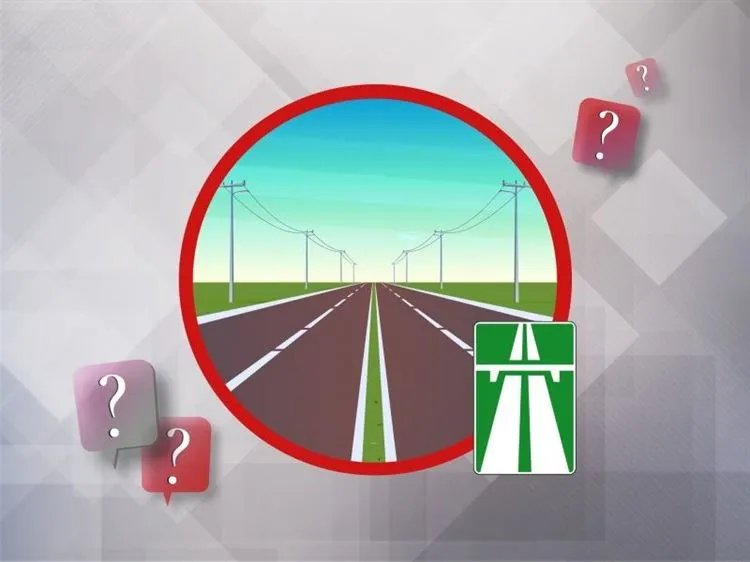
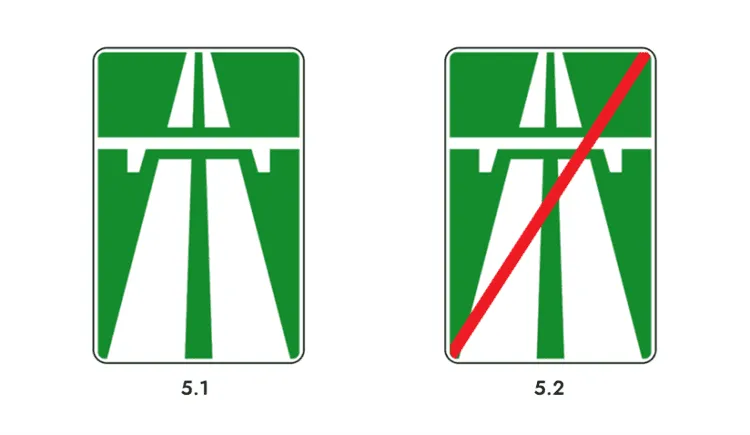
The definition of a motorway in the SDA is quite voluminous, as it includes all the nuances. Thus, according to the rules, a motor road is “a road marked with sign 5.1 and equipped with carriageways for each direction of movement, separated from each other by a dividing strip (or, in its absence, by a road fence), without an intersection at the same level as other roads, railways or trams, pedestrian or bicycle paths.” The end of the route is marked with sign 5.2.
At the same time, the definition itself does not indicate the speed of movement – for them it is necessary to refer to section 10, that is, to paragraph 10.3. Declares that motorcycles, cars and trucks with a maximum permissible mass not exceeding 3.5 tons can travel on highways at a speed of no more than 110 km / h. However, when towing a trailer on a highway, cars can travel at a speed of no more than 90 km / h h.
Separately, we note that on some sections of toll roads recently last year, traffic was allowed at speeds up to 130 km / h, and now their number is gradually increasing. In this case, in paragraph 10.3 there is a note stating that it is allowed to increase the maximum speed on the motorway to 130 km / h “by decision of the owners or owners of motorways.”
What is prohibited on the motorway?
The rules of the road are governed by section 16 of the SDA. Well, clause 16.1 contains a list of what is prohibited in them. Let's list all the restrictions in order.
Pedestrians and pets are prohibited from driving on motorways. This is due to the high speed of the machines and the corresponding safety requirements. Also, as we remember, the highway never crosses at the same level as footpaths, so there is no place for pedestrians to exit.
Cyclists are prohibited from driving on motorways. Recall that cyclists can ride on the side of the road, but this permit does not apply on motorways: here everyone is forbidden to ride on the side of the road.
Mopeds are prohibited on motorways. We remind you that a moped is a vehicle with an engine of no more than 50 “cubes” or an electric motor with a power of no more than 0.25 kW and a maximum speed of no more than 50 km / h. It should be borne in mind that electric scooters with a more powerful motor of 250 W are also to mopeds, so you can't even ride on the highway.
Tractors, self-propelled machines and other vehicles are prohibited on motorways, the speed of which, according to technical characteristics or condition of less than 40 km / h, is less than 40 km / h. This category includes, for example, horse-drawn carriages, sleighs, mounts, pack animals and etc. If on ordinary roads, together with cyclists and mopeds, they can move along the side of the road, then they are prohibited from entering the track.
On motorways, trucks with a maximum permissible mass of more than 3.5 tons are prohibited from driving outside the second lane. This ban does not directly apply to motorists, but it is worth remembering that trucks and buses can move on the two right lanes of the freeway, so the speed limit is 90 kilometers per hour.
It is forbidden to park on motorways outside special parking lots, marked with signs 6.4 or 7.11. This means that it is forbidden to park arbitrarily on the carriageway and on the side of the road. The only exception is forced parking: as we remember, forced parking is allowed on the side of the road. But if a forced arrest occurs on a highway, the driver cannot simply stand still and wait for help. Clause 16.2 stipulates that “in the event of a forced stop on a motorway carriageway, the driver must turn on the hazard lights, place an emergency stop sign, and then take steps to bring him to the marked lane (to the right of the line marking the edge of the carriageway)” – then is on the edges.
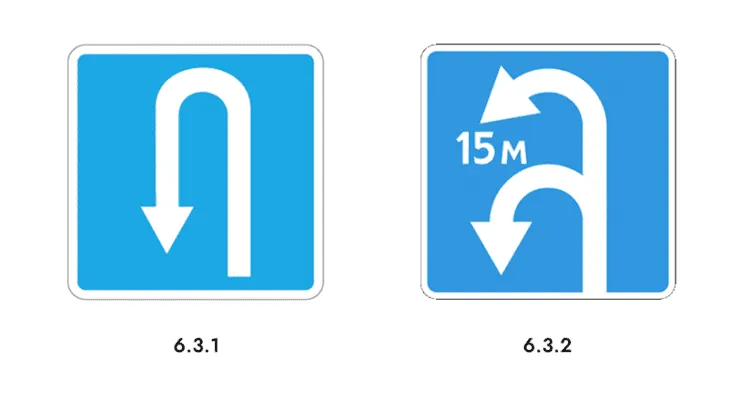
U-turns and entry into technological breaks in the dividing strip are prohibited on motor roads. This means that you can only turn here at crossroads and places specially equipped for this, for example, marked with signs 6.3.1 and 6.3.2. Well, a U-turn in an unmarked place through a technological gap in the median is fraught with punishment.
Reversing is prohibited on the freeway. We devoted a separate study to the rules of reversing, in which, in particular, we talked about the prohibition of reversing on the motorway. Please note that reversing is prohibited in any case both on the carriageway and on the side of the road, so there is no excuse for violation.
What other roads are subject to motorway regulation?
Speaking about the rules of driving on the highway, it is worth remembering one important circumstance. These rules, of course, apply to all motorways marked with signs 5.1 and 5.2. However, paragraph 16.3 of the SDA indicates that the same requirements apply to roads marked with sign 5.3 “Road for cars”.
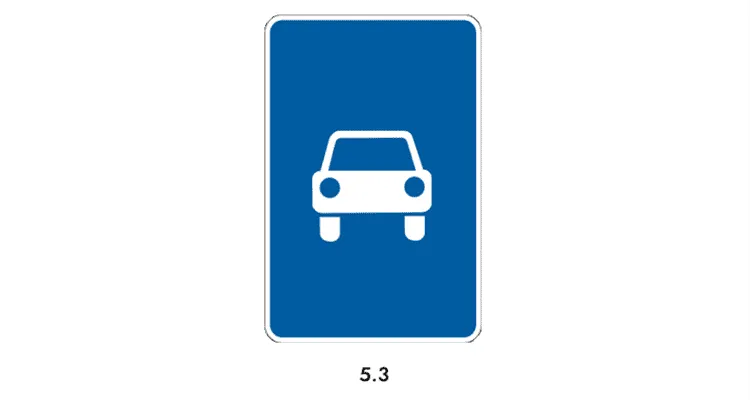
This sign indicates the beginning of a road reserved for the movement of cars, buses and motorcycles, and also prohibits the movement of mopeds, bicycles, tractors and other slow-moving vehicles. The main difference here is in the permissible speed – on the road marked with sign 5.3, you can move at a speed of no more than 90 km / h.
Can I tow my car on the motorway?
We talked in detail about how to properly tow a car, and made it clear, among other things, that towing on the highway is formally allowed. However, it is worth considering all the other factors that we have listed above: firstly, the minimum design speed of 40 km / h and, secondly, the prohibition of stopping and reversing. After all, if during towing, for example, the cable breaks, you will have to stop and raise it again, and this is not only prohibited, but also very dangerous. In addition, it should be remembered that paragraph 10.4 of the SDA limits the speed of towing: in accordance with it, “vehicles towing motor vehicles may move at a speed not exceeding 50 km / h.” Given the high speeds on motorways, soft towing should be avoided whenever possible.
Can I take driving lessons on the motorway?
Some drivers still believe that it is impossible to meet a school car with a student on the track. However, from January 1, 2020, 1734 of December 20, 2019, which canceled the seventh paragraph of clause 16.1, which prohibited driving on the training track. Therefore, from January 1, 2020, traffic on the motorway is allowed. Of course, the chances of meeting a training car on it are small, but it is worth remembering that this will not be a violation.
Can new drivers use the freeway?
Until 2020, there were no restrictions on highways for novice drivers, and now, when students can drive them, there were no bans for novice drivers. That is, novice drivers who have the corresponding sign in the form of a yellow square with a black exclamation mark on their car can drive on the highway without restrictions.

What is the fine for those who violate the rules on the motorway?
Of course, on the track you can be punished for standard violations: speeding, driving without documents, drunk driving, and so on. Accordingly, we will not talk about this, but will list only those penalties that directly relate to violations of traffic rules on the highway.
Driving on the highway in a vehicle with an estimated speed of less than 40 km / h is punishable under article 12.11, part 1. According to her, such a violation entails the imposition of an administrative fine of 1,000 conventional units.
Parking on the highway outside special parking areas entails liability under the same part 1 of article 12.11 – a fine of 1000 conventional units is also charged for this. Once again, we note that forced arrest is an exception and there will be no fine for it.
U-turn or entry of a vehicle into technological breaks of a dividing strip on a motor road entails liability under paragraph 3 of Article 12.11. It provides for the imposition of an administrative fine in the amount of 2,500 conventional units.
Driving in reverse on the highway is punishable under the same part 3 of article 12.11 – as a result, a fine of 2500 conventional units is provided.
It is curious that part 2 of article 12.11 of the Code of Administrative Offenses does not exclude a punishment for learning to drive on the highway in the amount of 1000 conventional units – after all, as we remember, from January 1, 2020 this is not a violation. Most likely, this point will be corrected in a future edition of the Code.
