
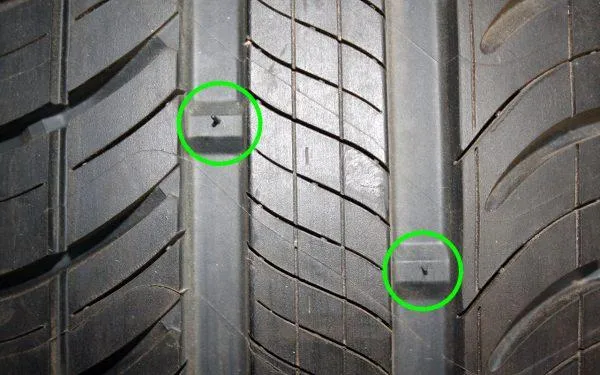
Summer tire tread wear indicator: details
Comfort and safety on the road largely depend on the quality of car tires. During the operation of the car, every driver must remember such an important point as the wear rate of summer and winter tires.
Triangle notation
The tread height is an important aspect that must be controlled during vehicle operation. These are high quality tires that provide the correct size of the tire contact area with the road and reliable traction. This allows you to neutralize the effect of aquaplaning and creates traffic safety.
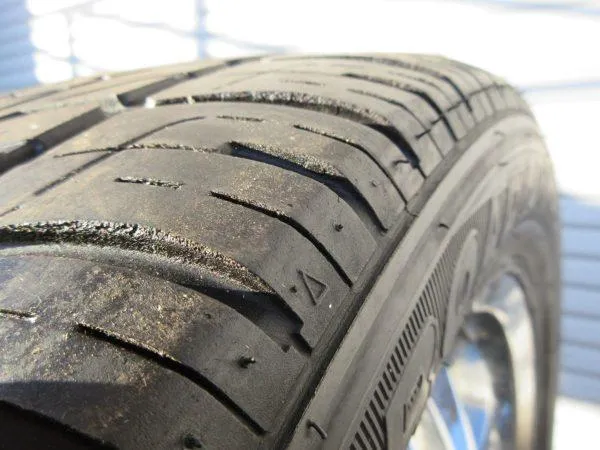
Tire wear indicator triangle
It is very important to monitor tire wear indicators. Modern technologies make it possible to do this thanks to special indicators printed on the tire.
When choosing tires for a car, the driver must be able to read the markings. The main designations that many motorists are familiar with:
- d – landing diameter;
- s is the profile width;
- D is the outer diameter;
- h – series;
- H is the profile height.
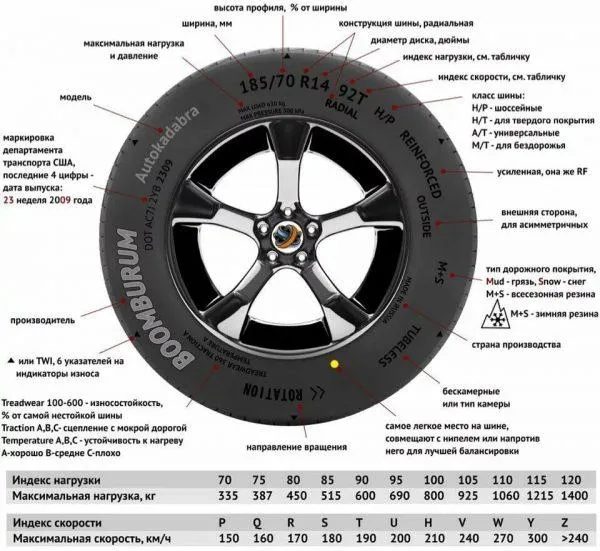
Tire marking decoding
There are also other types of markings that not all drivers may be aware of. It is these symbols that are of great importance when choosing car tires, especially if they are purchased not new, but used.
This is an indicator of uniform tread wear. Manufacturers describe it as a small triangle with an upward angle. This is one of the most popular designations.
Pirelli, Goodyear, Toyo, Hankook, Yokohama: all these brands put a triangle on their tires.
As a rule, manufacturers place a so-called tread wear indicator (TWI) on the side of the tire at the same distance along the entire diameter of the tire.
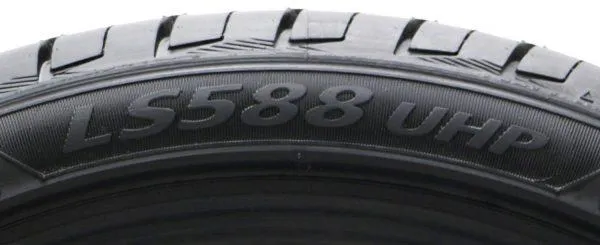
Manufacturers place a tread wear indicator on the side of the tire at the same distance
it is thanks to this triangle that a potential buyer can easily determine the degree and nature of tread wear.
The level of wear of a car tire can be uneven, so these indicators should be displayed over the entire area of u200bu200bthe tire. For example, if the car is out of camber, the pattern on the side of the tire will be removed. This eraser can no longer be used.
Numerical designations
such signs are quite easy to read. The numbers are printed on the tread pattern at different depths. During operation, they are erased from the largest to the smallest.
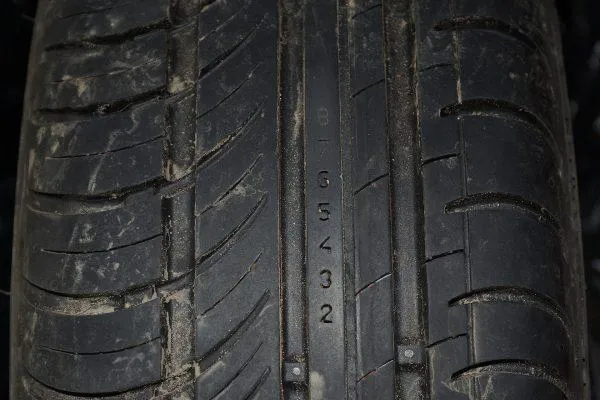
Digital tire wear indicator
Therefore, when the number “2” appears on the tire, it is an eloquent warning to replace the tire. Note that the figure shows how many mm the critical value is missing when the tires can no longer be used with confidence.
Other symbols
There are other types of designations that will allow the motorist to determine the residual height of the tire tread.
Volumetric images
They are located in grooves. Once the tread block design is compared to the 3D image, the tire must be replaced.
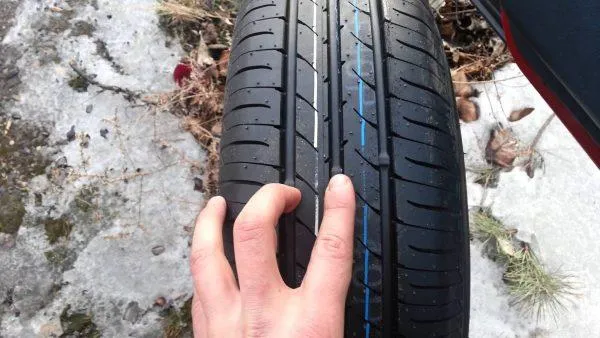
3D images of tire tread wear
strokes
Embossed stroke indication in the original design is preferred by many tire manufacturers, resulting in brand dependency.
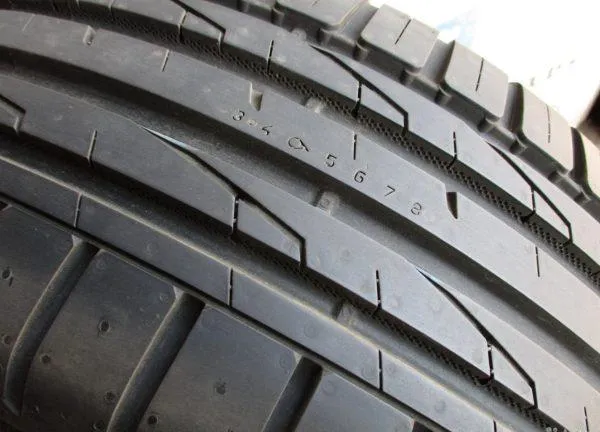
Nokian number indicator located in the center of the tread
For example, the Nokian indicator has a distinctive feature in the form of a combination of numbers that are located in the center of the tread. Their cancellation indicates an immediate tire change.
This manufacturer puts snowflakes on winter tires. Labeling works the same way.
Arrows
Bridgestone marks the outside of the tire with arrows. When they wear out, the guard reaches a critical height of no more than 1.6 mm and must be replaced. Winter tires from this manufacturer have an indicator in the form of a ribbed ledge. It is located at 4 points at equal distances throughout the product.
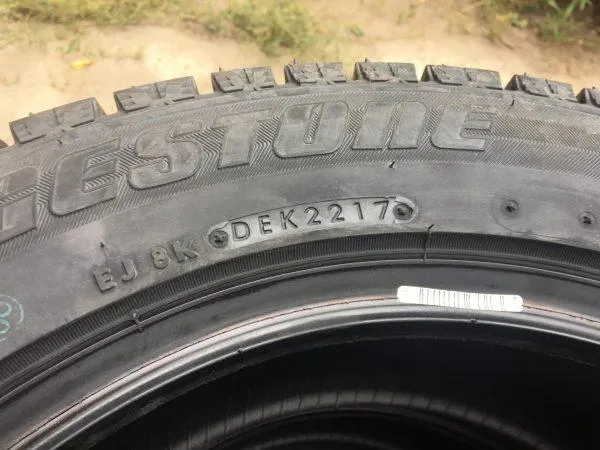
Bridgestone uses an arrow as an indicator
Colour
Some tires take on a bright hue during use. This is due to the abrasion of the upper layers of the coating. The larger the other shade, the closer the replacement period.
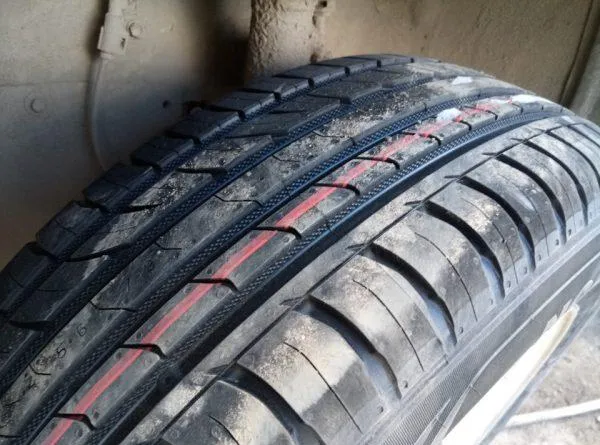
One of the indicators of tread wear is a colored bar.
Intermediate indicators
They are integrated into the protector. The disappearance of this designation warns of the need to purchase new tires.
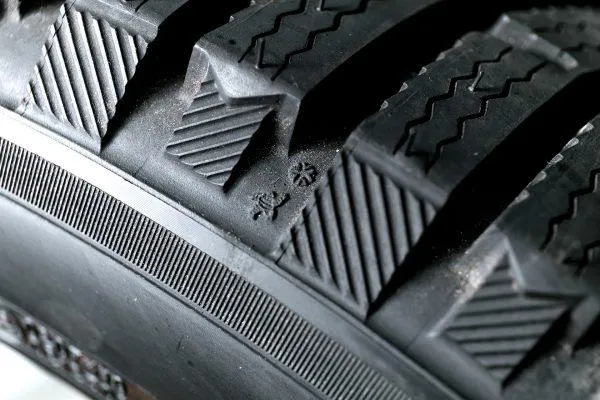
Intermediate indicator indicating the degree of tire wear
It should be noted that there are established standards for the degree of wear for each type of transport:
- passenger cars – 1.6 mm;
- trolley – 1 mm;
- motorcycles – 0.8 mm;
- bus – 2 mm.
Results
Various types of tire wear indicators greatly simplify the process of using tires, so the driver must be able to decipher them. If you do not have enough experience, it is better to seek professional help. Failure to comply with these parameters entails not only administrative liability in the form of a fine, but can also cause an accident.
