
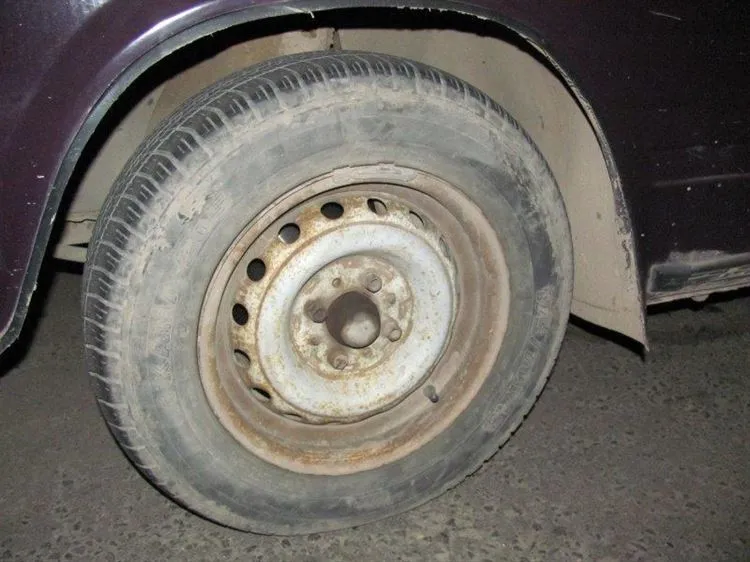
Is a tire with deep cracks allowed?
After inspecting the wheels of a car, car owners often notice minor damage and cracks that can be a few millimeters in size, and deep cracks that should be a reason to think about changing tires. Let's talk in more detail about whether such cracks are allowed on the tires and you can safely operate the car if these defects are present in the tires.
Tire check frequency
Experts recommend performing tire checks almost every month. A simple inspection takes 2-3 minutes, while the car owner can be completely confident in the reliability and safety of your car, and no critical suspension failures. The presence of uneven tire wear indicates improper camber toe and wear of suspension parts.
The presence of numerous cracks on the tread and on the sidewall indicates the mediocre quality of the tires, which crack under the influence of ultraviolet radiation from the sun and from strong temperature changes. In this case, the car owner needs to think about replacing these not very high quality tires.
Danger of using a damaged tire
Each car tire is designed for a certain maximum speed and load during the operation of the vehicle. All these characteristics are encoded in the tire index, so there will be no difficulty in obtaining the necessary information.
Any damage to the tires significantly reduces the reliability and durability of the tire. Therefore, if the original tires are designed for a maximum speed of 200 kilometers per hour, with such numerous injuries, the maximum allowable speed can reach 140 to 150 kilometers per hour.
You also have to take into account the fact that damaged wheels, whose surface is riddled with cracks, are not as durable and can simply break if you get the wheels into a deep hole. Machine speed can be relatively low. Such wheel breaks are extremely dangerous and can lead to serious road traffic injuries.
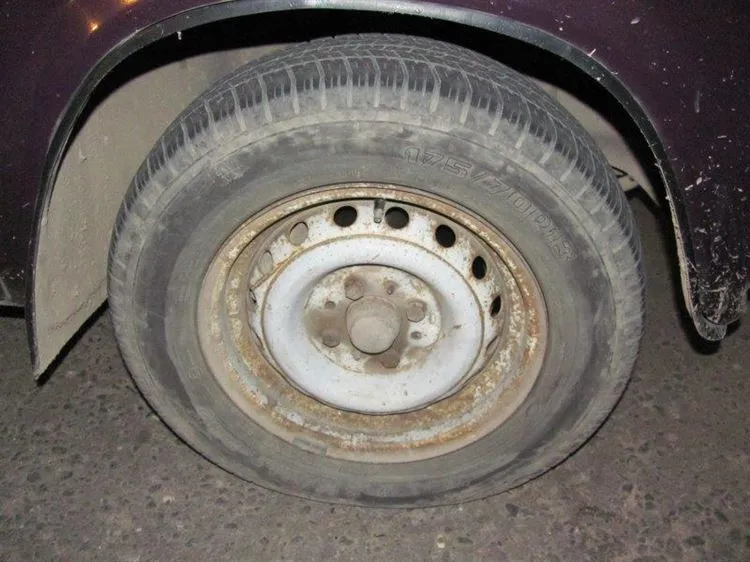
How to check wheels
Most often, such damage and cracks on tires are formed in the shoulder area, due to the increased load on this part of the tread. In accordance with the rules, it is allowed to operate a car whose tires have cracks of no more than 0.01 millimeters. Such defects look like small scratches that do not affect driving safety.
If, by running your hand over the tire, you can feel deep cracks with your fingers, then there is reason to think about the safety of these wheels, which will soon be replaced with new tires. And the most dangerous type of damage is in the sidewall, because the thickness of the rubber is minimal here.
On the tread, where the rubber compound layer is as dense as possible, cracks will not be so dangerous. Therefore, if the defender received a slight damage, it is not necessary to change the wheels. The only exceptions are those cases where such cracks are seen in the cord or there is uneven tire wear.
Summarizing
During the operation of the machine, various damages, scratches, chips and cracks will always appear on the tires. Such losses on the side are dangerous because they significantly reduce the strength and durability of the tire, which can explode at high speeds or when hit in a deep hole. Car owners should regularly check the wheels, and if they notice such defects on the sidewall of the tire, then the tires are recommended to be replaced. But cracks and chips in the sole are not so dangerous, so you can drive the car even with such damage to the wheels.
