
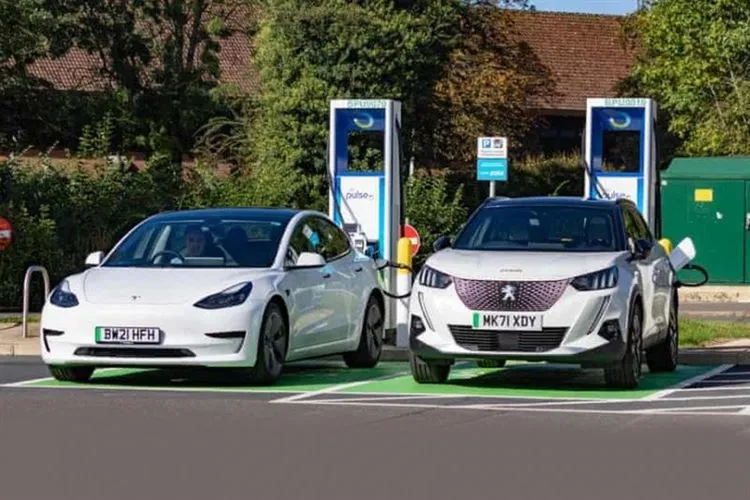
World statistics 2021: electric vehicles and rechargeable hybrids
The International Energy Agency (IEA) has published a report on global sales of electric vehicles in 2021. We are talking about both pure electric vehicles and rechargeable hybrids: in many countries they are equated with “trains”, since they also have the ability to drive for a long time on electric traction and recharge the network battery. Electric vehicle sales more than doubled last year, from 3.1 million to 6.6 million, according to the IEA. Its market share increased from 4.1% in 2020 to 8.6% in 2021.
Looking at the progress of the global electric vehicle market over the past ten years, the 130,000 units sold in all of 2012 are now about a week apart. According to the IEA, there will be 16 million electric and plug-in hybrid vehicles on the world's roads by the end of 2021, consuming 30 terawatt hours (TWh) of electricity per year. For example, Ireland produces a lot of electricity every year.
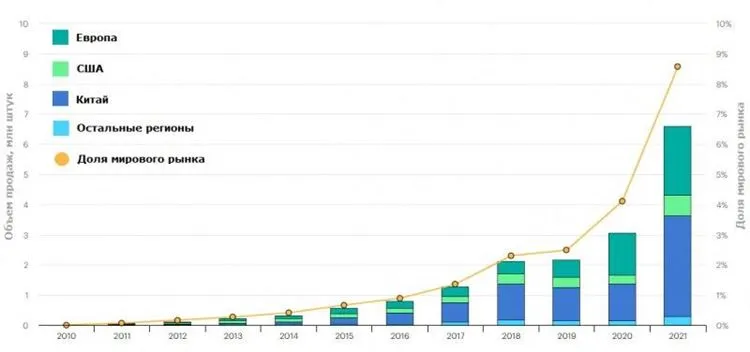
Global sales of plug-in electric and hybrid vehicles in 2010-2021 (IEA data)
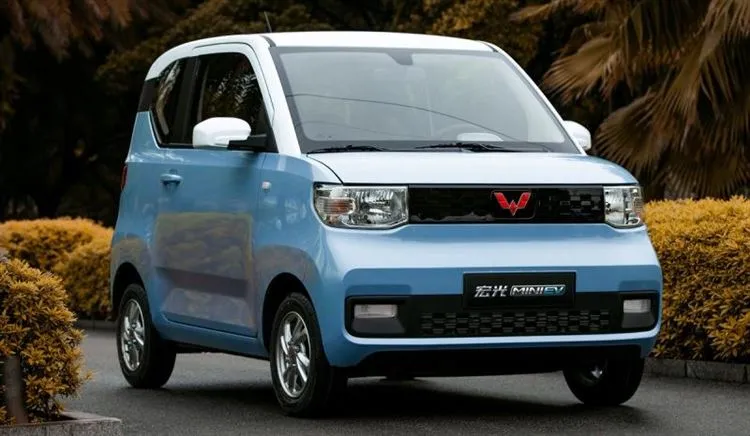
China is the main consumer of electric vehicles. Last year, 3.4 million electric and plug-in hybrid vehicles (nearly triple) were sold here, more than worldwide in 2020. According to JATO Dynamics, 2.34 million purely electric vehicles were sold here. At the end of the year, the share of electrified models in total sales reached 20%. Growth is likely to slow this year, as government subsidies for buying electric trains have been slashed by a third since January. But the most popular electric car in China was the Wuling Mini EV miniature hatchback (470,000 units), which is not covered by subsidies at all.
The second largest market for electric and plug-in hybrid vehicles is Europe, with 2.3 million vehicles in 2021, 70% growth and 17% market share. Although pure electric vehicles account for only half of this volume. However, in December the share of plug-in cars already reached 21% and for the first time exceeded the share of diesel cars. In Norway, the share of electrified models last year was 72%, in Sweden – 45%, in the Netherlands – 30%, in Germany – 25%, and in France and the UK – 15% each.
About 700,000 electric vehicles were sold in the US market last year. Of these, 450,000 are electric vehicles and 361,000 are Tesla brands. Elsewhere in the world, skirting machines are still out of favor, with only about 300,000 units sold, according to the IEA. Even in developed Japan, their share is less than 1% of the market, not to mention Brazil, India, or more recently.
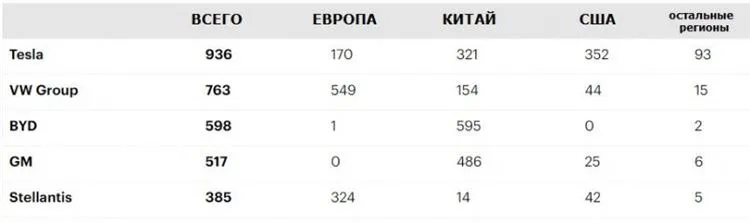
Sales of plug-in electric and hybrid vehicles in 2021, thousand units (IEA data)
Tesla was the biggest seller of electric vehicles last year, selling 936,000 units, according to the IEA. Volkswagen is second with 763,000, China's BYD is third with 598,000, followed by General Motors (517,000) and Stellantis (385,000). And JATO Dynamics has compiled a ranking of the world's best-selling electric vehicles for 2021. The bestseller was the Tesla Model 3 sedan.
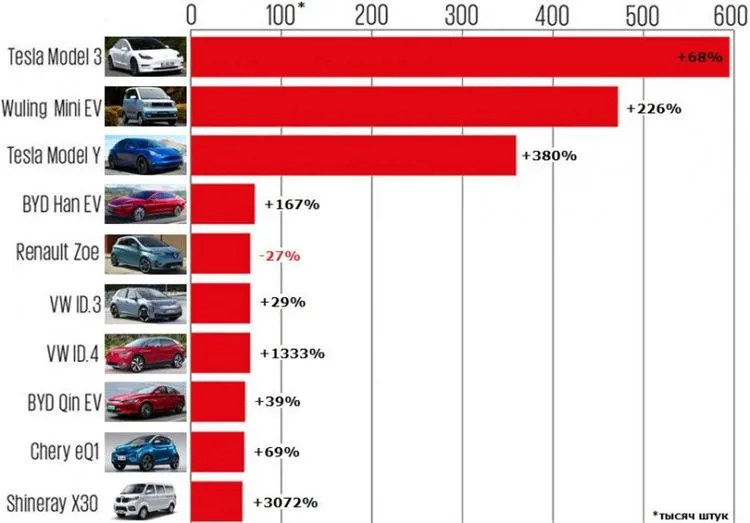
World ranking of the best-selling electric vehicles in 2021 (data from JATO Dynamics)
IEA experts predict that the crazy growth in sales of battery-powered vehicles will soon slow down. First of all, due to the rise in the cost of the machines themselves, due to the rise in the cost of raw materials for the production of traction batteries. Last year, lithium added 150% in price, nickel – 25%, graphite – 15%. And the IEA has also calculated that at the current rate of electrification of transport, a shortage of lithium will come as early as 2025.
