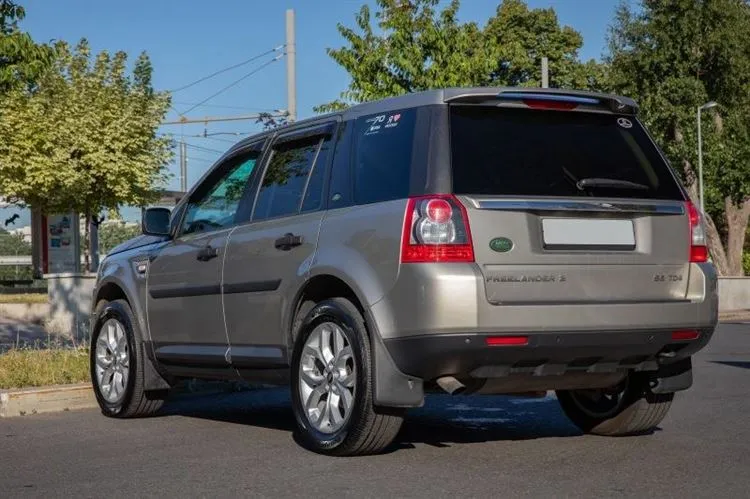
Land Rover Freelander 2 with mileage: resource suspension and many problems of a French diesel
Freelander is a completely honest SUV that fully justifies the proud title of Land Rover. As we already found out from the first part, in addition to a pronounced problem with the rear arches, the quality of the body parts is quite high here. The salon also holds up well, and the electrician can present unpleasant surprises, but so far without “crime”, like the older relatives. In this chapter, we will deal with the chassis, transmission and motors.
Chassis
Brake system
There are practically no complaints about the braking system. The brakes are disc, the discs are quite large. Front on petrol 316 mm, on diesel 300, and rear 302 mm on all versions. At the same time, the gasoline rear discs are also ventilated.
Calipers are simple and reliable, single-piston floating caliper front and rear. True, after 2013, an electric handbrake appears, and with it comes a new parking brake mechanism, not with a drum brake inside the main rotor, but with a screw drive to the main block. Potentially, the design is troublesome, but so far there are no particular problems with the caliper itself, only electric drives fail. They cost inhumanely, from 23 thousand pieces, but you need two of them. It is good that breakdowns on relatively fresh machines with this system are still rare.
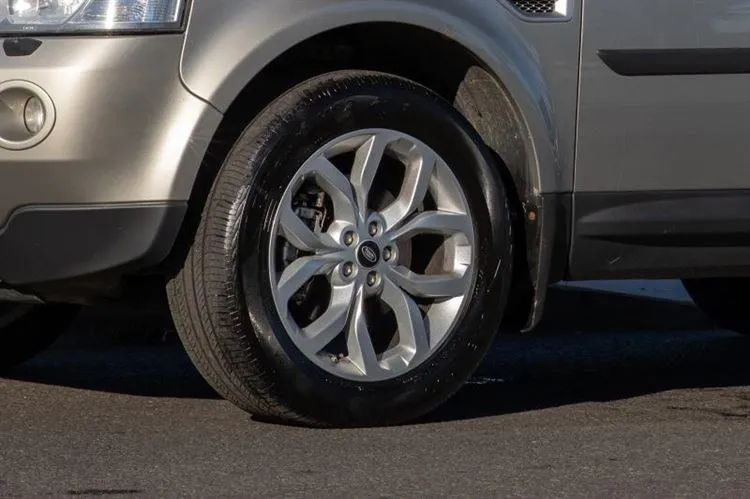
By ten years of use, the fingers may begin to turn sour, and the rubber seals of the fingers and pistons will probably require replacement, but with normal maintenance, there should be no other problems.
The brake lines do not corrode here, the handbrake cables change easily and without problems, the ABS unit is quite reliable, problems, if any, are due to power or wiring.
By and large, you only need to check if the car has gone on serious off-road. If so, then not only the body, but also the brakes with suspension can become a source of trouble even on “fresh” cars after restyling.
| Detail | original price | The price of the original | Price of non-original 2 |
|---|---|---|---|
| Brake system | |||
| Brake pads front | 2852 | Ate 5 415 | Feb 3 739 |
| Brake pads rear | 11 613 | Ate 3 143 | NiBk 2 158 |
| Brake disc front | 4080 | Ate 4 315 | Optimal 3 783 |
| Brake disc rear | 3 848 | Bosch 3 651 | Ferodo 2,738 |
Suspension
For most Freelander owners, suspension is just what the car has. And this is very good. The original suspension components are of very high quality, others go for 200 thousand or more. It is not for nothing that the Freelander 2 often acts as a donor of spare parts for other cars on the EUCD platform: Ford Mondeo, Volvo S80 and more.
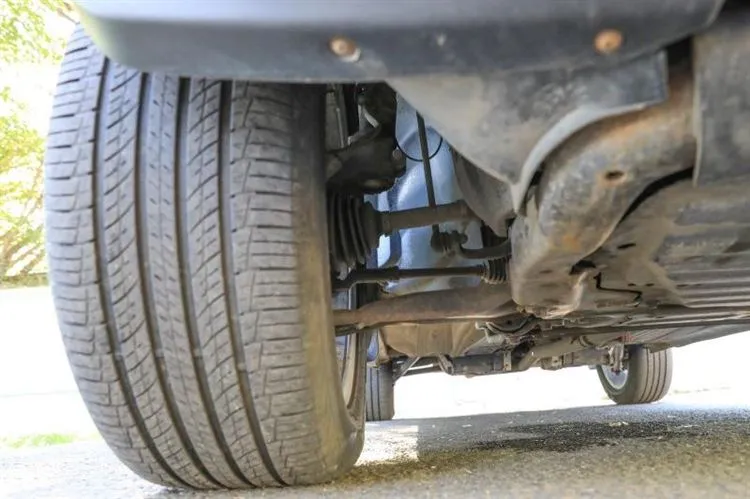
Most claims are collected by branded wheel nuts with an aluminum cone, which corrode and can tightly “boil” in the holes of some rims, and wheel bearings. However, the last problem is rather Ford's, since it is mainly the front hub units that suffer, which are made in one piece and unified with “all-platform” ones (including those from Volvo). They cost from 7 thousand for a hub of a good brand, and the original from 12, and the hub is clearly overloaded. It is better not to install wheels with a larger offset (the numerical designation of the offset in this case will be less) and be careful with the fords – the original hub assemblies are poorly sealed.
The front arms are quite expensive and nominally non-separable, like all platform cars, but they are steel and the ball joint is riveted. The replacement turns out to be elementary, a ball of good quality is sold separately. You can also buy silent blocks.
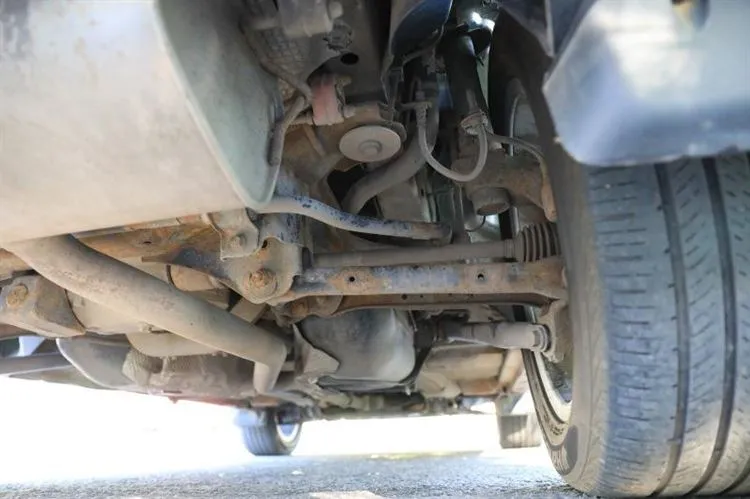
The rear suspension, as already mentioned in the first part, is of its own English design, and this is MacPherson strut (as in the front). You can see the difference in design approaches. All silent blocks of levers are replaceable from the factory, nothing is disposable, the levers themselves are strong with a closed profile – they do not rot to holes, like sheet stamping on Fords and Volvos. The hub bearing also changes separately, and their choice is huge. Moreover, the rear hubs, ceteris paribus, go longer than the front ones. But silent blocks live less than in front: the lower silent of the transverse arm and the rear silent of the longitudinal serve well if 120-150 thousand kilometers, but replacement is inexpensive. If you put a non-original, then less than 1000 conditional units per side for three elastic bands. True, if breakup bolts turn sour, then the suspension cannot be adjusted, but such intervention is usually not required – here the levers are strong,
| Detail | original price | The price of the original | Price of non-original 2 |
|---|---|---|---|
| Suspension | |||
| Front L-arm | 16 313 | Optimal 6 937 | 4U 4 781 |
| Front hub | 12 697 | Febest 4 678 | SKF 5 939 |
| Rear L-arm silent block | Not available | Febest 1 482 | SWAG 2 235 |
| Upper arm rear suspension | 4 172 | Stellox 1 647 | Moog 3 063 |
| Rear trailing arm silent block | 1 262 | BGA 455 | Febest 580 |
| Front shock absorber | 13 195 | MM4947 _ | Kayaba 7,539 |
Steering
Steering with conventional power steering on all motors. Unfortunately, the design is quite troublesome. Not very successful pumps really do not like airing the system as a result of fluid leaks or air leaks in the supply hose, the rail starts tapping at runs of 120-150, and corrosion eats up the side bushings. The rail on the Freelander 2 is located in the niche of the subframe and therefore gets very dirty even in city cars – any violation of the tightness of the covers in such conditions leads to corrosion of the shaft.
However, if the problem is dealt with in time, then it is inexpensive, the Ford rails of this generation are well mastered in repair and feed more than the first generation of locksmiths. Side bushings, clamping nuts – all this is in repair versions, there are drawings of metal parts to replace plastic and fluoroplastic instead of metal.
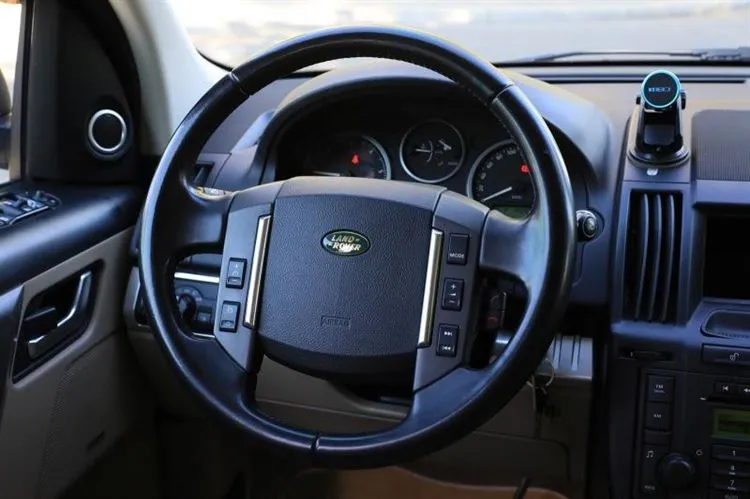
As for line leaks, in most cases the reason for this is the dirty “brush” of the power steering oil cooler. It is rarely washed, and overheating of the oil leads to degradation of the rubber elements of the system and oil seals.
There is a small problem with the steering column lock, the mechanism wedges at sub-zero temperatures due to the freezing of the electric drive. If you don’t want to wait for the interior to warm up in winter before driving, it’s better to disable the blocking function with a proprietary SDD scanner. Well, or you can put a “trick” from Volvo.
Transmission
Common problems
Despite frequent off-roading, cars usually have no spline issues (other than corner gear splines) and the CV joints hold up well. Problems can only be thrown by the internal tripods of the front axle – after hundreds of thousands they ask for a new lubricant, and if you tighten it with a replacement, you will have to change the hinges themselves, and it will cost oh how expensive.
The price of the assembled shaft is about 90 thousand conditional units, there are no separate CV joints, there is no non-original, you can pick it up, but you will have to climb into the Volvo forums in search of cross codes to find a replacement. And the resource will be lower in any case – on the Land Rover, the shafts work with completely different angles than on passenger cars.
With rear internal CV joints, such problems happen much less often, but it happens. External hinges, oddly enough, go longer than the internal ones, if you do not tear the cover.
Mechanical boxes
It is difficult to find a car with a manual gearbox, but they were installed on diesel versions. The box there is the Ford Getrag M66, a completely time-tested option. The manual gearbox itself is strong, but with runs over 200, bearings can fail, and with regular towing of trailers along the highway, the sixth gear also wears out.
A dual-mass flywheel is present by default, but it is quite successful, in any case, it is able to pass 200-250 thousand. But the angular gear on the M66 is not very good, even on Aisin machines it lasts longer. However, the prices for spare parts and breakdowns are the same, the difference is in the housing and the intermediate shaft. And about the essence of the problems – a little lower.
automatic boxes
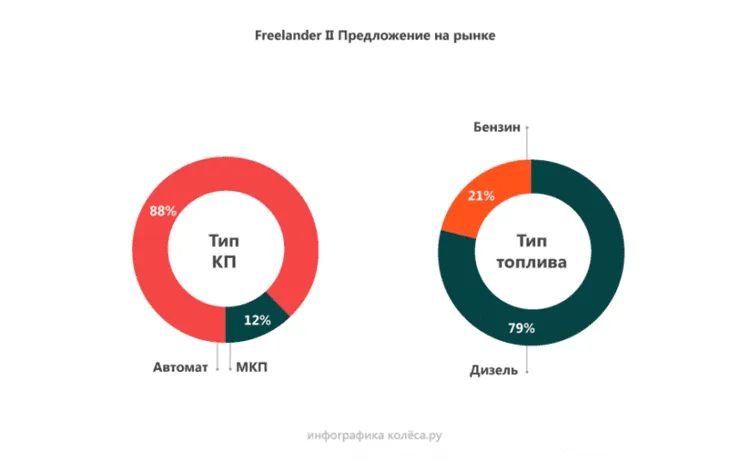
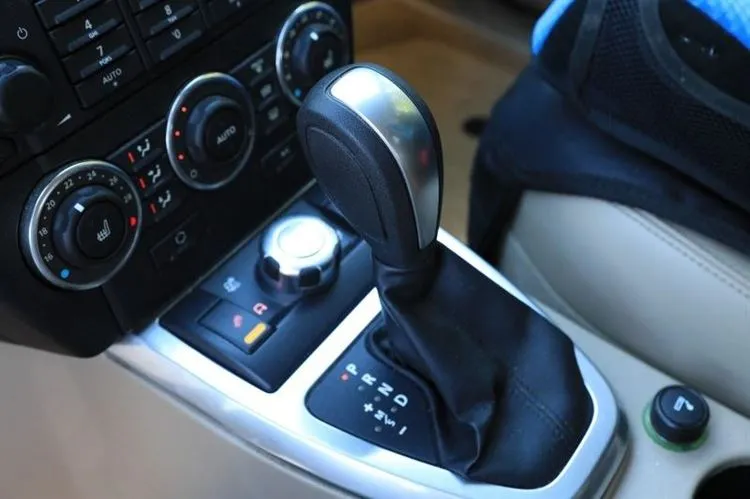
Almost all cars are equipped with an automatic – this is the Aisin TF80-SC box or its later version TF80-SD from 2010. Boxes with the same designation are found on other models of the EUCD platform, but they are not completely interchangeable. So, the Freelander valve body is configured to work with the Ford / Mazda control unit, but the valve body plate and the mechanical part are closer to the Volvo versions. These boxes are strong and very successful in the mechanical part, but do not like overheating and dirty oil.
The good news is that there is almost no overheating on the Freelander, and the main problem is general wear due to loss of oil pressure and worn linings of the gas turbine engine blocking clutch on runs of 200-250 thousand. The problem is usually, in fact, in the wear of the linings of the blocking of the gas turbine engine, the wear of the gas turbine blocking solenoid (TCC), the linear pressure solenoid (EPC) and the wear of the O-rings of the C1 drum shaft through which the pressure leaks. Because of this, wear of the friction clutches of the C2 drum, which are responsible for turning on the 4th, 5th and 6th gears, appears over time.
If you don’t drive a dying box, then the drums and steel disks will be intact at the time of repair, and the total price of the service will be ridiculous, 10 thousand for the repair of the gas turbine engine, about 15 thousand sets of friction clutches and rings of the C1 drum of a new sample. Everything else usually does not require replacement, so the typical amount of 120-150 thousand for the repair of such a box in the service is most likely somewhat overstated. But the owner of a Land Rover (even an old one) for a typical service looks like a purse on legs, it will be difficult to bargain.
In order to extend the life of the automatic transmission to a reasonable maximum, it is worth changing the oil on time, a maximum of once every 60 thousand kilometers, and preferably twice as often. The recommended oil for this box is Toyota WS, which is poorly suited in viscosity for factory o-rings. It is better to prefer the more viscous Toyota T-IV. Rings of a new type on TF-80 boxes began to be installed in 2015, when Freelander 2 was no longer produced.
Front hub
12 697 conventional units
The box filter until 2009 is felt, does not like the occasional oil change, but tries to keep it clean. After 2009, a strainer went on, with it it is more difficult to get a drop in oil pressure due to a clogged filter, but it also cleans the oil worse. With regular oil changes every 30-40 thousand, they are equivalent. And if you put an external fine filter, then a mesh filter is even preferable. For gasoline cars, it is highly recommended to install a regular external radiator of the box with the number LR0061105, they were equipped with cars in complete sets with a towbar, and many cars in the state version received it initially, but if not, it is very desirable to equip the car with it.
Additional specific problems of the Aisin automatic transmission on the Freelander 2 are the ingress of water into the gearbox control connector and the breakage of the corner gear. Water from the connector kills the cable of the box – the connector is part of it. The automatic transmission control unit dies along the chain – it is located right on it here, water under the wire insulation enters the unit and causes corrosion of the board.
The 4WD angular gear suffers from oil leaks and bearing wear. Roller bearings suffer from pitting corrosion of the running surfaces even when the oil is in place. If it is absent or almost absent, then wear is very fast. It is important not to miss the moment when the box buzzes in order to prevent wear on the intermediate shaft and output gear.
If you ride a buzzing box for a long time and they wear out, then the price of repairs increases significantly: a working pair will cost at least 35 thousand, often reaching 50 or more. A set of bearings and seals with a disposable spacer will cost less than 15 thousand. The work of replacing bearings is not very difficult and usually costs from 5 to 10 thousand conventional units.
Sometimes the intermediate shaft needs to be replaced due to wear of the mating splines on the side of the box – often the reason is the wear of the bearings and the depressurization of this assembly. These gearboxes on Volvo have a similar problem, and the parts are exactly the same, but the Land Rover transmission case is slightly different. For Freelander 2, a sleeve is produced from GParts or other suppliers, which allows you to avoid replacing the intermediate shaft with a whole working pair. A certain share of the responsibility for the problems of the angular transmission lies with the seals, they very quickly begin to let oil out and water in.
In theory, the Freelander 2 was equipped with a 6DCT450 “robot” complete with a 2.2 diesel engine in 2010-2011. But in practice, there are no such machines in our area, and the option is extremely unsuccessful, judging by the rare reviews.
Four-wheel drive
In addition to the problems mentioned above with the angular transmission, there are other troubles. The Haldex clutch requires an oil change every 30-40 thousand, depending on the intensity of off-road exercises and the activity of the driver in winter. Its wiring requires monitoring the integrity of the connectors, and in the rear fuse panel (located by the spare wheel), it is better to change the fuse for the DEM block to 5-7.5A instead of 15 amps, since when the contacts are shorted, the block usually burns out, not the fuse. This also helps with the wedge of the clutch oil pump engine, which happens if you do not change the oil in it.
A rather expensive surprise can be thrown by the rear gearbox, in which the main pair and bearings also fail. Less often than in a corner transmission, but this problem should not be discounted. The reason for the breakdown is also the wear of the bearings, the same water that got into it – the breather is short here, the seals are also imperfect. By the way, often the howl of a dying corner gear masks the problem with the rear gearbox, which is quieter. Feel free to check everything.
Motors
Common problems
The radiator package is arranged tightly, like on a Volvo. For a full flush, the radiators will have to be removed and washed separately. And the fan and fan controller are frankly unsuccessful. With an increased starting current, which happens already at 100+ runs due to wear of the brush assembly and unsuccessful bearings, the fan controller lights up, which leads to overheating of the motors.
A two-fan unit (it is installed on almost all of the many “Freels” with climate control) is no more reliable than a single-fan unit, since they do not use a serial switching circuit, there are just two separately regulated fans and the control unit is more complicated than on designs with one fan.
A cheap Chinese copy of the control unit for 5 thousand conventional units is assembled on weak transistors, but, unlike the original, it is at least amenable to modernization and repair. It is difficult to repair the branded block, which is supplied only with a frame and fans – the board is filled with a compound, and in such a way as to make repairs difficult, but not prevent corrosion. The assembly of fans costs over 80 thousand conditional units.
Petrol engines
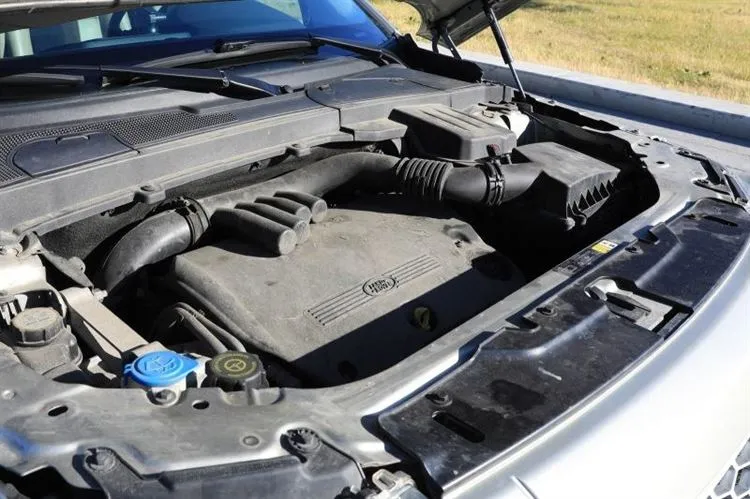
The main gasoline engine on the Freelander 2 cannot be blamed for weakness and poor resource. For LR, they chose the strongest engine from the Volvo line of those years. Ford and LR call it modestly Si6 or 306PN, but in fact it is a derivative of the Volvo B6324S – from Ford / LR it has a top cover and control unit firmware. Even the supports here are from Volvo, the intake manifold and throttle are also Volvo.
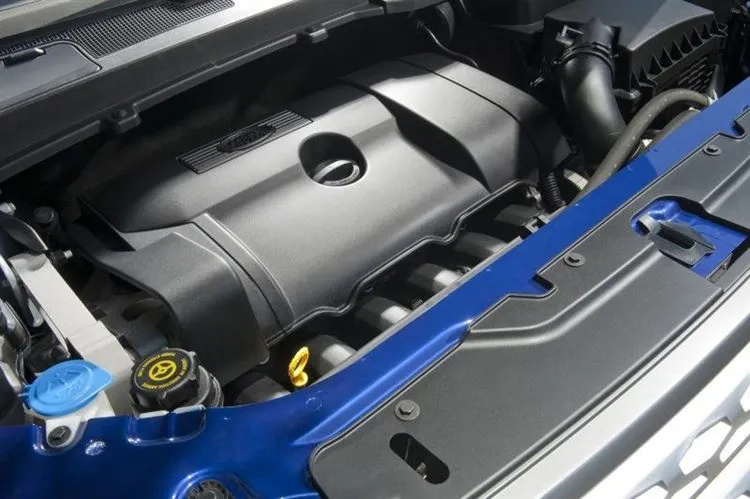
Motor Si6 2010-2012
By the way, the uniform leapfrog is going on with prices: a number of components are cheaper from the Swedes, and some from the British. For example, a Volvo intake manifold is a third more expensive, and each of the intake damper actuators is two to three times more expensive. The crankcase ventilation valve (VKG) in the manifold from LR is half the price of the Volvo one. And collectors from LR are twice cheaper each. But the timing gear kit for Volvo is 70 thousand, and for LR – 190. The timing chain for Volvo is cheaper, 5 thousand versus 9. When buying large units, the difference is already very large, a short block from LR costs a million, which is 300 thousand more than a complete Volvo engine. In general, each time you have to compare the prices of parts in catalogs if you do not want to throw money away.
However, these motors almost do not break if they are not overheated. Most of the problems are related to leaks due to malfunctions of the VCG, failure of the seals of the top cover with a membrane, failure of the oil-water heat exchanger with improper maintenance, malfunctions of the ignition system and vacuum pump leaks. At runs over 300-350, a tendency to oil appetite begins to appear, and this is not wear, but the rings simply coke, and wear of the valves and valve seals appears. The cylinder-piston group, with a good choice of oil and good maintenance, easily exchanges half a million kilometers.
The largest repair during this period will most likely be associated with the timing – it will be needed in thousands of 200. The gas distribution mechanism here is implemented extremely unusually. The camshafts are driven by a chain from the flywheel side, but, unlike BMW and VW designs, the chains are not driven directly from the crankshaft, but from a gear reducer. The design is successful in the sense that you do not need to remove the box or motor to replace it, but the gearbox itself accumulates backlash over time due to wear on the bearings and the gears themselves and begins to howl. Bearings are inexpensive to change, as are chains – if they are replaced in time, repairs will be inexpensive. But if the gears or couplings of the phase regulators are worn out, then the costs will be considerable. The price of a set of gears is mentioned in the paragraph above. The phase regulator is much cheaper, 14 thousand (and the Volvo one is twice as expensive!).
Turbocharger for 2.2
75,739 conventional units
At the same time, a generator and a pump are driven through the gearbox and freewheel, and through the pulley on the generator and the belt, the air conditioning compressor and power steering are also driven. By the way, any problems with the power steering pump, an underfilled air conditioner, a faulty generator increase the load on the gearbox assembly and can lead to early failure of the gear reducer.
In VKG, it is mainly the oil separator that fails, more precisely, the membrane of the valve built into it. You can only change the membrane, since there are repair kits, albeit non-original ones. You can replace the cover, in the original it costs 8 thousand, non-original ones from 3, but they serve noticeably less – they often warp. In the event of a malfunction of the VKG, the seals of the front cover of the motor and the casings of the timing chains flow. Parts are cheap, but a lot of work.
In routine maintenance, the replacement of candles is not provided, so that the ignition coils fail over time, and the engine begins to “five” or simply loses some of the thrust. Power is still greatly lost due to wear and failure of the intake geometry control dampers, they are electrically driven here, and a slow reaction to gas, excess fuel consumption and a decrease in power due to them occur already at runs of about a hundred thousand.
In addition to good reliability, a very good sound and smooth traction from the very bottom are attached. Its only drawback on Freelander is a good appetite, in urban conditions it easily exceeds 16 liters per hundred even with a working transmission.
A year before the second restyling, the Freelander began to install a two-liter engine of the Ecoboost family from Ford in the 240-241 hp version. He replaced the time-tested straight-six. Four cylinders with supercharging and direct injection allowed even a little increase in power and traction.
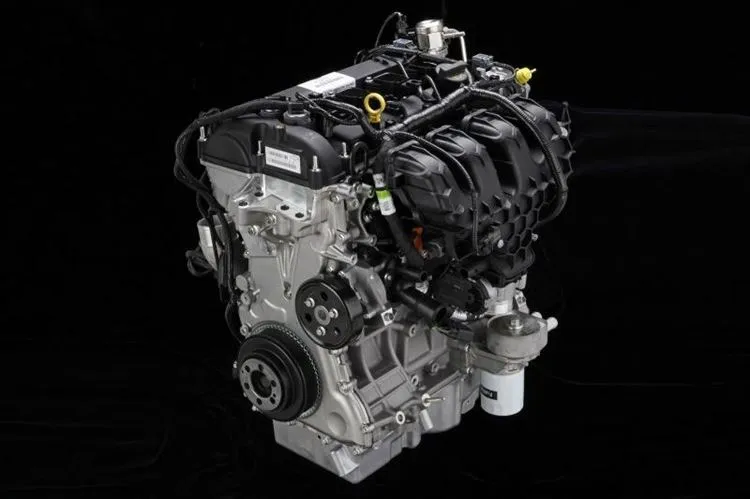
Ford Ecoboost 2.0L engine
The motor is similar to Ford's TPBA/R9CB motor. It is rare on the Freelander, but from experience on other machines, some conclusions can be drawn. The engine really does not like the urban cycle with its low speeds and high intake air temperatures. Detonation on 95th gasoline in such conditions is constantly manifested. Moreover, at first the firmware was extremely unsuccessful, detonation was generally poorly suppressed. Later, the firmware was updated, but not all machines received the new software. And the 98th / 100th gasoline does not completely solve the problem. Dirty injectors and fuel pressure problems due to dirt make things worse. Filtration quality is insufficient for many conditions.
Otherwise, in terms of mechanics, the motors are quite simple, and of the typical serious problems, it is worth noting only breakdowns of the exhaust manifold, it is thin-walled steel and burns out, at the same time damaging the turbine with debris. And since the collector is also the body of the hot part of the turbine, the loss will be 35 thousand conditional units – this is how much a non-original cast-iron collector costs, which is stronger and cheaper. The original part is not supplied separately, only assembled with a turbine. This is from 184 to 340 thousand conventional units. What's funny is that many victims change the original for the original, as they are fans of “true LR quality”. You can see the problem at the very beginning by checking the seams between the collector contact plate and the nozzles – destruction usually starts from this zone.
A more frequent, but less serious problem is ruptured pipes to the intercooler and other air leaks. The motor works with high boost pressure, and the pipes weaken after three to five years of operation, often tearing them under strong pressure. The original tubes are not cheap, but you can pick up silicone substitutes, since the shape is quite simple. In addition, the original parts LR031918 and LR038317 have interchangeable end parts, it is not necessary to buy them assembled for 10-30 thousand.
The intercooler eventually begins to sweat oil along the rolling, and sometimes the core itself tears due to aluminum corrosion. By the way, to drown out the Freelander, it is enough to press something against the left decorative grille on the wing. The air intake is made through such a kind of “snorkel”, and evil neighbors have the opportunity to fill in a can of building foam and watch how the owner tries to start after parking on the lawn.
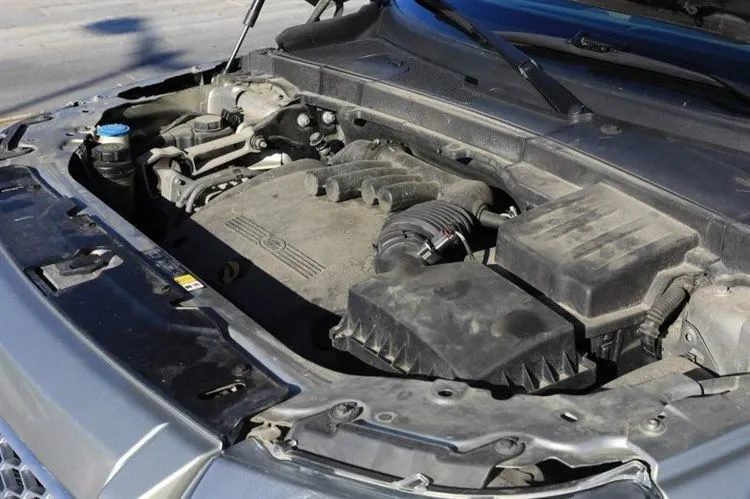
In general, the EcoBoost engine is not so bad – it is relatively simple and very technologically advanced. The timing resource is small, but the chains are inexpensive, and the replacement is simple – it is difficult to make a mistake when replacing, except that the keyless landing of the stars implies special tools and new bolts.
The need to adjust the valves once every 60 thousand and some disposability of both the block itself and the strapping no longer bothers anyone. Well, if you don’t pour 5W20 oil with runs over 50 thousand, then there will be no problems with oil pressure, scuffing of camshaft beds and knocking of phase regulators. On 5W40 oils, this kind of problem does not manifest itself at all. Well, traditionally, to everyone who believes that there are “narrow channels” in the motor, I recommend reading my material on this topic.
Diesel engines
The diesel engine with the designation 224DT, in fact, also has nothing to do with Land Rover, it was made and developed by PSA, and Ford took some part in the development. On Peugeots and Citroens it is known as DW12M/BTED4, on Fords it is known as Q4BA or KNWA.
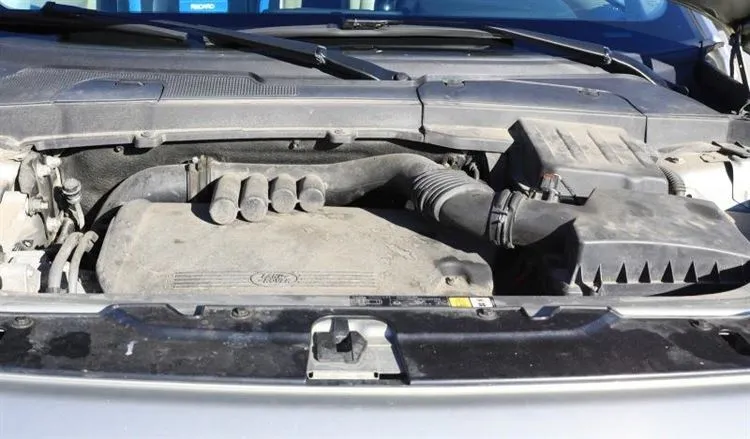
Versions for Freelander are all with one turbine, here is usually Garett GTB1752VK or MHI TD04L-11TK3s-VG on late production cars with a particulate filter and 190 hp engines. Both turbochargers are electrically controlled boost, and the problem of French cars, which, due to problems in the vacuum system, is characterized by overboosting, is absent here.
This diesel has no problems with the air metering – Land Rover puts a conventional Bosch electric throttle on the intake for all versions, including cars with DPF.
But there are problems with swirl flaps (on pre-styling), oil leaks, very problematic EGR, always dirty DBP (aka MAP-sensor) in the intake, wear of rockers and knocks in the timing, wear of the intermediate chain in the timing drive and its dampers, sour injectors and breakdowns of the VCG – everything, as in the French “original”.
You might think that the motor is very fragile, but this is not entirely true. It is quite reliable and goes for a very long time, it has an excellent piston resource – for 500 thousand. He also has good fuel equipment and a lot of traction. But it requires specialized maintenance, knowledge of a lot of nuances and weaknesses. Otherwise, he corny “does not go”, and minor problems come back to haunt expensive repairs, up to early overhaul due to the destruction of the cylinder head and pistons.
Be careful with chipping motors: the firmware has been hacked for a long time, it is easy to merge and fill, and the “tuners” promise to get 200 forces or more cheaply, but in practice, in most cases, the intervention is rude, with the complete shutdown of all “fuses”. The output is a very dangerous firmware with a scaling EGT, a bunch of soot, an overload of the turbine and liners.
When buying, it is difficult to assess the condition of the motor completely outside of a specialized service. You can check oil leaks and traction, as long as the motor is not “washed”, it is more difficult to hear the sound of the chain when changing speeds, because the motor is quite noisy. Better listen with a stethoscope.
injection pump for 2.2 TD4
93 538 conventional units
The hardest thing to check the condition of the rockers. You can remove the vacuum pump and one of them will be visible, but it is difficult to draw conclusions from the absence of a gap between the rocker and the valve. An endoscope can crawl through the valve cover, but this option is also not the easiest to implement. The full picture can be seen only when parsing, but no one will disassemble the motor for diagnostics. We can assume that if there is a knock from the cylinder head, everything will have to be changed – both the chain and the rockers.
If you start the problem, then the contact surface of the rocker sags, it starts to press on the spring plate, as a result, the valve will dry out sooner or later and fall into the cylinder. The chances of “Stalingrad” in this case are very high.
It is highly recommended to clarify when the injectors were removed – they stick tightly, often as a result they are drilled out with the removal of the cylinder head, and in the worst case, the cylinder head is replaced. At the initial stage, the problem can be smelled at startup – the nozzle sticks due to the passage of gases. Therefore, if there is bubbling, then it's time to remove, clean the well and change the sealing washers.
Camshafts also wear out on low-viscosity oil and worn rockers. On the machines of the first releases, the camshafts sometimes break, the injection pump drive shank breaks off, and after 2008-2009 the problem no longer occurs – the shaft has become steel, not cast iron. On the other hand, steel shafts are more prone to cam wear.
Checking the condition of the crankshaft pulley is not difficult, but you need to be very careful to notice cracks under layers of dirt. Recognizing a pulley of a new type that does not turn is not difficult – its inner part has a characteristic “gear”.
It is better to change the not very successful inlet pipe from the filter to the throttle on cars before restyling with resonators to a straight restyled one, with better traction and less noise. Well, the intake dampers on cars must be removed before restyling. If there are drive elements, then check their presence with an endoscope.
There are also problems typical mainly for Freelander, and almost all of them are clearly visible. The motor either does not work at all, or the “engine power limit” is lit on the dashboard and the car “does not drive”.
The most common “Land Rover” trouble, not typical for its French versions, is the rupture of pipes to and from the intercooler. The problem is also treated quite simply – as on a 2.0 gasoline engine, all parts can be repaired.
Souring of the geometry drive rod on turbines and breakdown of the electric actuator are a little less common and are often associated with the first problem. Actuator errors P2562-63 indicate under-inflation or over-inflation. The nozzles are very sensitive to overflow, the old ones are enough for a small pressure jump, when there is also no error. To reduce risks, it is recommended to manually shift the “geometry” drive of the turbine several times at each maintenance and sometimes give the engine full thrust for at least a couple of minutes so that deposits on the exhaust manifold and turbine burn out.
A completely clogged MAP-sensor on other machines with this motor also does not occur, and on Freelander it is sometimes covered with soot so that it shows the weather on Mars, so you need to wash it regularly.
Airing the fuel system is also typical for Ford engines. In this case, the “pear” of manual swapping is installed from analogues from PSA. At the same time, this helps a lot when replacing fuel filters, the procedure becomes much cheaper and not traumatic for the high-pressure fuel pump.
The thermostat running along the seam is a legacy of Ford, it is necessary to put the option from PSA, there is no current seam on the plastic. The antifreeze supply hose to the 8A520 heat exchanger is stratified, and it is expensive and includes a large metal element, so it is often farmed. In general, the cooling pipes do not differ in super reliability, most of all complaints are about the “tee” with the number LR8260D and the pipe LR8286.
The failure of the engine control unit due to poor location and water ingress has already been discussed above, in the “electrical” section. Water enters the connector and gradually seeps through the seals, damaging both the connector itself and the contacts in the ECU unit. DPKV on a diesel engine is a consumable, there is always water under the casing. You just need to always have a spare.
| Detail | original price | The price of the original | Price of non-original 2 |
|---|---|---|---|
| Motor | |||
| Radiator | 29 607 | Thermal 5 096 | Nissens 7 208 |
| Timing belt 2.2 | 6 168 | Dayco 1 713 | Gates 3 077 |
| Timing kit 2.2TD4 | 27 214 | Dayco 8 479 | SNR 9 901 |
| Turbocharger for 2.2 | 75 739 | MHI 123 469 / Garrett 41 855 | Jrone (Garett replacement) 19,087 |
| Timing gear for 3.2 | 194 897 | Out of stock | |
| injection pump for 2.2 TD4 | 93 538 | Bosch 74 720 | Boruida 46 207 |
To take or not to take?
Freelander 2 has no failed versions: engines are good (diesel 2.2 and gasoline 2.0) and very good (gasoline 3.2). The car box also got a good one, and the suspension is designed with a good margin of safety. Blindly and cheaply, it is not recommended to take such a car, but after a careful diagnosis and assessment of one's own strength to maintain Friel in good condition, it can be fully recommended for purchase.