Four-wheel drive, Soviet assembly and electric motor: myths and facts about Fiat Panda
Panda is not only a bamboo bear, but also one of the most interesting and unusual small cars of the FIAT concern. Next year, this model will celebrate its fortieth anniversary, but for many young motorists, the Panda has remained an “unknown animal”. Although in Soviet times it was to this car that we showed great interest: there were certain reasons for this, which gave rise to speculation and inaccuracies related to the design features of this car. Facts minus myths – the formula of our today's material related to the first generation Fiat Panda.
MYTH 1: This primitive design is the work of a famous designer
truth
A people's car is something that humanity has almost always needed. Ford T and Volkswagen Kafer, Citroen 2СV and Renault 4, Austin Mini, Fiat 500 and Renault 5… This list can be continued for a long time, but in the mid-eighties Italy once again needed an even more modern and popular car than the rear-wheel drive Fiat 124, which became Zhiguli after the “technical translation”, or the front-wheel drive Fiat 127, which represented the era of “Golfs before VW Golf”. The car had to be up-to-date technically, attractive in appearance and as affordable as possible. Is the problem practically unsolvable? Yes. Or almost yes, because they are usually greeted by clothes, and in this regard, the Italians had their already proven strong point – a sort of heavy artillery. Young, but already quite famous and made a name for himself Giorgetto Giugiaro by that time had done a lot, including the creation of the appearance of another “alternative Golf” – Alfa Romeo Alfasud. Moreover, maestro Giugiaro not only created the exterior of the first generation VW Scirocco, but also put his hand and pencil on the very first Volkswagen Golf! That is why the FIAT leadership had no options: only Giugiaro.
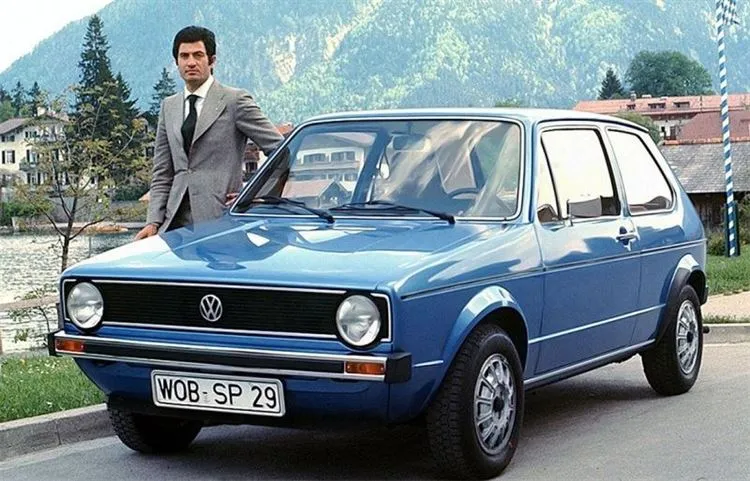
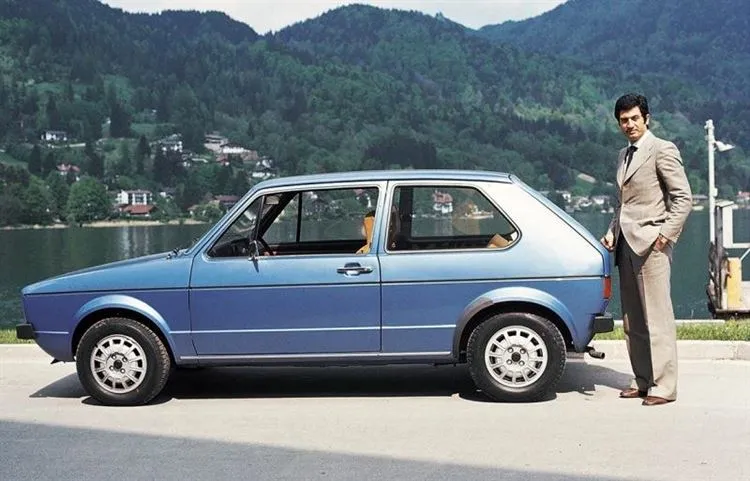
“I created Panda as a household appliance, like a refrigerator.”
Giorgetto Giugiaro
The concept of technical aesthetics combined with minimalism in solutions and maximalism in functionality defined the essence of Fiat Panda. Dimensions – like any small car like the Soviet Zaporozhets, but at the same time there is enough space in the cabin to comfortably accommodate a young family or an elderly couple. A modern look, but without the French “kookies” so as not to scare off the older audience by flirting with their children and grandchildren. Adequate behavior on the road, efficiency, simplicity and good cross-country ability… Are you tired of listening to incongruous qualities?
So the maestro was forced in many ways not only to “rethink”, but even to “reinvent” the multi-purpose urban small car.
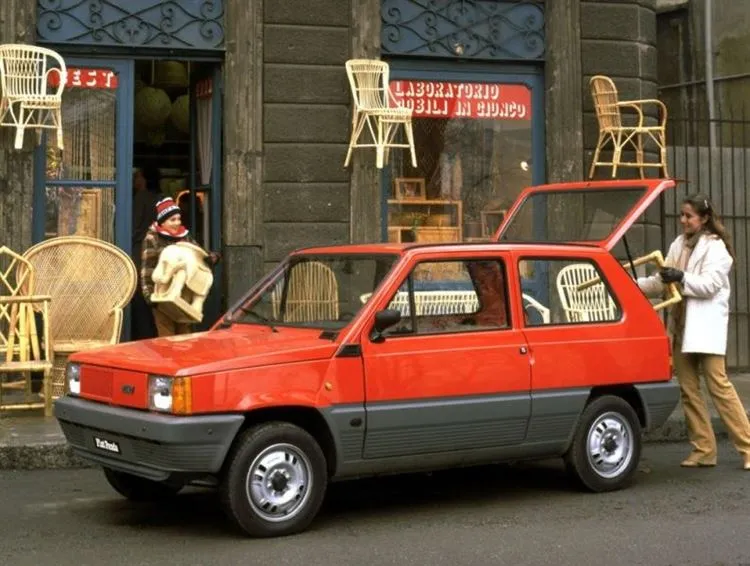
The fashion of those years contributed to simplicity in design. For the sake of rationalism, Giugiaro made the car as “box-shaped” as possible, that is, consisting of flat panels connected at almost right angles. And in order not to get a refrigerator, with just a few strokes, the maestro turned a utilitarian two-door little car into a quite nice and even somewhat stylish hatchback.
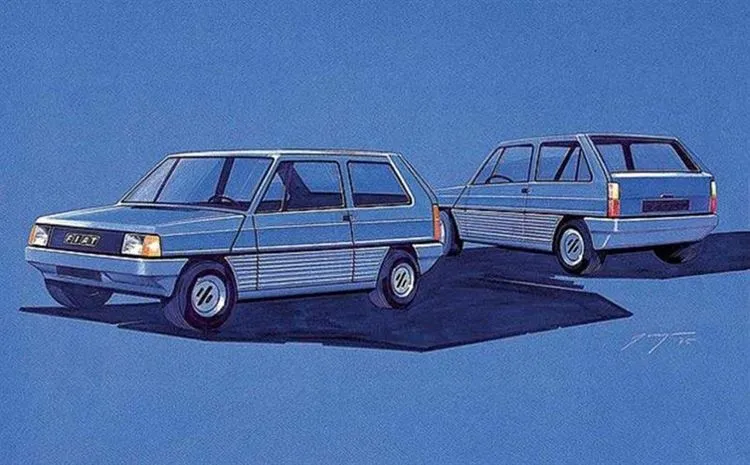
The missing rear wheel arches are not a problem, because many cars of the next decade, like the Audi 100 C3, received exactly the same solution. But Giugiaro went even further! Placing the wheels at the corners of the body with a maximum increase in the wheelbase is a simple trick that was resorted to even before the Italian master. But the use of completely flat glasses (the side windows on the left and right are the same), including the windshield (!) – oh, this at the end of the seventies can be safely called an extraordinary decision. At the same time, the serial Panda did not at all give the impression of some kind of “lawn mower with a roof”, since the Italian worked out the proportions and detailing to the smallest detail.
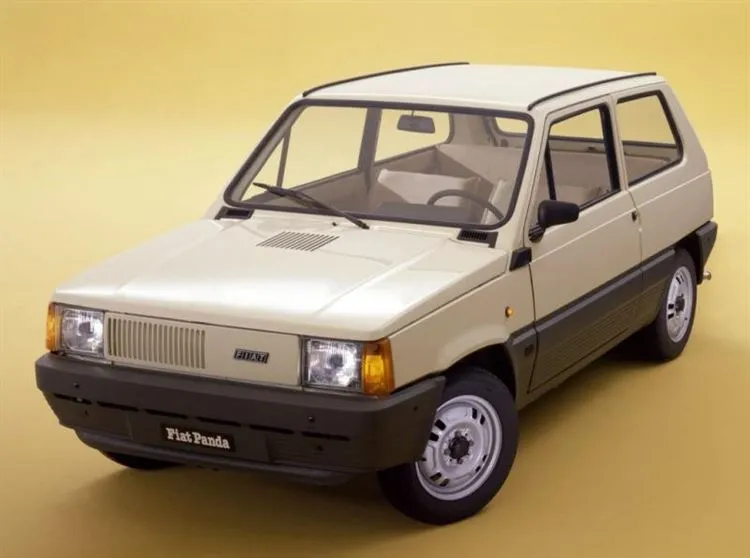
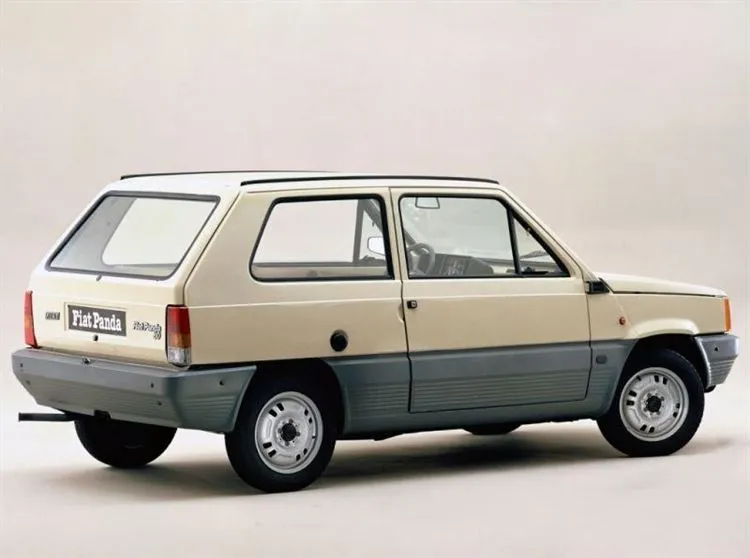
Even now, the Italian subcompact looks anything but archaic. And if you consider angularity irrelevant, remember the unfading Gelik and the new Suzuki Jimny
In pursuit of technical minimalism, the designers got so carried away that they tried to abandon the traditional mechanical cable-operated windows with a rotating “oar” in favor of a handle that had to be moved up and down, thus moving the glass in the opening. And the role of internal door handles, which are absent as a class on the same Logan of the first generation, was planned to be assigned to loops. However, the Italians still stopped in time and returned the usual elements to the interior, while leaving such unusual solutions as a flat windshield, one “janitor” and a luggage rack at the bottom of the dashboard.
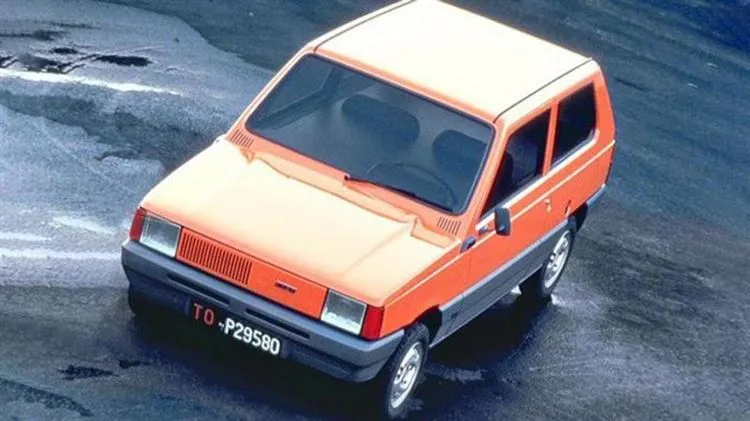
In some prototype solutions, the Italians surpassed even the “renoshnikov” with their missing internal handles on the first Logan
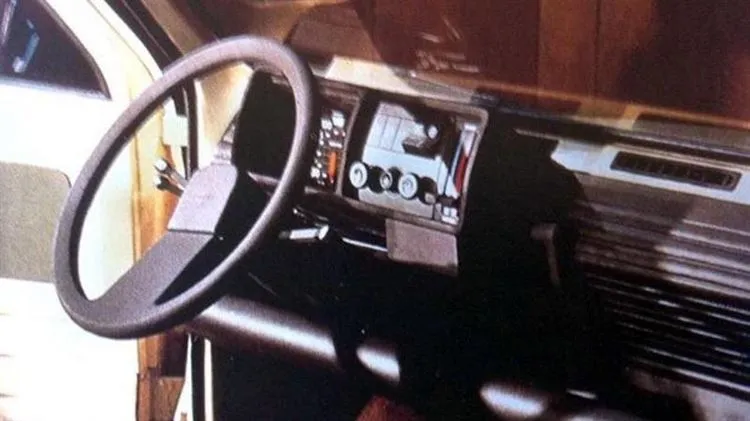
In some prototype solutions, the Italians surpassed even the “renoshnikov” with their missing internal handles on the first Logan
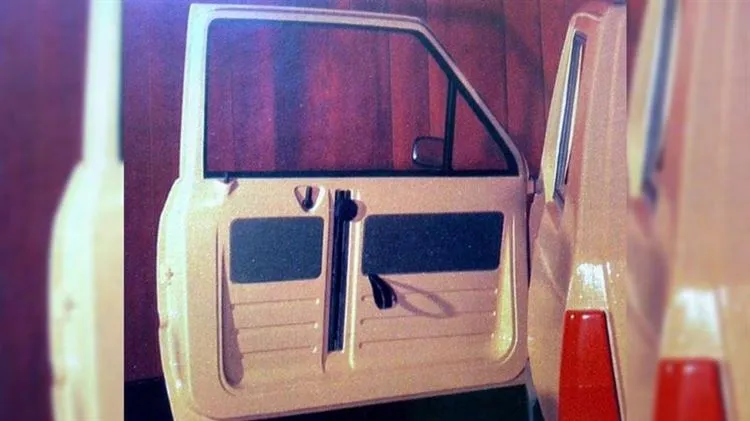
In some prototype solutions, the Italians surpassed even the “renoshnikov” with their missing internal handles on the first Logan
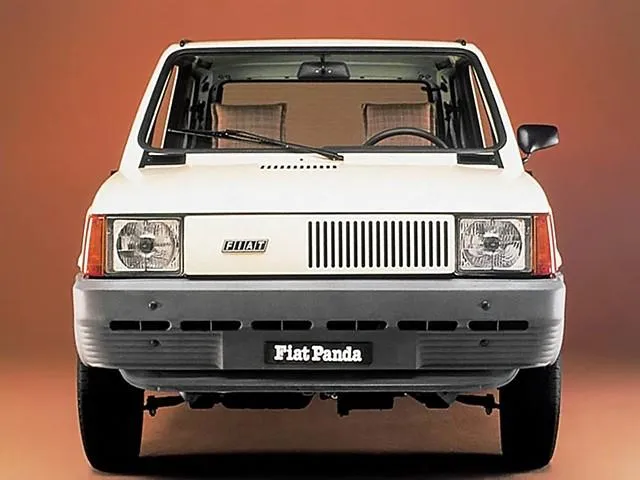
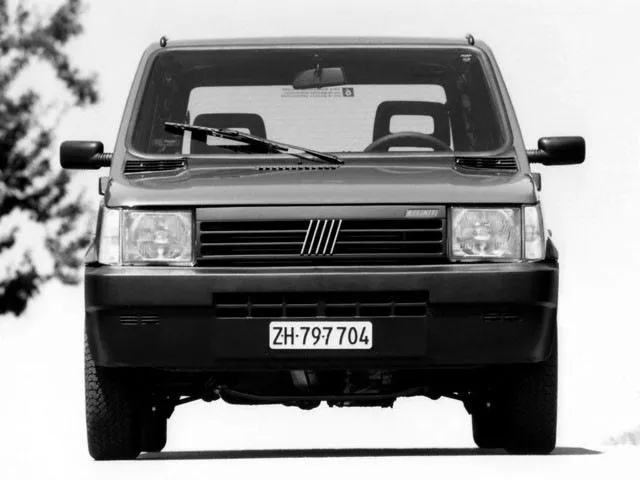
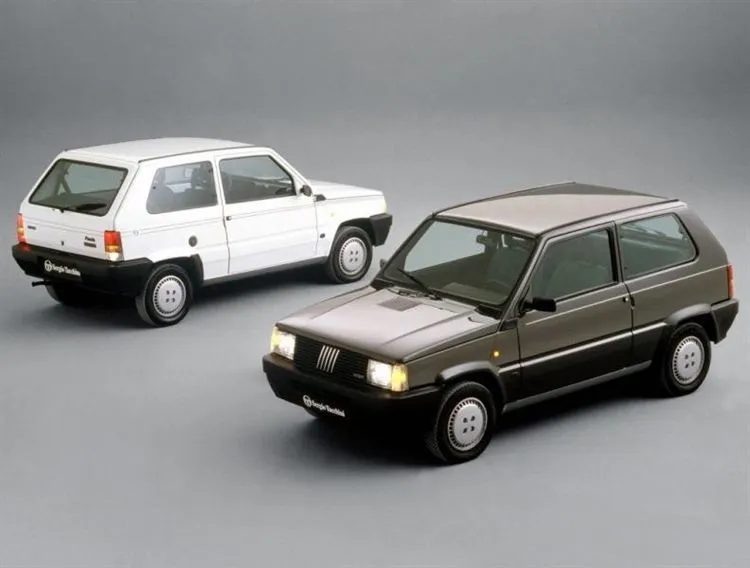
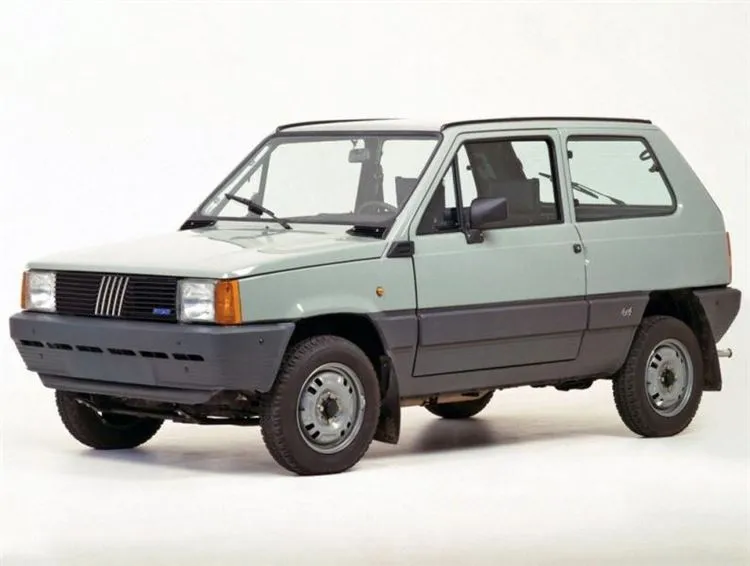
It is easy to distinguish later versions by the “four oblique sticks” on the grille
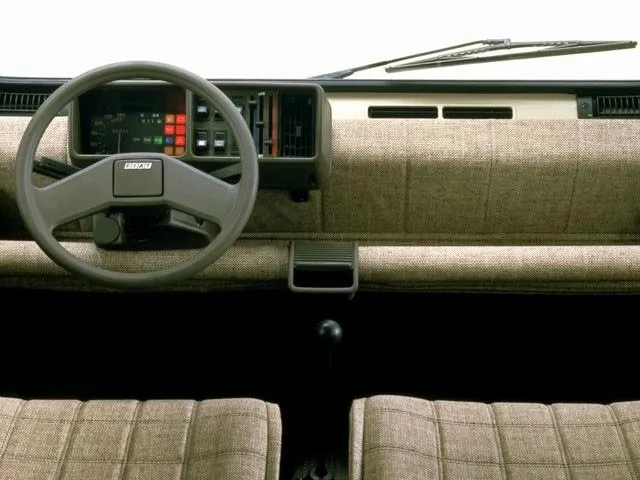
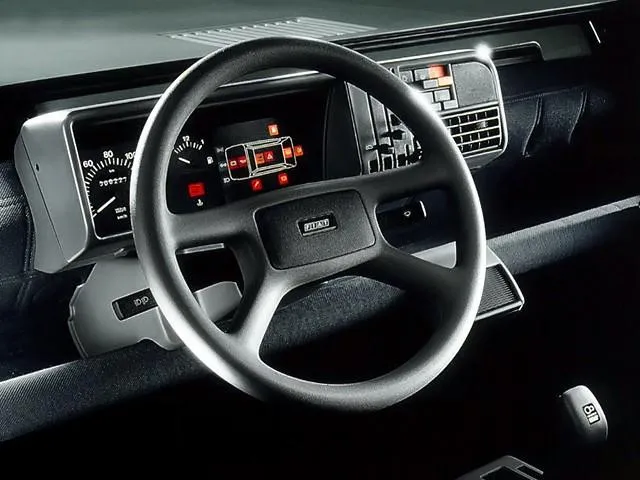
In 1986, the car was modernized, which also affected the interior (second photo)
The spare wheel, for the sake of maximizing the usable space, was exiled to the engine compartment – exactly to the very place where it ended up in the Soviet Tavria.
Did Panda look primitive? Not at all. A simple, concise, but original and memorable image of a cosmopolitan car, which both an 18-year-old boy and his seventy-year-old grandmother could equally successfully and effectively dissect. And this, of course, was the merit of Giugiaro.
MYTH 2: Fiat Panda was extremely primitive
myth
Panda entered the roads of the world more than four decades ago – in 1980. In the early modifications, the rear suspension had semi-elliptical springs, and under the hood, in addition to the four-cylinder liquid-cooled engine, one could also find a two-cylinder “air vent” from model 126. Agree that such a set hardly allowed Pandu's contemporaries to consider a particularly modern or technically advanced car.
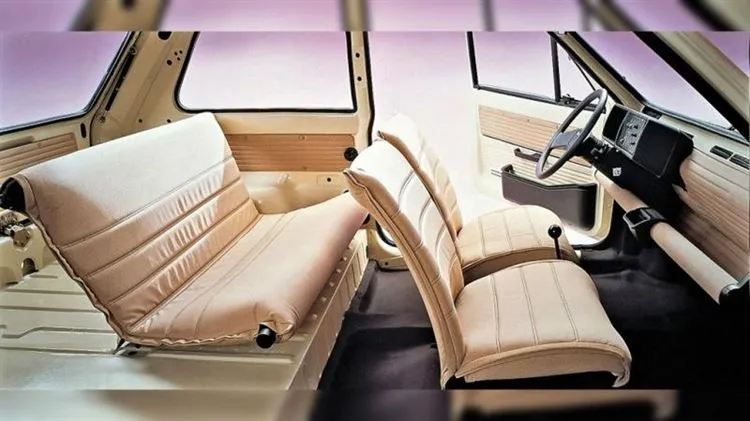
Depending on the year and configuration, the interior looked different, but bare metal was present in the cabin anyway.
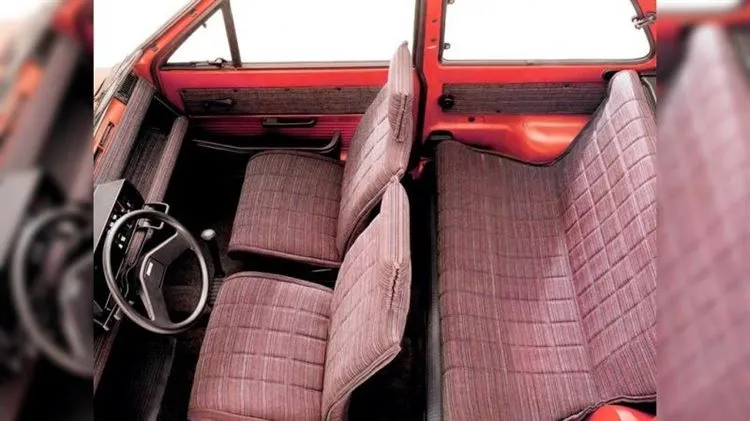
Depending on the year and configuration, the interior looked different, but bare metal was present in the cabin anyway.
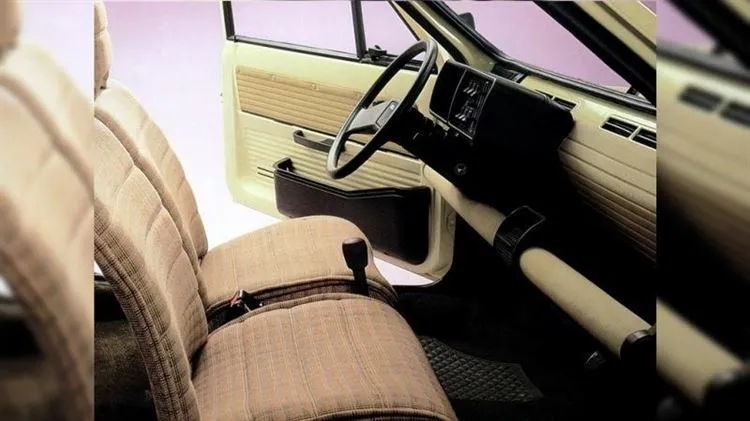
Depending on the year and configuration, the interior looked different, but bare metal was present in the cabin anyway.
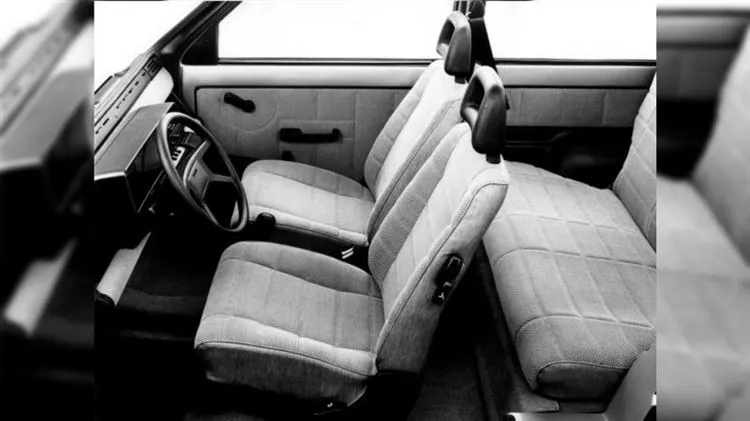
Depending on the year and configuration, the interior looked different, but bare metal was present in the cabin anyway.
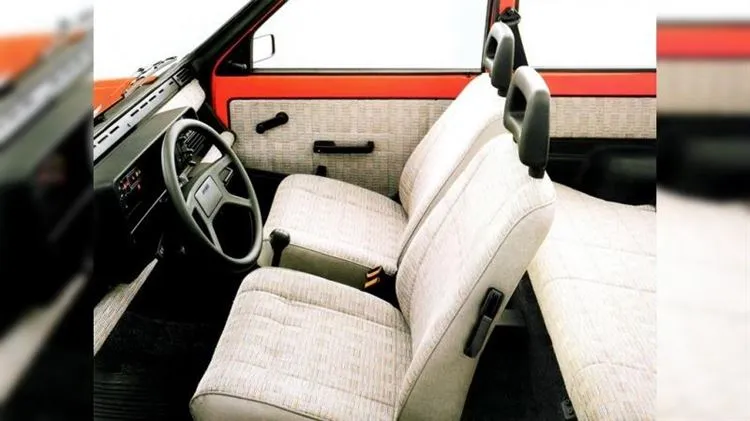
Depending on the year and configuration, the interior looked different, but bare metal was present in the cabin anyway.
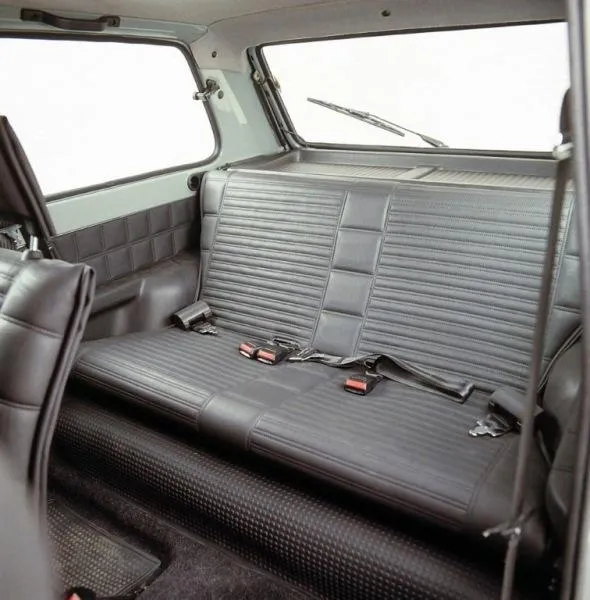
Pay attention to the number of seat belt buckles – Panda was positioned as a five-seat car!
And in vain! Indeed, in other versions, the car received an original Omega-type dependent suspension, which, due to the properties and inherent kinematic elasticity of the carrier tube, provided each rear wheel with a certain degree of freedom of movement from each other. At the same time, instead of springs in the suspensions, there were springs, and in front, traditionally for front-wheel drive hatchbacks, MacPherson struts were used.
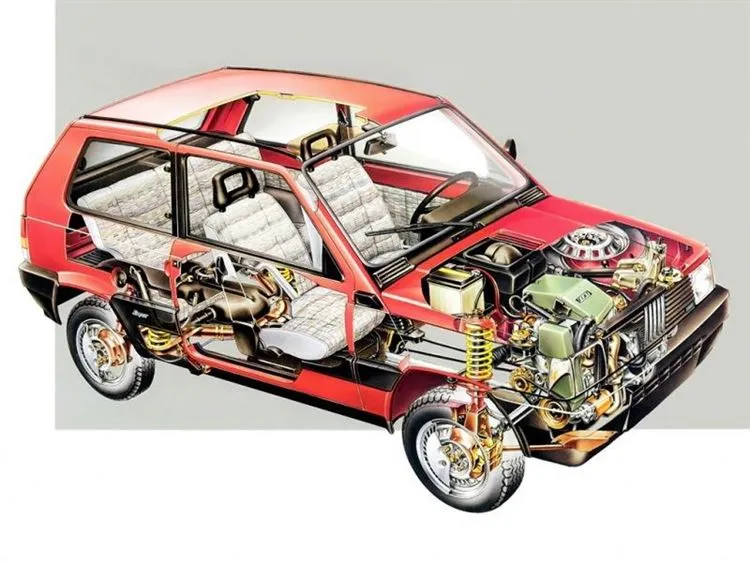
Fiat Panda turned out to be so good in terms of technology that it was appreciated not only by buyers, but also by journalists: the car was able to take second place in the 1981 European Car of the Year competition, losing only to the Ford Escort. Giugiaro, on the other hand, received the Golden Compass Award for this project, repeatedly calling this machine his favorite and most charming brainchild in interviews.
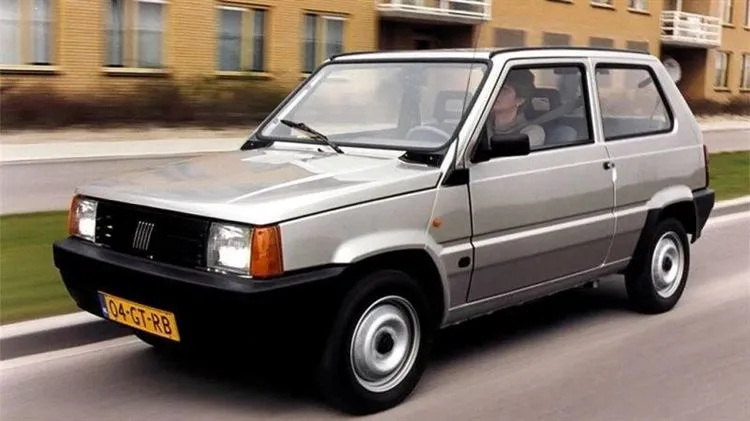
Even the most “powerful” 1000 cc version barely accelerated to 140 km / h, and in the corners the car rolled mercilessly, breaking the sidewalls of its narrow 135SR13 or 145SR13 tires
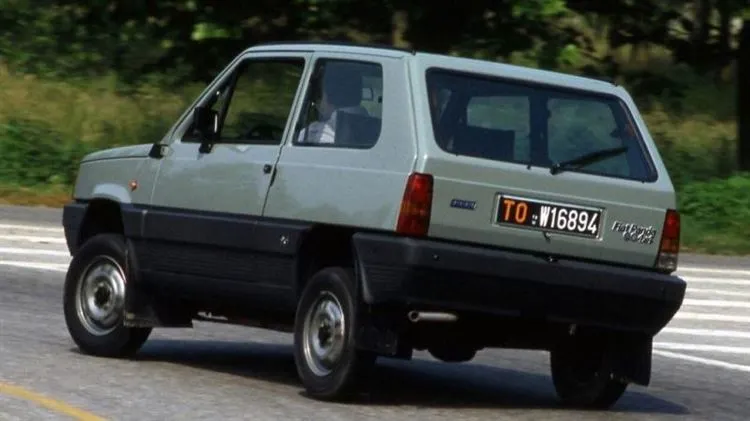
Even the most “powerful” 1000 cc version barely accelerated to 140 km / h, and in the corners the car rolled mercilessly, breaking the sidewalls of its narrow 135SR13 or 145SR13 tires
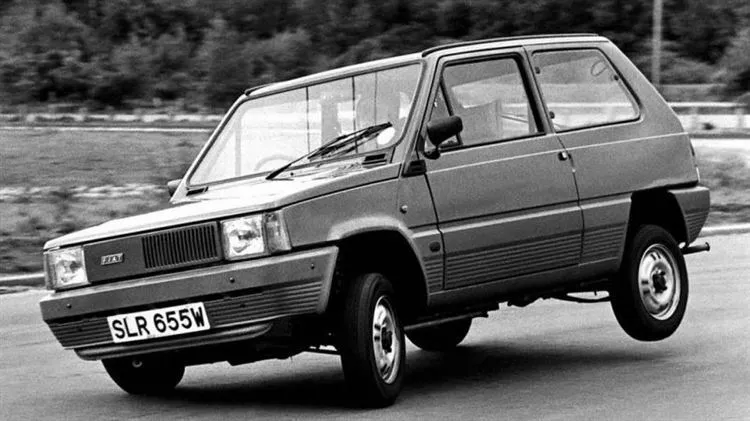
Even the most “powerful” 1000 cc version barely accelerated to 140 km / h, and in the corners the car rolled mercilessly, breaking the sidewalls of its narrow 135SR13 or 145SR13 tires
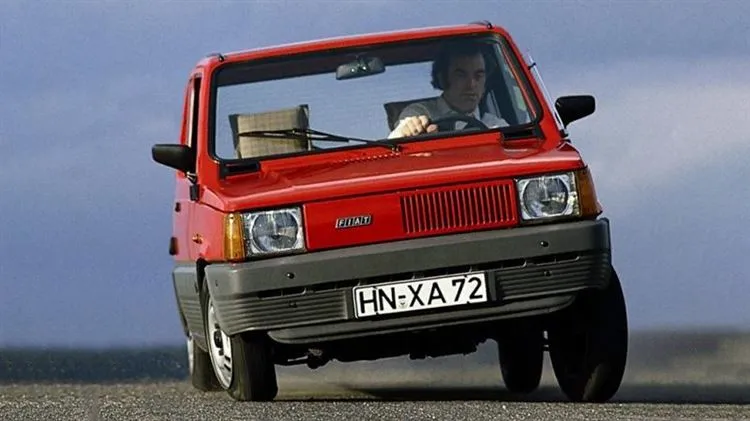
Even the most “powerful” 1000 cc version barely accelerated to 140 km / h, and in the corners the car rolled mercilessly, breaking the sidewalls of its narrow 135SR13 or 145SR13 tires
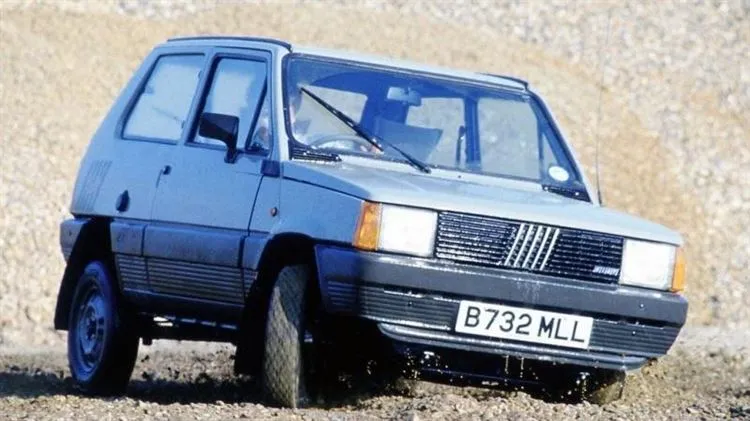
Even the most “powerful” 1000 cc version barely accelerated to 140 km / h, and in the corners the car rolled mercilessly, breaking the sidewalls of its narrow 135SR13 or 145SR13 tires
Another technical highlight of the Fiat Panda after modernization is the engine of the FIRE family, that is, the Fully Integrated Robotized Engine. The “fiery” motor was produced in a fully automated production with hundreds of robots, and the engine design was also developed on a computer using the finite element method. Despite the cast iron cylinder block and five-bearing crankshaft, the motor with a small center distance (77 mm) and no water passages between the cylinders turned out to be very light (only 69 kg), because it consisted of only 273 parts, which was about a third less, than analogues of the same working volume. Of course, the valves were located in the head, the gas distribution mechanism was driven by a belt, not a chain, and the intake and exhaust were smashed to different sides of the aluminum block head.
MYTH 3. Panda had an all-wheel drive version
truth
Even outwardly, the Panda looked more like not our Tavria or some Ford Fiesta, but the Soviet VAZ-2121 with its short overhangs, vertical side-walls and aft with an almost sheer slope of the third door. In Panda, however, it reached the rear bumper, as on VAZ station wagons, and the lights did not limit the width of the opening at all.
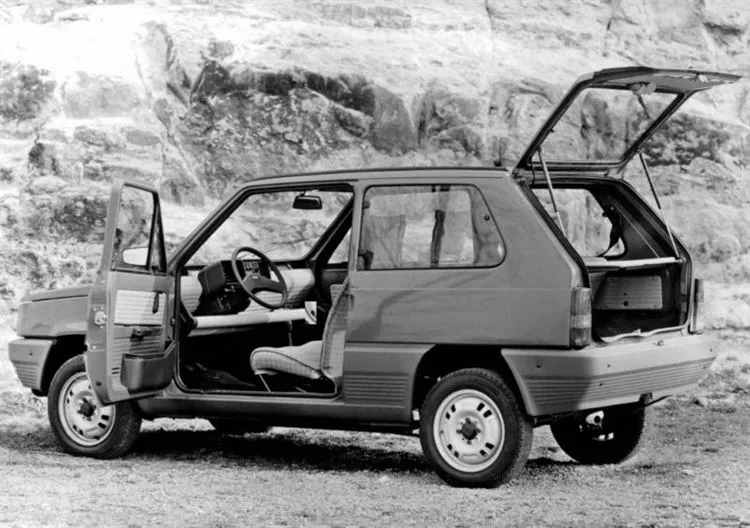
On this, perhaps, the similarity with the all-wheel drive Niva ended. Exactly until 1983, until the 4×4 version appeared in the gamut of the Italian small car! At that time, only a few models had all-wheel drive, unless, of course, we are talking about permanent, and not plug-in – only the Togliatti all-wheel drive and the British Range Rover could boast of this. The “part-time” camp was more extensive, but a compact small car with a pair of driven axles is almost out of the ordinary, with rare exceptions like the all-wheel drive Citroën Méhari, which was produced just between 1980 and 1983. It's funny that in the first year of the release of the Mehari 4×4, Panda appeared, and in the last – its all-wheel drive version. Most likely, such a Panda appeared just because Niva fell in love in Europe,
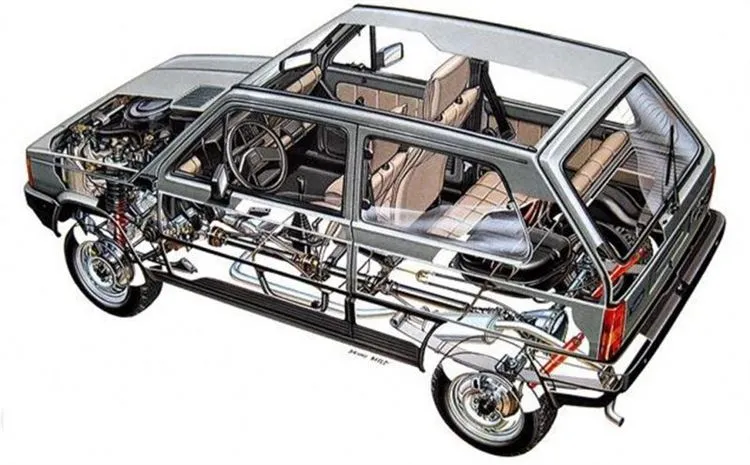
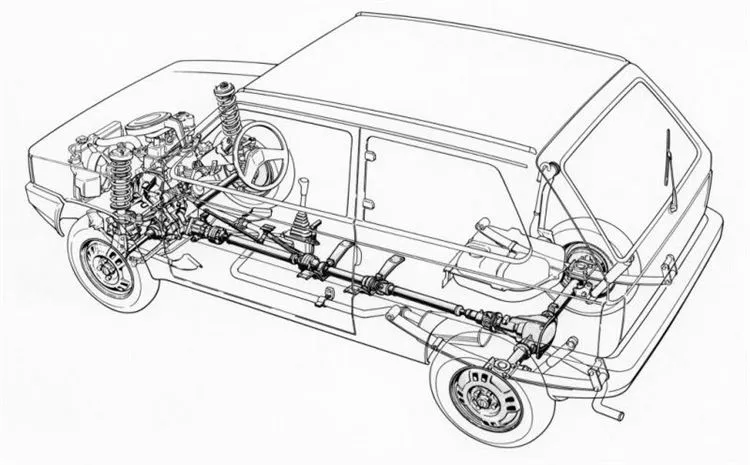
Panda 4 × 4 was considered by some Europeans as an alternative to the Soviet Niva, although in terms of cross-country ability, there was a differential-distributing gap between these machines.
It was equipped with a pair of gearboxes and cardan shafts, but the rear wheels were set in motion by the transmission only when the driver forcibly “activated” them. Features of this version are longitudinal springs and the presence of a vacuum booster in the brake drive. However, the all-wheel drive Panda can by no means be considered an analogue of our Niva, or the all-wheel drive Audi of those years, because the Italian car had no center differential, and the rear-wheel drive could only be connected off-road and in the speed range up to 40 km / h – mainly at driving in a straight line, because in turns the wheels of the front and rear axles would pass a different path.
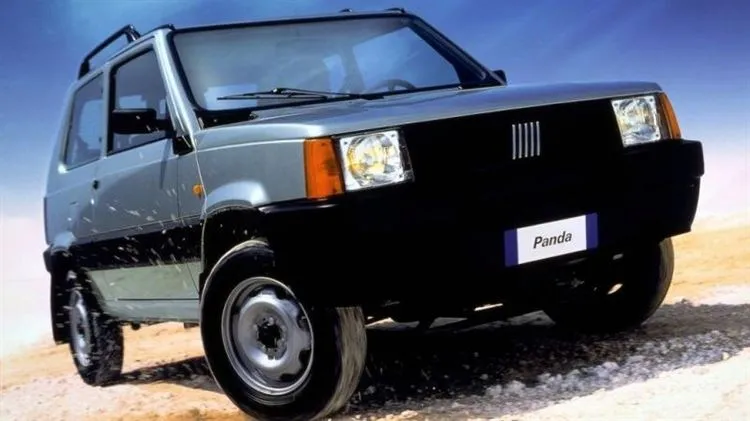
The all-wheel drive version allowed Fiat's “advertisers” to effectively beat this advantage of the machine in advertising photos.
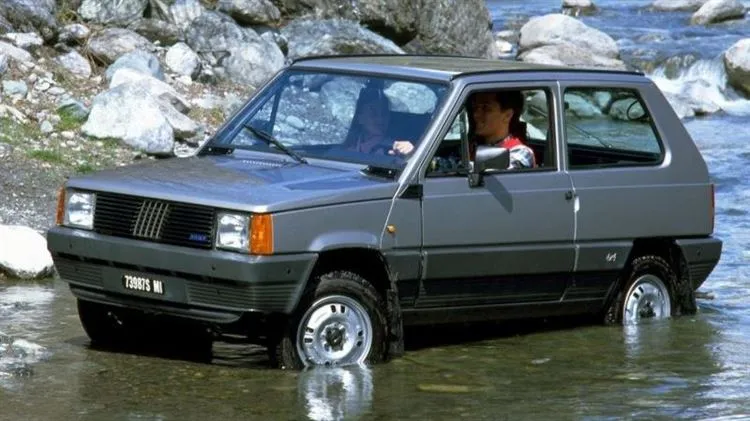
The all-wheel drive version allowed Fiat's “advertisers” to effectively beat this advantage of the machine in advertising photos.
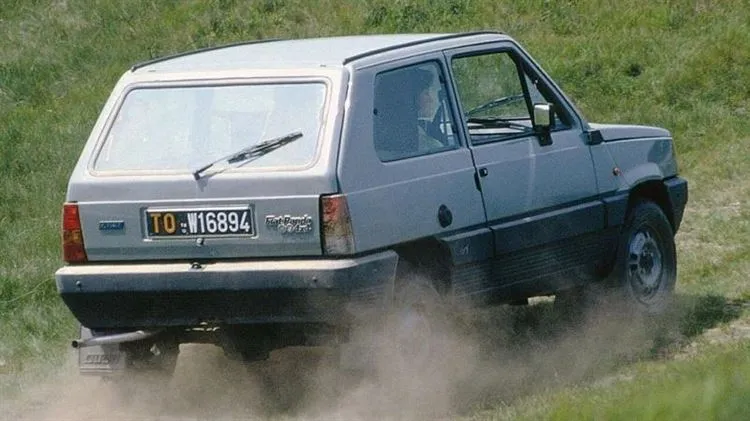
The all-wheel drive version allowed Fiat's “advertisers” to effectively beat this advantage of the machine in advertising photos.
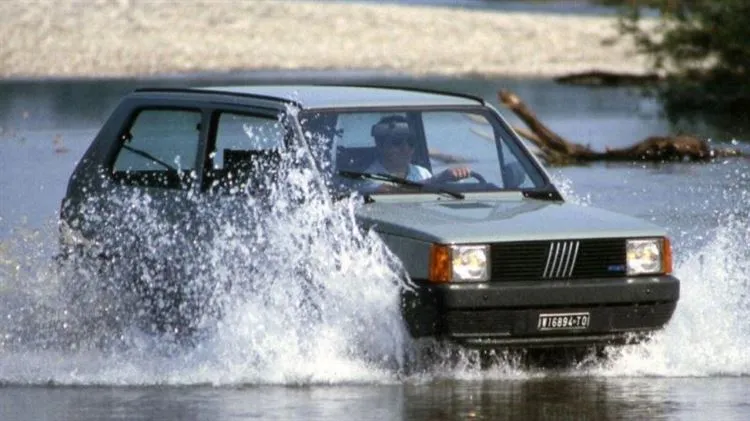
The all-wheel drive version allowed Fiat's “advertisers” to effectively beat this advantage of the machine in advertising photos.
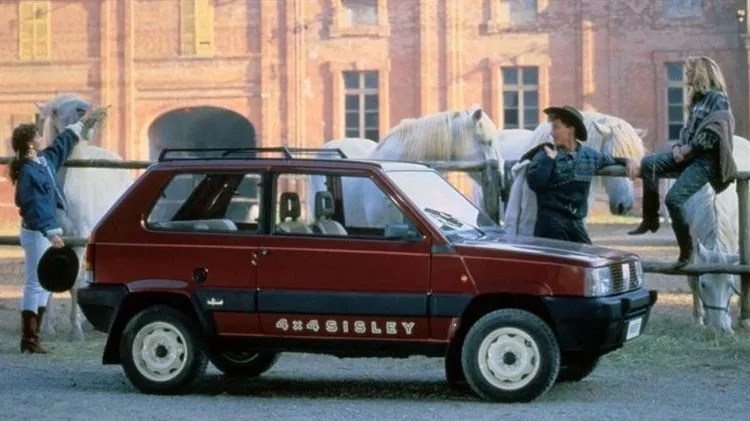
The all-wheel drive version allowed Fiat's “advertisers” to effectively beat this advantage of the machine in advertising photos.
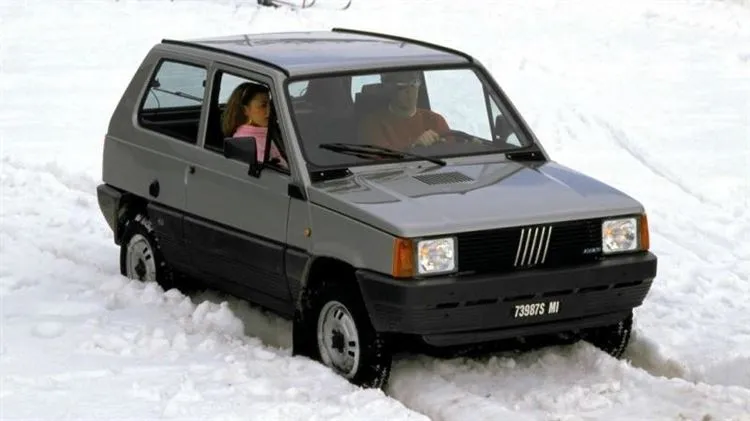
The all-wheel drive version allowed Fiat's “advertisers” to effectively beat this advantage of the machine in advertising photos.
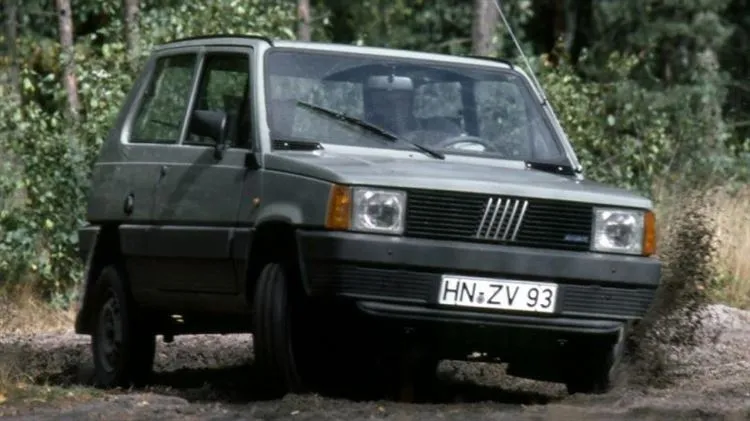
The all-wheel drive version allowed Fiat's “advertisers” to effectively beat this advantage of the machine in advertising photos.
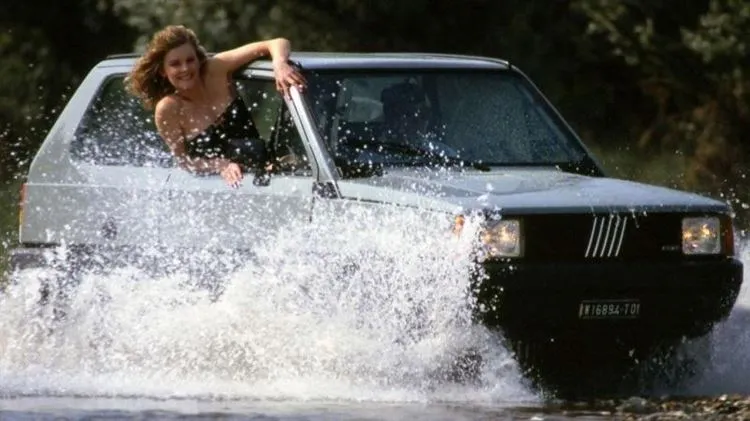
The all-wheel drive version allowed Fiat's “advertisers” to effectively beat this advantage of the machine in advertising photos.
Therefore, from the point of view of the transmission, Panda, with a certain stretch, can be considered an analogue of the Lutsk “Volynyanka”, in which, if necessary, the drive of the rear axle was also forcibly connected.
MYTH 4. This car was going to be produced in the USSR
truth
At the end of the eighties in Yelabuga, a long-term construction was slowly but obviously dying – the construction of a tractor plant-auto giant. Realizing that this enterprise could not be born in the new economic conditions, the Council of Ministers decided to launch an automobile plant on this site, adopting a corresponding resolution in July 1988 for this. It provided for the launch of the first production line in 1991, the second – in 1993, and the third – in 1995. The maximally compressed planned terms have been shattered by the new economic realities. The currency so needed for the purchase of equipment was sorely lacking, support for new projects in the automotive industry was transferred to “self-financing” back in 1987, and the decree of the USSR government on the development of production capacities in 16 related industries remained in agreement forever.
In general, already in 1990, the government was well aware that ElAZ could not be pulled on its own and no new Oka could be produced there. Therefore, in a hurry, they began to look for partners abroad, for which negotiations were held with representatives of Volkswagen, Suzuki, Mitsubishi, Ford… All of them were ready to supply either finished cars or car kits for their assembly, but sharing production secrets or selling equipment is other. At that moment, officials remembered Fiat, with which a quarter of a century ago everything not only grew together, but resulted in the construction of a huge city-forming enterprise that feels relatively good even in the conditions of the turbulence of the period of glasnost, self-financing and perestroika. At the same time, the first stage of the production of ElAZ, judging by the information leaked to the press, provided for the production in Yelabuga of Fiat Panda! This message caused a resonance and a lot of discussions.
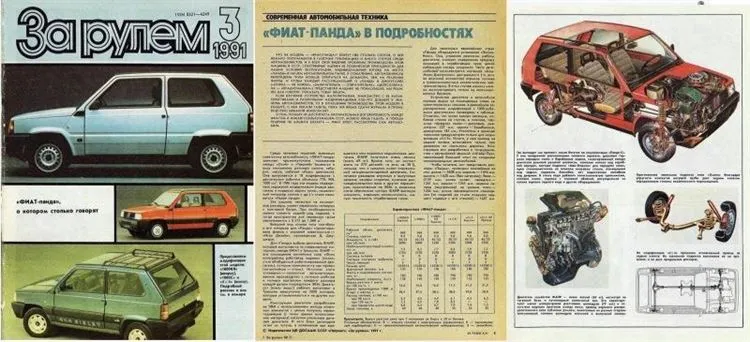
Fiat Panda became a real star of the March 1991 issue of Za Rulem magazine, adorning the cover of
Some argued that the model was outdated and its release 11 years after the start of production in Italy was already meaningless. Others, on the contrary, saw in this simple and utilitarian machine, if not the Soviet “Zhuk”, then at least the development of the “one hundred and twenty-fourth theme”, only in a different place and on a front-wheel drive platform.

The topic of Elabuga was repeatedly raised on the pages of the oldest Soviet, and then the current auto edition. The panda was there too.
No one saw competitors in an Italian car either in Samara or Tavria for a simple reason: in the conditions of a long-term deficit, any car found its buyer, and the battle for his wallet at that time and in that place would have looked simply ridiculous, because the solvent deferred demand many times exceeded offer.
In the second stage in Yelabuga, they were supposed to begin production of the A93 model, an independent-joint model, which later found its embodiment in Berezovsky's project called the All-Current Automobile Alliance. Truly, at that time everything was mixed up in the house of the automobile-Soviet – and horses, and people, and pandas…
Alas, neither Fiat nor any other car, including the former Opel Kadett with the Daewoo nameplate, smelled in Yelabuga, and initially the Kama Tractor Plant was eventually transformed into the Alabuga free economic zone, which then became a licensed assembly plant tractors of the Minsk Tractor Plant, as well as an enterprise for the production of special equipment and equipment for the oil industry.
MYTH 5. The first generation Panda was produced only with a gasoline engine.
myth
As we have already recalled in previous sections, the model was offered with gasoline engines – a two-cylinder “air vent” and a four-cylinder 900 cc engine of a traditional design. However, in addition to the 50-strong 4×4 thousand-cube modification, under the hood of the Italian subcompact one could also find an engine that ran on heavy fuel. The 1.3-liter unit developed 37 “horses”. However, if you think that this is the end of the motor variations, then you are deeply mistaken – in 1990, the Italians introduced a modification of the Panda Elettra.
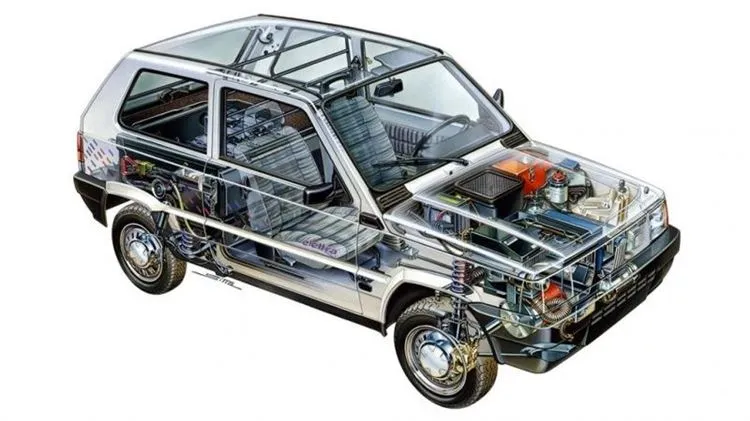
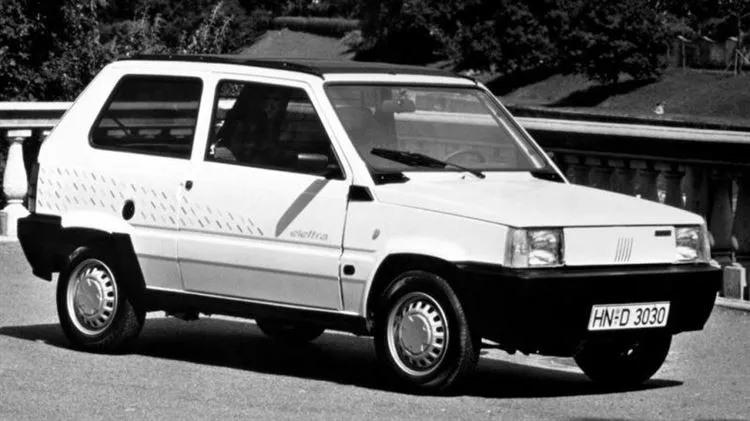
Long before Tesla: the compact Fiat was powered not only by gasoline or “solar oil”, but also by electricity!
The batteries took the place of the second row of seats, and with a curb weight of 1150 kg, the electric motor produced 18 hp, but already in 1992 the weight of the car was reduced, and the engine power, on the contrary, was increased to 24 hp. True, the “electro-Panda” did not become truly popular, because the car turned out to be heavy, not very practical and rather slow-moving.
MYTH 6. Panda was one of the cheapest cars in Germany
truth
In the jaded German market, there was room not only for the Porsche 911, but for much more practical, utilitarian, and cheaper cars that cost about the same as a set of Porsche wheels.
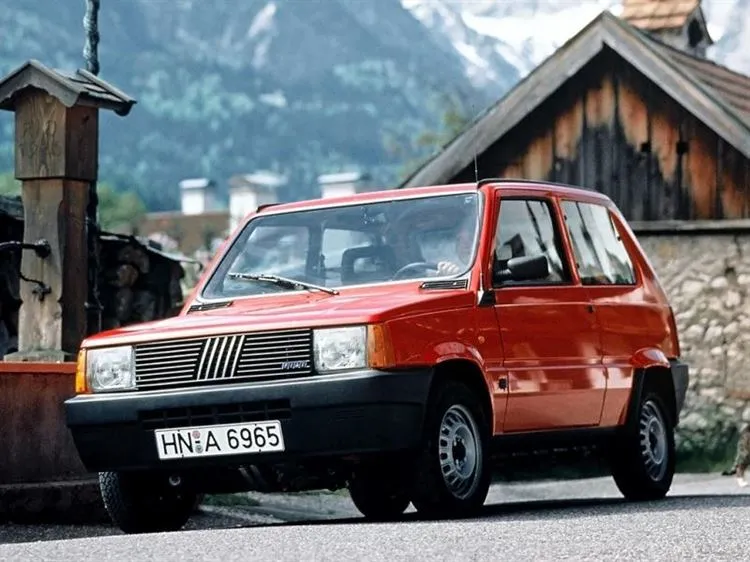
Panda did not become a noticeable element of the German landscape, but the Italian manufacturer in Europe definitely managed to pinch off some piece of the “budget pie”
The Italian hatchback was a very affordable car, although our Zhiguli were still cheaper. So, the cheapest modification of Lada Nova Junior with a 1200 cc VAZ-2101 engine and factory designation 21051 was estimated in February 1991 at only 8,990 Deutschmarks, while Fiat Panda – at 10,390 Marks.
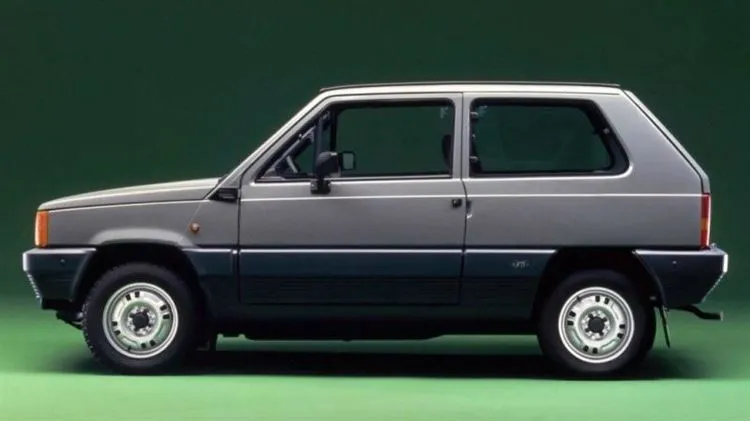
If desired, you can even distinguish the modification of the Panda in profile: after restyling, the plastic “body kit” around the perimeter of the car disappeared and a rear volumetric arch appeared. “Zhigulev” pattern of stamped wheels – a sign of late modification 4×4
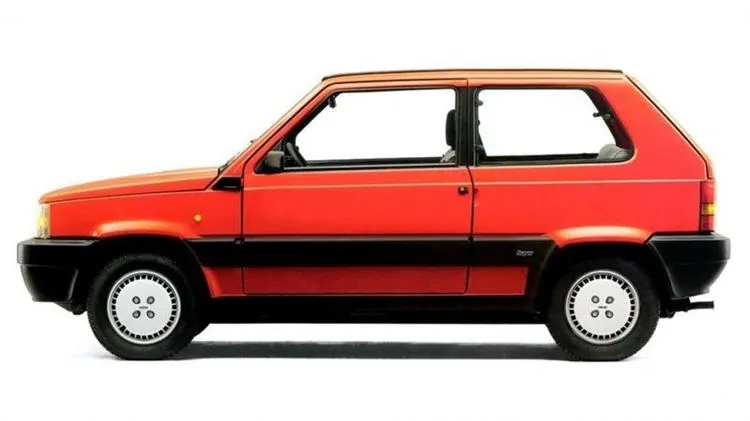
If desired, you can even distinguish the modification of the Panda in profile: after restyling, the plastic “body kit” around the perimeter of the car disappeared and a rear volumetric arch appeared. “Zhigulev” pattern of stamped wheels – a sign of late modification 4×4
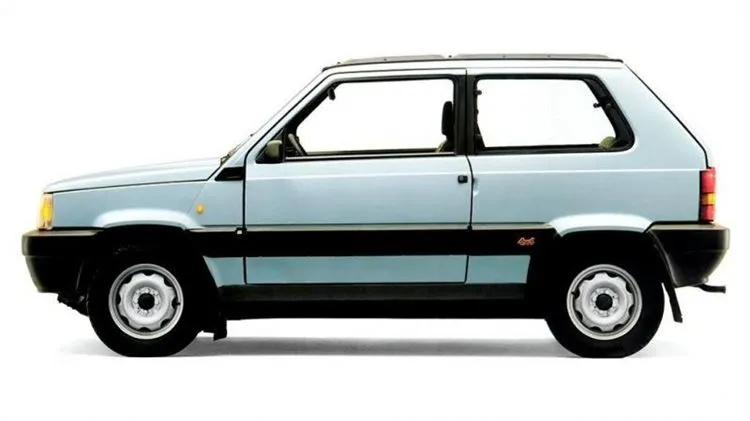
If desired, you can even distinguish the modification of the Panda in profile: after restyling, the plastic “body kit” around the perimeter of the car disappeared and a rear volumetric arch appeared. “Zhigulev” pattern of stamped wheels – a sign of late modification 4×4
It is interesting that the turned Panda called SEAT Marbella cost less – 9675 DM, but our Samara with a 1.1-liter engine 21081 started from 10,990 marks. Other cars like Nissan Micra, Wartburg with VW engine and Ford Fiesta cost almost one and a half times more – from 13,450 to 16,390 marks.
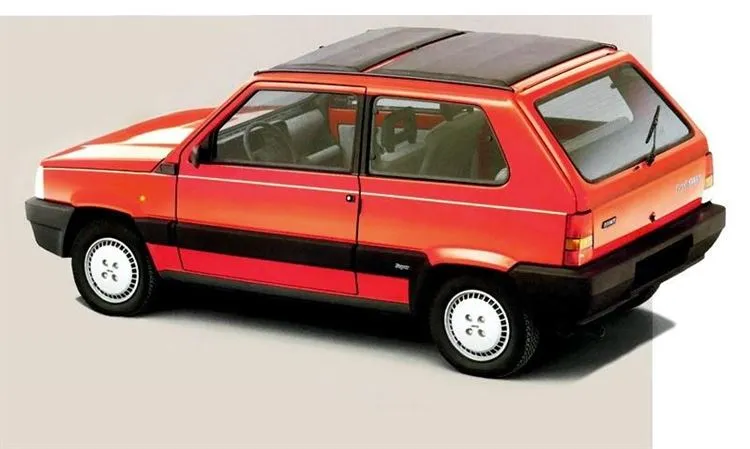
Some modifications of this car even had a sliding fabric roof!
That is, in Germany, Panda's obvious competitors were only obsolete Zhiguli or the Soviet “eight”, which at that time was no longer the last or penultimate peep of fashion. True, potentially our Samara was a class higher, but in practice, many potential buyers preferred a “purely Western” car.
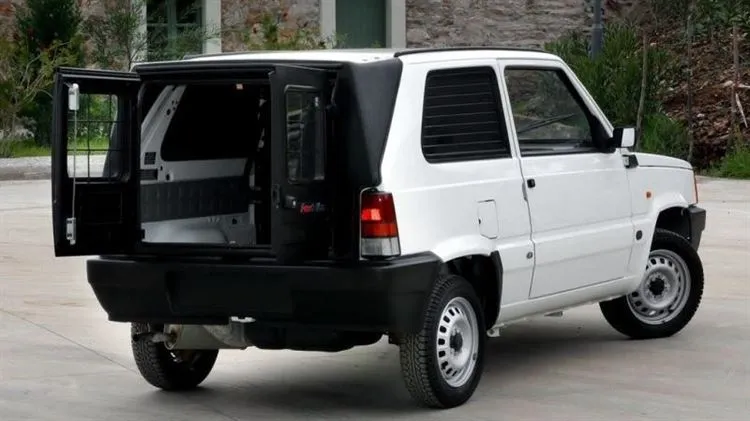
Load oranges in barrels: Fiat Panda Van was distinguished by “deaf” side windows and the presence of a plastic “extension” with hinged doors
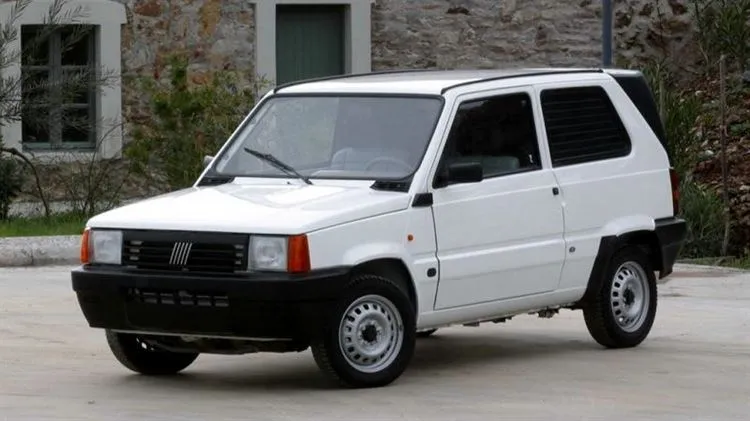
Load oranges in barrels: Fiat Panda Van was distinguished by “deaf” side windows and the presence of a plastic “extension” with hinged doors
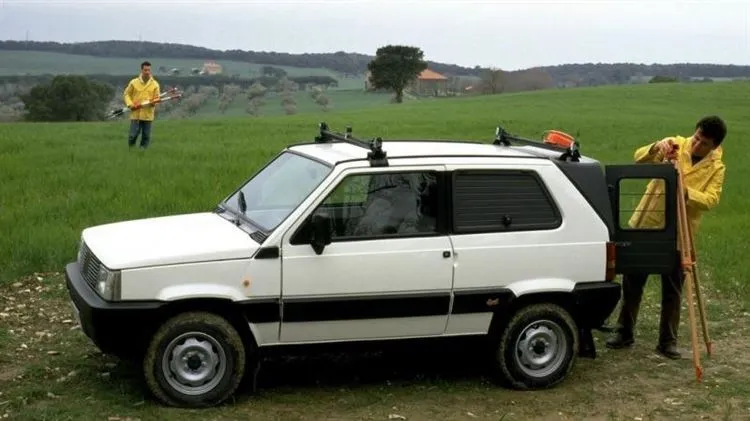
Load oranges in barrels: Fiat Panda Van was distinguished by “deaf” side windows and the presence of a plastic “extension” with hinged doors
MYTH 7. The first generation FIAT Panda was mass-produced, but was produced for a short time.
myth
Already in July 1984, the millionth Panda rolled off the assembly line, by the end of 1985, about 1.4 million cars were produced, and by the end of the summer of 1988, a figure of 2,000,000 units was taken. Thus, this Fiat was one of the most popular cars of the brand and class, produced until 2003 (!)! It sounds a little fantastic, but in just over two decades, the Italians managed to produce and sell four and a half million cars – that is, only a little less than in 18 years the representatives of the very first family (4.8 million copies) were produced in the USSR.
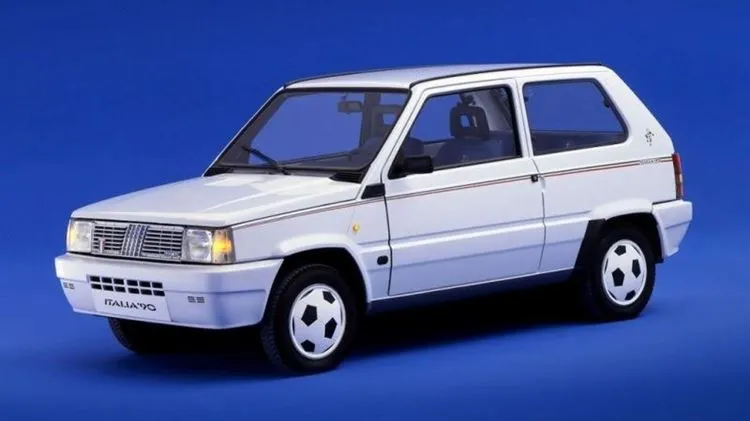
The car had quite a few “exclusive-nominal” limited editions, which differed in exterior decor and interior trim elements.
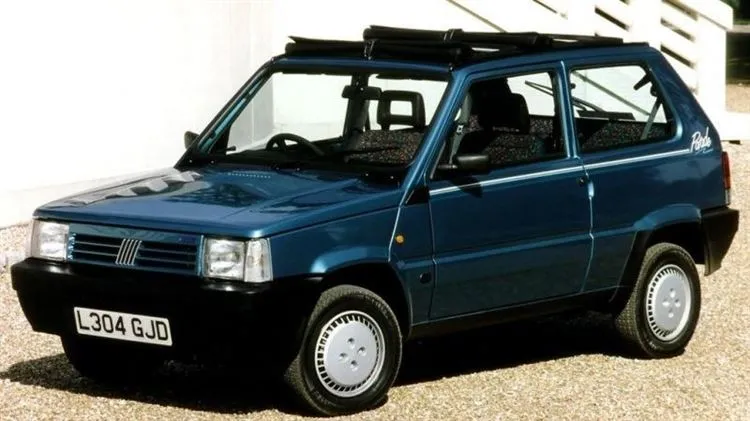
The car had quite a few “exclusive-nominal” limited editions, which differed in exterior decor and interior trim elements.
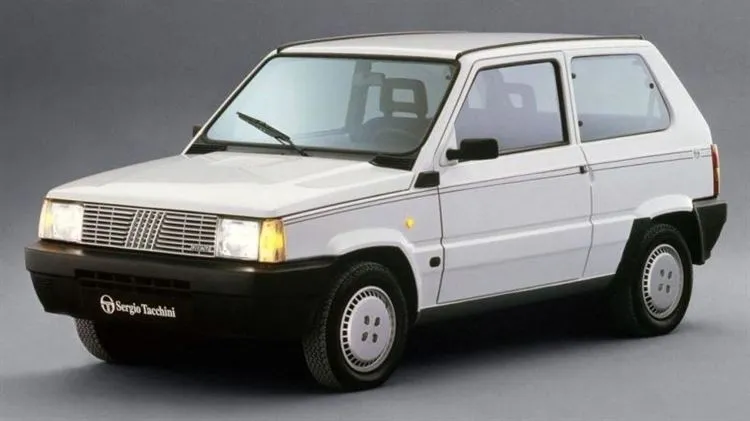
The car had quite a few “exclusive-nominal” limited editions, which differed in exterior decor and interior trim elements.
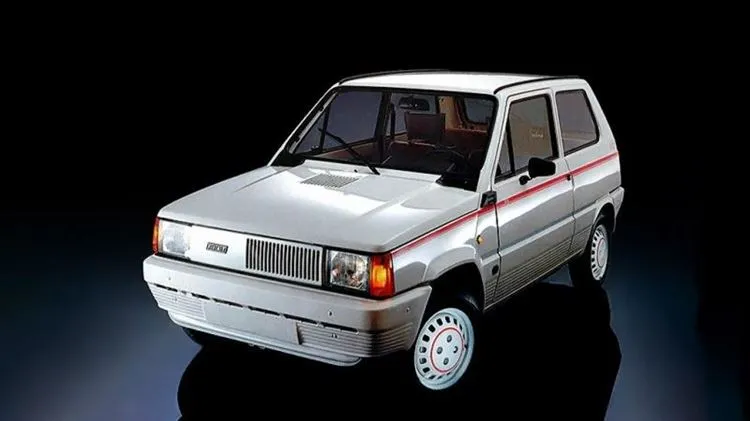
The car had quite a few “exclusive-nominal” limited editions, which differed in exterior decor and interior trim elements.
Thus, this Fiat was indeed one of the most massive models of the Italian concern, but it was produced not just for a long time, but for a very long time by world standards. After all, even the “one” and its derivatives in the form of modifications 21011/21013 in Togliatti were produced five years less. Of course, the “six” or “seven” at the VAZ was produced longer, but by world standards, the first generation Panda can be considered a real long-liver.