
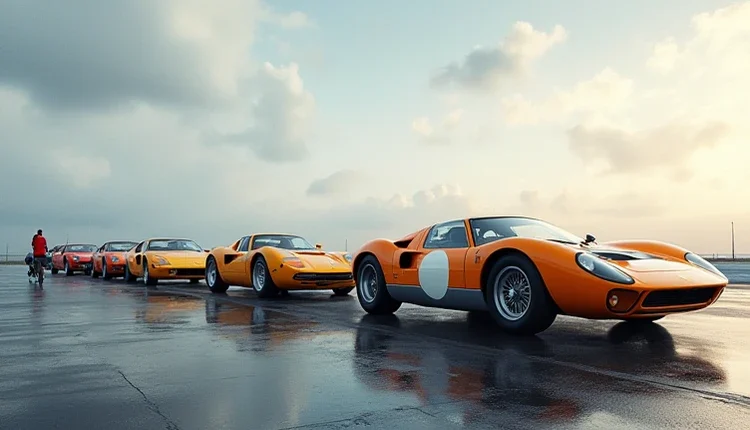
History of Sports Car Development: From the Beginning to the Present Day
How did the passion for speed begin? At what point did man decide that a car could be not only a means of transportation, but also an embodiment of power, speed, and engineering excellence? These questions make us think about how sports cars paved the way from a simple idea to an iconic phenomenon. The history of sports cars is not just a story about cars; it is a journey into the world of innovation, technology, and the human quest for perfection.

🚗🚀 The Beginning of the Era of Speed: The Appearance of the First Sports Cars
When we talk about sports cars, it is difficult not to remember how they appeared and why. The history of sports cars begins at the beginning of the 20th century, when the automobile industry was just starting to gain momentum. Back then, cars were a novelty, and their main purpose was to move people from point A to point B. However, less than a decade later, people began using cars for racing.
The first cars that could be called sports cars were based on regular road cars. Early racers sought to modify their cars for racing, improving their speed and handling. One such car was the Blitzen Benz, which set a speed record in 1909, reaching 140 mph (228 km/h). This was an era when speed became a symbol of status and engineering prowess, and manufacturers began developing cars designed exclusively for the race track.
📜 Key moments in the birth of sports cars
- 1894: The first automobile races were held between Paris and Rouen, featuring the earliest models of automobiles.
- 1900s: The first dedicated racing cars appeared, such as the Mercedes 35 HP and the Blitzen Benz.
- 1910s: Development of the motorsport industry, the emergence of racing as a mass spectacle.
🏁 Legends of the Automotive Industry: The Birth of Iconic Sports Cars
After World War I, motorsports gained popularity and manufacturers began to focus more on creating cars specifically designed for racing. During this period, brands such as Ferrari, Aston Martin, and Porsche entered the arena. These companies became symbols of luxury and speed, creating cars that not only competed in races but also became objects of desire for enthusiasts around the world.
Ferrari, founded by Enzo Ferrari in 1929, quickly gained a reputation in the world of motorsport. Ferrari cars became the benchmark for performance and design, and their success in racing events such as Le Mans and Formula 1 only reinforced their status. At the same time, Porsche, with its legendary 911 model, became a symbol of engineering art, offering the perfect combination of speed, handling and elegance.
🚘 Iconic models of the 20th century
- Ferrari 250 GTO (1962): A legendary car that became an icon not only due to its racing success, but also due to its unique design.
- Porsche 911 (1964): This model became the hallmark of the Porsche company, thanks to its excellent handling and reliability.
- Aston Martin DB5 (1963): Famous from James Bond films, this car has become a symbol of style and British quality.
Sports cars have become a symbol of an era in which technology and art came together to create cars that could win on the track and impress with their appearance.
🏎️ Evolution of technology: How innovation has changed sports cars
What makes sports cars so unique? The answer lies in technology, which is constantly evolving and improving. The second half of the 20th century was marked by a rapid increase in technological capabilities. This was the time when racing cars became faster, lighter and safer thanks to innovative solutions.
One of the most significant innovations was the introduction of turbocharging. In the 1970s, turbochargers began to be used to increase engine power, allowing cars to reach incredible speeds. An example is the Porsche 911 Turbo, which was the first production car with turbocharging and set new standards for sports cars.
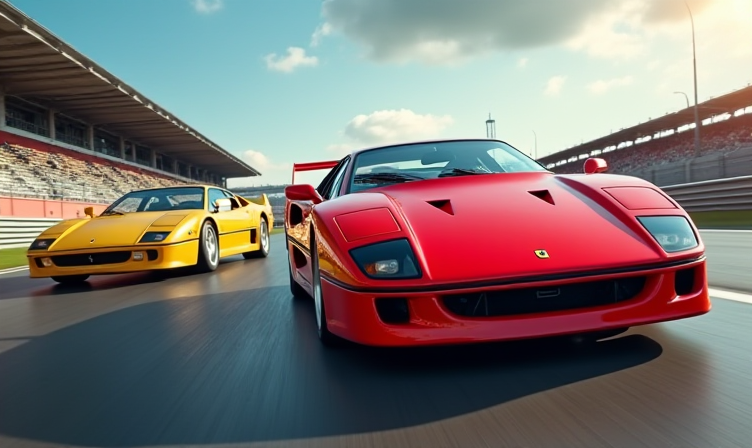
Aerodynamic technologies were also actively developed during this period. The introduction of spoilers, diffusers and other elements allowed for significant improvements in the handling and stability of cars at high speeds. The Ferrari F40, released in 1987, became the first production car to reach a speed of 321 km/h, largely due to improved aerodynamics.
🔧 Key Technological Advances
- 1970s: Introduction of turbocharging, beginning of use of composite materials in body construction.
- 1980s: Development of electronic engine management systems and introduction of aerodynamic elements.
- 1990s: Introduction of active suspensions and stability control systems to improve handling.
Technology has made sports cars not only faster, but also safer. Anti-lock braking systems (ABS), electronic stability programs (ESP), and active safety systems have become standard in sports car production. The 2000s saw a revolution in electronic driver assistance systems, allowing even ordinary drivers to enjoy driving sports cars on public roads.
⚡ Electric Revolution: How Electric Cars Changed the World of Motorsports
With the beginning of the 21st century, we witnessed a new era in sports car development. Environmental concerns and the desire for sustainability led to the birth of electric cars that were not only environmentally friendly but also incredibly powerful. Tesla pioneered the electric sports car with the introduction of the Tesla Roadster in 2008, which proved that electric cars could be just as fast and exciting as their gasoline-powered counterparts.
Today, electric cars play a major role in the world of motorsports. Brands like Porsche with their Taycan and Rimac with their Nevera hypercar show that the future of sports cars is electric. These cars offer amazing acceleration and handling, outperforming many traditional sports cars with internal combustion engines.
⚡ Iconic Electric Sports Cars
- Tesla Roadster (2008): The first mass-produced electric sports car, capable of 0-60 mph in 3.7 seconds.
- Porsche Taycan Turbo S (2019): An electric car with incredible acceleration – 0-100 km/h in just 2.8 seconds.
- Rimac Nevera (2021): A hypercar with 1914 hp, accelerating to 100 km/h in less than 2 seconds.
Electric vehicles continue to gain popularity, and many experts believe that in the future, sports cars with traditional internal combustion engines may give way to electric vehicles on the highways and roads.
🔥 Return of the classics: Retro style in modern sports car design
Why do so many modern sports cars refer to the past? What makes manufacturers return to classic shapes and styles, reinterpreting them in new models? These questions find their answer in the trend towards retro design, which has become popular in recent decades. In a world where technology is rapidly developing, people often feel nostalgic for the eras when cars were not just machines, but symbols of freedom, power and style.
Many modern sports cars take inspiration from the past. Brands bring back iconic models, giving them modern technology and updated designs. An example is the Ford Mustang, which retains the recognizable features of its predecessor, but is equipped with the latest engines and safety systems. The Dodge Challenger is another shining example of how classic design can harmoniously coexist with modern technology, attracting the attention of both old-school fans and new fans.
🚗 Examples of modern retro design
- Ford Mustang (2020): The updated Mustang retains classic lines and shapes, but is equipped with modern EcoBoost engines and safety systems.
- Dodge Challenger (2019): The modern Challenger stays true to the style of the 1970s original while offering powerful V8 engines and modern technology.
- Chevrolet Camaro (2021): The Camaro combines classic muscular design with modern driving technologies and comfort.
The return to the classics is also due to the fact that many of these models have a huge emotional value for buyers. For many, these are their dream cars, symbols of the past that they want to bring into the present. Manufacturers are aware of this and create cars that not only remind us of the past, but also offer a modern level of comfort and safety.
🛣️ The Future of Sports Cars: What Technologies and Trends Await Us?
What does the near future hold for sports cars? What will be the next breakthroughs that will change the face of motorsport and everyday road cars? These questions are important because the world of sports and technology does not stand still. Sports cars, like their predecessors, continue to evolve, introducing innovations that previously seemed impossible.
One of the most significant trends is the integration of artificial intelligence and autonomous control systems. We are already seeing the first attempts to create sports cars with partial or full autonomy. This, of course, will not completely replace the driver in the world of motorsports, but such systems can significantly improve the safety and efficiency of cars on public roads.
Another important aspect is the increasing use of lightweight and durable materials. Carbon fiber, titanium, and composites are becoming the standard in sports car production, allowing for significant weight reduction and improved handling. Hybrid and fully electric powertrain technologies are also rapidly developing. Electric cars are already showing impressive results on race tracks, and we can expect them to dominate this field in the near future.

🔮 Key trends of the future
- Autonomous driving systems: Development and implementation of technologies that can assist drivers in driving and reduce the risk of accidents.
- Hybrid and Electric Vehicles: Increase in the share of electric vehicles and hybrids among sports cars.
- Lightweight Materials: Extensive use of composites and other lightweight materials to improve performance.
It is also important to note the growing importance of software in cars. Manufacturers are already implementing over-the-air (OTA) update systems, which allow improving the performance and safety of cars without having to visit a service center. These technologies will also play an important role in the future of sports cars, making them not only fast, but also smart.
⁉️🤔 Popular questions and answers
- Which car is considered the first sports car?
The first sports car is considered to be the Mercedes 35 HP, created in 1901. It was designed with an emphasis on speed and agility, making it the first car that met the modern concept of a sports car.
- What is the difference between a racing car and a sports car?
A racing car is designed solely for competition and is often not allowed on public roads. A sports car, on the other hand, is designed for regular road use but has high performance features that make it suitable for high-speed driving.
- What are the most famous sports car brands?
The most famous sports car brands are Ferrari, Porsche, Lamborghini, Aston Martin and McLaren. These companies have been creating cars for decades that are considered the benchmarks of speed, style and innovation.
- What cars are considered iconic in the history of sports cars?
Iconic models include the Ferrari 250 GTO, Porsche 911, Ford Mustang, Dodge Challenger, and Chevrolet Corvette. These cars have had a huge impact on the industry and remain popular to this day.
- How do electric cars affect the future of sports cars?
Electric cars offer incredible acceleration and performance, making them serious competitors to traditional gasoline sports cars. In the future, electric cars are expected to take a significant share of the sports car market, especially in light of environmental requirements.
- How do modern sports cars differ from classic models?
Modern sports cars are equipped with the latest technologies, such as autonomous driving systems, advanced safety systems and electric powertrains. Classic models, on the other hand, are valued for their design, mechanical simplicity and emotional connection with the driver.
- What materials are used in modern sports cars?
Modern sports cars make extensive use of lightweight and strong materials such as carbon fiber, aluminum, and titanium. These materials help reduce the weight of the car and improve its performance.
- How has technology changed the way sports cars are driven?
Technologies such as stability control systems, anti-lock brakes and active suspensions have significantly improved the handling and safety of sports cars. Electronic assistants make driving more predictable and controllable, allowing drivers to enjoy driving without worrying about difficult conditions.
- Why has retro design become popular in modern sports cars?
Retro design evokes a sense of nostalgia and allows buyers to experience the spirit of past eras in a modern version. These cars combine the best features of classic models with the latest technology, which makes them attractive to a wide range of car enthusiasts.
- What role do autonomous systems play in the sports cars of the future?
Autonomous driving systems can significantly improve the safety and usability of sports cars. They can take over some of the driver's responsibilities, especially in heavy traffic or on long journeys, while still allowing the driver to maintain full control of the car on a race track or winding road.
💎 Results and conclusions
Sports cars have come a long way since their inception, evolving from simple racing machines into symbols of engineering and technological progress. From the first modifications created for increased speed to modern electric vehicles capable of incredible speeds, the history of sports cars is full of innovation, passion and the pursuit of excellence.
The evolution of technology has played a key role in the development of this industry. Turbocharging, aerodynamics , composite materials and driver assistance systems have significantly changed the appearance of sports cars, making them faster, safer and more comfortable. Retro design has brought the charm of past decades into the modern era, allowing fans of the classics to enjoy the style and power of cars created based on the best traditions.
The future of sports cars promises to be exciting, with the growing role of electric powertrains and autonomous technologies. While these changes may be controversial among traditional car enthusiasts, they open up new horizons and opportunities for sports cars to remain at the forefront of the automotive world.
So, whether you are a fan of roaring engines or a follower of electric innovations, sports cars will always embody the dream of speed, freedom and the endless pursuit of perfection.
| Model | Year of issue | Characteristics | Rating |
|---|---|---|---|
| Ferrari 250 GTO | 1962 | V12, 3.0L, 300 hp, 0-100 km/h in 6.1 sec. | ⭐⭐⭐⭐⭐ |
| Porsche 911 | 1964 | 6-cylinder, 2.0L, 130 hp, 0-100 km/h in 8.5 sec. | ⭐⭐⭐⭐⭐ |
| Aston Martin DB5 | 1963 | 6-cylinder, 4.0L, 282 hp, 0-100 km/h in 8.1 sec. | ⭐⭐⭐⭐ |
| Model | Year of issue | Power | Rating |
| — | — | — | — |
| Tesla Roadster | 2008 | 248 hp, 0-100 km/h in 3.7 sec. | ⭐⭐⭐⭐ |
| Porsche Taycan Turbo S | 2019 | 761 hp, 0-100 km/h in 2.8 sec. | ⭐⭐⭐⭐⭐ |
| Rimac Never | 2021 | 1914 hp, 0-100 km/h in 1.85 sec. | ⭐⭐⭐⭐⭐ |
| Trend | Description | Example | |
| — | — | — | |
| Autonomous systems | Development of technologies that allow partially or fully autonomous driving of a car | Tesla Autopilot | |
| Electrical installations | Transition from traditional engines to electric and hybrid power plants | Porsche Taycan | |
| Lightweight materials | Using carbon fibre and other composites to reduce weight | McLaren P1 |
