

How Climate Change Affects the Automotive Industry 🌍🚗
In the context of global climate change, the automotive industry faces new challenges and opportunities. Growing awareness of the need to reduce carbon emissions and preserve the environment significantly influences the development and production of cars.
Impact on design and technology 🌱🔧
Climate change requires automakers to rethink their approaches to vehicle design:
- Eco-friendly materials: There is an increasing demand for materials with a low carbon footprint.
- Electrification: The rise of electric vehicles as an alternative to traditional combustion engine vehicles.
- Energy Efficiency: Developing more efficient and economical vehicles is becoming a priority.

New standards and legislation 📜🌿
Governments and international organizations are introducing new standards and laws to reduce emissions and encourage the production of clean vehicles:
- Emissions Standards: Tightening emission requirements for new vehicles.
- Incentives and subsidies: Providing incentives and subsidies for the purchase of electric vehicles and hybrids.
- Investment in Innovation: Funding research and development in clean vehicles.
Quote block: Expert opinion 🎙️🌐
” The automotive industry is on the threshold of a new era, where environmental friendliness and innovation will become key factors for success.” – Mikhail Petrov, automotive market analyst.
Prospects and challenges 🌟🚧
The transition to clean technologies in the automotive industry opens up new prospects, but also presents certain challenges:
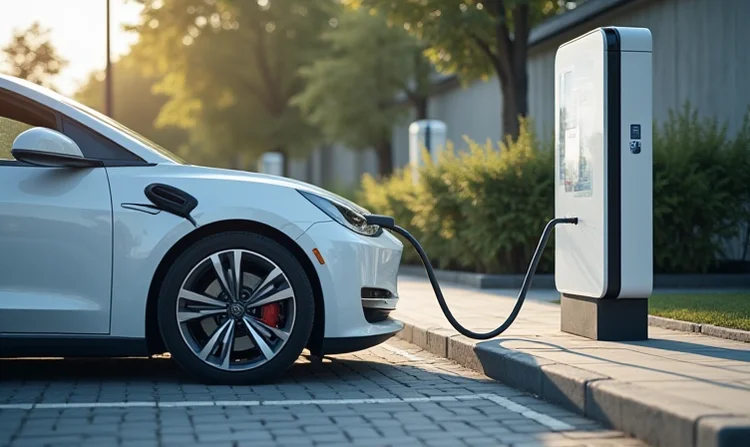
- Infrastructure development: The need to build a network of charging stations and service centers for electric vehicles.
- Technological breakthroughs: The need to develop more efficient and affordable batteries.
- Changing consumer preferences: Adapting to changing consumer demands and expectations for green vehicles.
Impact on the economy and labor market 📉💼
The impact of climate change on the automotive industry also extends to the economy and the labor market:
- Job creation: Increased job opportunities in the development, production and servicing of clean vehicles.
- Retraining of employees: The need to retrain workers and engineers to work with new technologies.
- Changing used car market: Decreasing demand for traditional internal combustion engine vehicles and increasing interest in used electric vehicles.
The role of innovation and research 🔬🚀
Advances in science and technology play an important role in helping the automotive industry adapt to climate change:
- Materials Science Research: Developing new, lighter and stronger materials to reduce the weight of vehicles and improve their energy efficiency.
- Battery Innovations : Improving battery performance, increasing capacity and reducing charging times.

Conclusion and findings 🌍🔍
Climate change is changing the automotive industry forever. Manufacturers and consumers are witnessing the industry’s evolution towards greener and more sustainable solutions. This requires new approaches to the design, production and use of vehicles, as well as adaptation to changing legal and economic conditions. In an era of global climate challenges, the automotive industry is in the spotlight, seeking to combine technological innovation with environmental responsibility.
