

Tata Harrier 2019 – the new Indian crossover Tata in Harrier
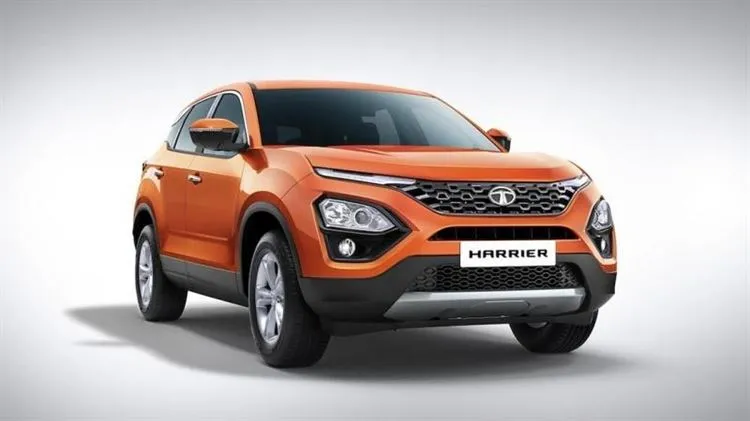
The new Indian crossover Tata Harrier has been declassified on October 30, 2018 and is preparing to enter the Indian market in January 2019. Tata Harrier 2019-2020 review – photos and videos, price and full technical specifications of the new, modern and high-tech Indian Tata Harrier crossover built on the Omega arc bogie (a simplified version of the Jaguar Land Rover D8 platform). The name is borrowed from the Japanese crossover Toyota Harrier, which in turn will be equipped with a 2.0-liter Kroytec turbodiesel (renamed diesel sedan II with a diesel engine from Fiat Chrysler) and the design of the front end is very similar to the front design of the Korean crossover Hyundai Kona and Hyundai Santa Fe 4 generations… here is such a hodgepodge. Price forTata Harrier in India, according to preliminary data, will amount to 1.5-2 million rupees (approximately 1340-1787 thousand conventional units).
Production of the new flagship Tata Motors Harrier crossover has already begun at the company's plant in the Indian city of Pune. By the way, the conveyor for the production of new goods is installed in half a year, according to the most modern technologies, Jaguar and Land Rover, and boasts 90% automation.
The Indian company Tata Motors is a real automotive giant that owns the brands Mahindra & Mahindra, Jaguar, Land Rover, Suzuki Maruti, Tata Group Tata Daewoo and commercial vehicles. Auto assembly plants located in India and South Korea produce electric vehicles, passenger cars, crossovers, SUVs, buses and commercial trucks. In the past 2017, Tata Motors only sold to the local Indian market, over 2.5 million passenger cars, crossovers and SUVs, becoming the largest automaker in India.
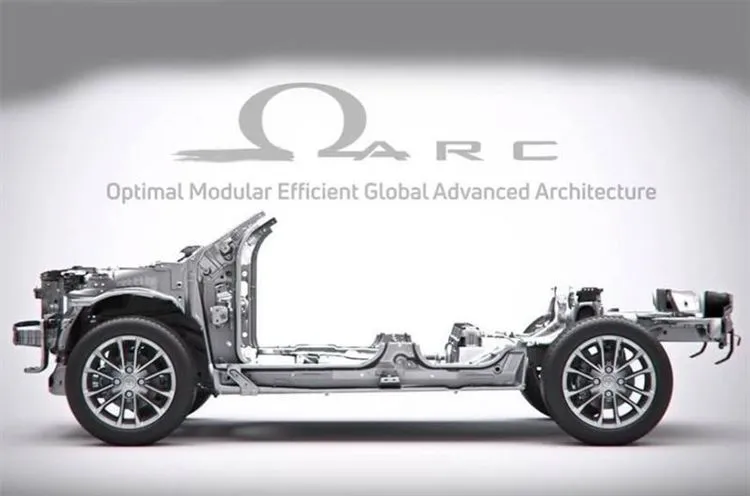
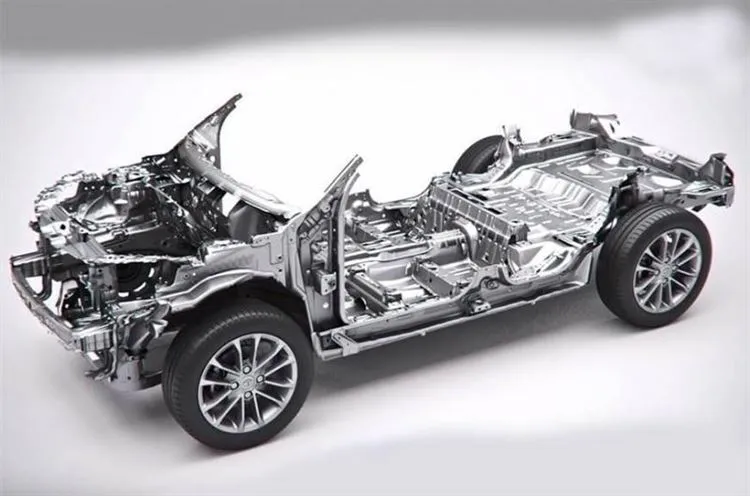
Having made a short digression into the history of the Indian company Tata Motors, back to the Tata Lunya crossover, which became not only the first model of the brand, created using the most advanced Jaguar and Land Rover technologies, but also a hodgepodge (name, engine and appearance). The new Tata Harrier crossover is built on the Omega Arc platform, which is, in fact, a simpler and stripped-down version of the D8 “cart” from Jaguar and Land Rover, which built the Land Rover Discovery Sport crossover. Thus, the new Indian crossover with a transverse engine, electric power steering and a completely independent front (MacPherson) and rear (multi-link) suspension architecture. However, it should be noted that if the suspension of the British crossover is almost entirely made of aluminum, most of the suspension components of the Indian crossover have been replaced with steel to reduce the cost. The basic version of the new front-wheel drive and is available as an optional all-wheel drive with a clutch that connects the rear axle.
I'm not going to argue about the name of the new Indian crossover Harrier. Let Tata Motors and Toyota, and independently find out among themselves who owns the rights to the name. Just note that the Japanese crossover Toyota Harrier appeared in 1997 (currently available for the 3rd generation) and is really known only in Japan, Malaysia and recently.
Having sorted out from the platform down to the engine and transmission of the new crossover. Under the hood of the Tata Harrier, a 2.0-liter four-cylinder Kroytec turbodiesel with a capacity of 140 hp for 5-seater versions of the crossover and 170 hp for a car with a 7-seat interior configuration is installed. This diesel engine is a copy of the Fiat Multijet II engine and is manufactured by an Indian company under official license from Fiat Chrysler vehicles. From Tata Motors with Fiat since 2007, an agreement to use the Italian company's diesel engine technology. For the engine, there are two gearboxes on Hyundai – 6 and a manual gearbox 6 automatic transmission.
It is interesting that, perhaps, in the engine compartment of the Tata Harrier, in addition to the 2.0 Kroytec turbo diesel (140 hp and 340 Nm), a 1.2 turbo petrol engine (120 hp 200 Nm) will be assigned in tandem with 6 manual transmissions.
One of the controversial components of the new hodgepodge of the Indian crossover Tata Harrier in the front of the body, resembles the design of the front body of the Hyundai Kona and Hyundai Santa Fe crossovers. Of course, there is no complete copy of it, but the placement of optics in Indian and Korean crossovers is similar. The front of the body of the Indian Harrier does not look as harmonious and stylish as crossovers from South Korea.
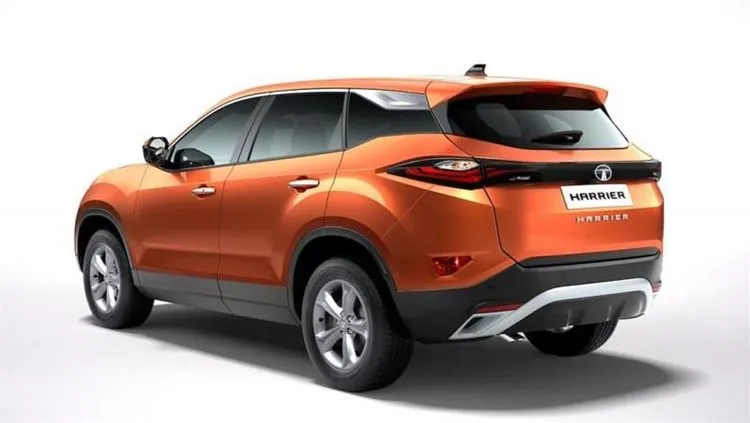
In general, the exterior design of the body of the new flagship of Tata Motors can be described as bold, modern and original. The prototype of the serial crossover was the Tata H5X concept, and the emergence of new items implemented in the Indian manufacturer's latest corporate style – Design Impact 2.0. The crossover body with a total length of 4.6 meters is not only a multi-level front lighting, but many horizontal lines assembled into a single composition, a sagging sill line, a floating roof-pillar and an original stern.
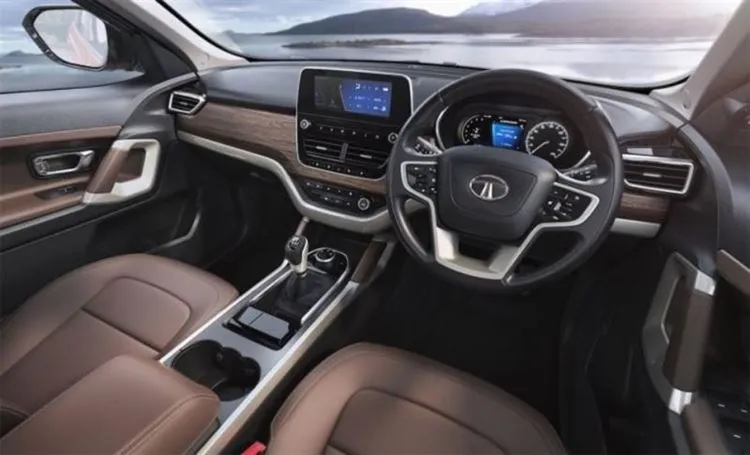
The Tata Harrier crossover is by far the most attractive, stylish and original Indian-made car, and it is a pity that images of the new interior are not yet available. At the first opportunity, we will share photos of the interior of the crossover, but for now I can only assume that the equipment will be in the cabin.
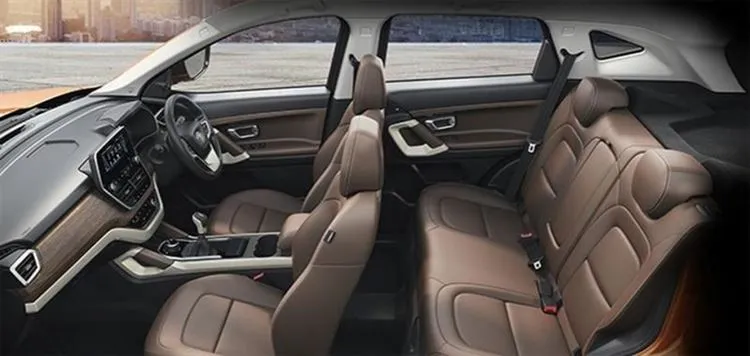
According to preliminary information, the Indian Harrier crossover will receive a virtual instrument panel, an advanced multimedia system with a color touch screen (mirror link, Android Auto, a rear view camera), a Harman audio system with 10 speakers, a multifunction steering wheel, dual-zone climate control, a first row of seats. with electric adjustment and leather upholstery.
It only remains to add that the main competitors of the Tata Harrier in the Indian market, in all likelihood, will be the Jeep Compass crossovers, the Mahindra XUV500 car and the rich configurations of the Hyundai and Nissan models with Creta legs.
