
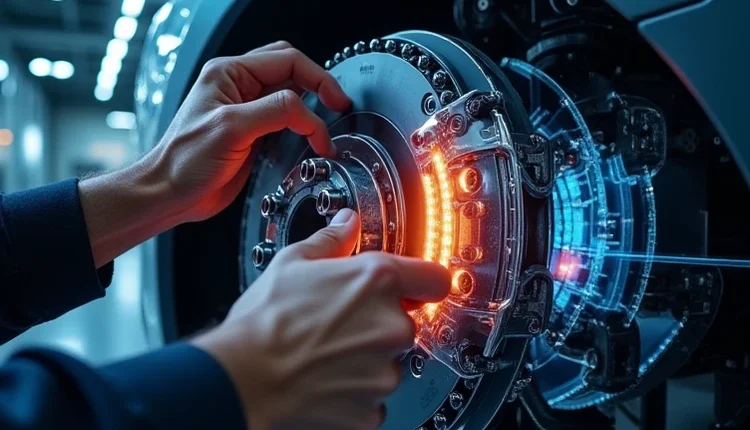
Automotive innovations to improve braking performance
The vehicle's braking system is a critical component that ensures safety on the road. Modern braking technologies are aimed at improving the efficiency of brakes, increasing safety and driving comfort.
🚗 The Importance of the Braking System in a Car
The braking system plays a key role in safe driving. It allows the driver to control speed and stop in critical situations, thereby preventing accidents and reducing the risk of injury.
🌟 Innovations in braking systems
Choose accessories to improve your car's braking system here and take advantage of the latest advances in this field:
- Anti-lock braking system (ABS): Prevents wheels from locking during hard braking, ensuring control of the vehicle.
- Electronic Brake-force Distribution (EBD): Distributes braking force between wheels for more effective braking.

🛠 Improved brake materials and designs
Modern brake systems use advanced materials such as ceramics and carbon fiber, which provide better braking and less wear. Brake disc and pad designs have also been optimized for increased efficiency and durability.
🔄 Integration of the braking system with other vehicle technologies
Braking systems are increasingly integrated with other vehicle technologies, such as advanced driver assistance systems (ADAS) and electronic stability control systems. This provides greater levels of safety and control.
🚀 Development of adaptive braking systems
Adaptive braking systems represent the latest in automotive technology. They can analyze your driving style, road conditions, and the behavior of other road users, automatically adjusting braking force for maximum efficiency and safety.
- Automatic brake pressure control: Improves safety under various driving conditions.
- Predictive braking functions: The system can anticipate the need for braking based on data from sensors and cameras.
📱 Integration with automated driving systems
With the development of automated driving technologies, braking systems are becoming part of integrated vehicle control systems. This allows for smoother and more precise autonomous braking, improving overall road safety.
- Collaboration with autonomous driving systems: Provides more precise and predictable braking.
- Improved emergency response: Automatic braking if a hazard is detected on the road.

🌐 Using innovative technologies in braking systems
Innovative technologies such as electronic braking systems and regenerative braking systems are opening up new horizons in improving the efficiency and environmental friendliness of braking systems.
- Electronic brake systems: Offer faster response and increased braking precision.
- Regenerative Braking: Converts kinetic energy into electrical energy, improving fuel efficiency.
🌿 Environmental aspect of braking systems
Modern technologies are also aimed at reducing the environmental impact of braking systems. The use of environmentally friendly materials and technologies helps reduce particle emissions and improve the environmental friendliness of vehicles.
- Use of environmentally friendly materials: Reduces environmental impact.
- Reducing particulate emissions from brake pads: Helps reduce air pollution.
📊 Analytics and diagnostics in modern braking systems
Advances in technology have led to the introduction of analytical tools and diagnostic systems into vehicle braking systems. These innovations allow drivers to receive accurate information about the condition of their brakes, alert them to the need for maintenance, and prevent potential failures.
- Self-diagnostic systems: Alert the driver when brake pads or other components need to be replaced.
- Brake Wear Monitoring: Provides data on brake system wear and performance.
🚦 Improved braking response and control
Innovations in braking systems improve response and control of braking, which is critical for driver and passenger safety. This is achieved through improved hydraulic systems, the use of more efficient brake fluids and optimized brake design.
- Rapid brake response: Ensures instant braking when needed.
- Enhanced braking control precision: Provides smooth and predictable braking.

🌐 World trends and standards in braking systems
Global trends in the automotive industry, including increasing safety standards and the development of autonomous technologies, are influencing the development of braking systems. Manufacturers are striving to meet international safety standards and integrate braking systems with other smart vehicle technologies.
- Compliance with international standards: Guarantees a high level of safety for braking systems.
- Integration with driver assistance systems: Improves overall safety and braking efficiency.
🏁 Conclusion: The Future of Braking Systems
The future of braking systems promises to be even more innovative, safe and efficient. With advances in technology and increasing safety requirements, automotive braking systems will continue to evolve, offering a better driving experience and increased safety on the roads.
🛠 Wear-resistant materials technologies in brake systems
The development of wear-resistant materials technologies has significantly improved the durability of braking systems. The use of advanced alloys and composite materials in brake pads and discs increases their service life and efficiency, reducing the need for frequent replacement and maintenance.
- Ceramic and Composite Brake Pads: Less wear and produce less dust.
- Advanced alloy brake discs: Provide better heat dissipation and resistance to deformation.
📱 Electronic braking systems and intelligent braking
Electronic braking systems provide more precise and effective braking than traditional mechanical systems. Intelligent braking, integrated with driver assistance systems, can automatically adjust the braking force depending on driving conditions.
- Electronically controlled braking systems: Improve the precision and response speed of the brakes.
- Adaptive Braking: Automatically adapts the braking force for optimum safety.

🌐 Developing global braking safety standards
With global safety standards in mind, brake system manufacturers are striving to create more reliable and safe brake systems. International safety standards not only improve product quality, but also increase consumer confidence in braking technology.
- Compliance with international safety standards: Improves the reliability and efficiency of braking systems.
- Integration with emergency braking systems: Prevents collisions and reduces the risk of accidents.
🏁 Conclusion: Directions for the development of braking systems
Car braking systems will continue to evolve, becoming more reliable, efficient, and intelligent. Future innovations will focus on improving safety, reducing environmental impact, and integrating with advanced automated driving technologies.
