
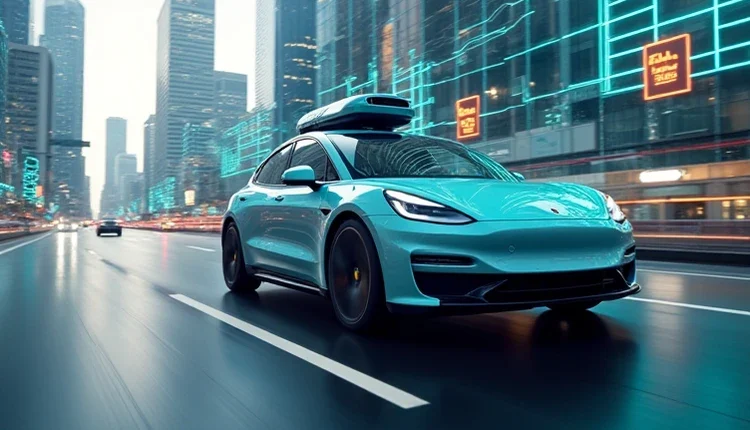
Autopilot in Modern Cars: Technologies of the Future 🚗🤖
What is autopilot?
Autopilot in a car is an advanced system that uses various technologies to automatically control a car. It is a complex combination of software and hardware designed to improve safety and driving comfort.
Operating principle
Autopilot uses sensors, cameras and radar to collect data about the road environment, then processes that data to make decisions about maneuvering, speed and braking.
Key technologies
- Sensors and Cameras: Provide accurate perception of the surrounding space.
- Radars: Detect objects on the road, helping to avoid collisions.
- Artificial Intelligence Algorithms: Analyze data and make decisions in real time.
🚘 Types of autopilot systems
Adaptive cruise control
This is a basic autopilot function that controls the speed and distance from the vehicle in front.
Semi- autonomous control
Systems of this type can drive a car on their own in certain conditions, such as on the highway.
Fully autonomous control
These systems can completely control the car without driver intervention, but are still in the development and testing stage.
🛠️ Maintenance and safety
The Importance of Updates
Regular software updates are necessary to ensure the safety and effectiveness of autopilot systems.
Service requirements
Autopilot systems require careful maintenance and testing to ensure they operate reliably.
Security Features
- Emergency Braking: Automatically responds to hazards on the road.
- Warning systems: Alert the driver to potential threats.
- Autonomous driving: Increases safety in difficult road conditions.
📈 Table: Comparison of functions of different autopilot systems
🚦 Advantages and disadvantages of autopilot

Advantages
- Increased safety: Reduced risk of accidents by preventing human error.
- Driving comfort: Reduces driver fatigue, especially on long journeys.
- Traffic efficiency: Reduce travel times and reduce congestion by optimising traffic flow.
Flaws
- Technology Dependency: Need for constant updates and maintenance.
- High cost: Additional costs for purchasing and maintaining the system.
- Functionality limitations: It is impossible to completely replace the driver in some road situations.
🌍 The Impact of Autopilot on the Future of Driving
Transformation of road traffic
Autopilot has the potential to radically change the face of road traffic, making it safer and more organized.
Changes in legislation
The advent of self-driving cars requires a revision of road legislation and safety standards.
New opportunities for the industry
The development of autopilot systems opens up new prospects for the automotive industry and related sectors.
The autopilot system is a significant step in the development of automotive technology, promising a revolution in the field of safety and driving comfort. However, its full implementation requires time and improvement of both technology and the legislative framework.
🚗 Technical features of the autopilot
Main components
- Sensors and cameras: Provide continuous scanning of the road situation.
- Software: Analyzes data and makes decisions about maneuvers.
- Control Interface: Allows the driver to interact with the autopilot system.
Operating principle
Autopilot uses data from sensors to create a three-dimensional image of the surrounding environment, allowing the car to respond independently to changing road conditions.
Integration with other systems
Autopilot is closely linked to other vehicle systems, such as cruise control and collision avoidance systems.
🌐 The Impact of Autopilot on the Global Automotive Market
Development of new markets
Autopilot is helping to open up new niches in the automotive industry, such as autonomous taxis and trucking.
Changing the perception of cars
With the advent of autopilot , cars are becoming not just a means of transportation, but mobile offices or recreation areas.
Impact on the insurance market
Autopilot systems could lead to lower insurance rates by reducing the number of accidents.
Results
Autopilot in cars is not only a technological breakthrough, but also a catalyst for social and economic change. It opens up new prospects for improving the safety, comfort and efficiency of vehicles.
🚦 The Impact of Autopilot on Road Safety
Improving traffic safety
- Reducing the human factor: Autopilot reduces the number of errors caused by driver fatigue or inattention.
- Accident prediction and prevention: Thanks to advanced algorithms, the autopilot can predict potential accident situations.
Problems and challenges
- Unforeseen situations: Autopilot may not be able to cope with unusual road conditions.
- Technology Dependency: Increased reliance on electronic systems increases vulnerability to technical failures.
🌍 Global trends in autopilot development
Investments in development
Major car companies and startups are investing billions of dollars in developing self-driving systems.
Legislative regulation
Governments around the world are introducing regulations and laws to regulate the use of self-driving cars on the roads.
📊 Table: Comparison of auto pilot in different brands of cars
Results
Autonomous driving systems in cars are significantly transforming the automotive industry and society. They offer new levels of safety and comfort, but also require a thoughtful approach to safety issues and legislative regulation.
