
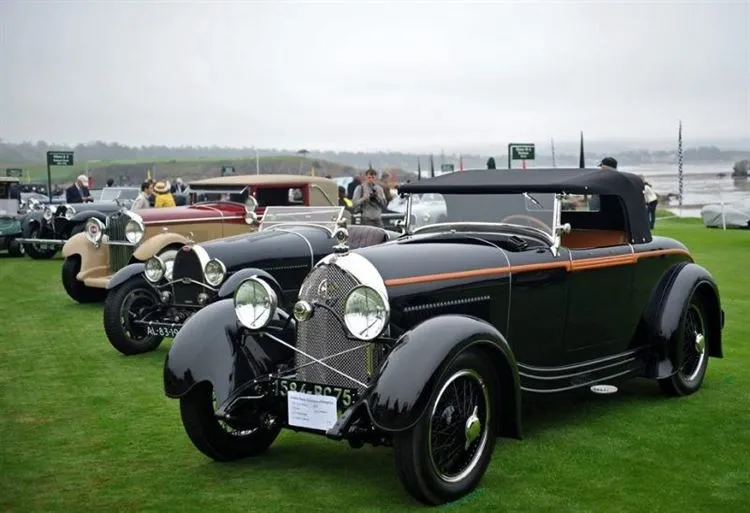
Car “Lauren Dietrich”: photos, specifications and features
Lauren Dietrich cars were produced from 1896 to 1935 by the French company Societe Lorraine des Anciens Etablissements de Dietrich et Cie de Luneville, formerly known as a manufacturer of railway locomotives. In the early 1930s, the joint-stock company refocused on the production of aircraft components and armored vehicles.
Start
De Dietrich et Cie was founded by Jean de Dietrich in 1884. In its first decade, it established itself as a major manufacturer of railcars, rails and wheelsets. However, the Franco-Prussian War led to the division of production capacities. One of the company's factories in the city of Luneville (Lorraine) remained under the control of France, and the other in Niederbronn-les-Bains (Alsace) ended up in the territory occupied by Germany.
At the end of the 19th century, another technological revolution took place – the world got acquainted with automatic mobile transport. Motorized carriages rapidly conquered the streets of European cities, displacing horse-drawn cars and creating competition for trams. Jean de Dietrich, sensing the potential of the novelty, in 1896 bought the rights to the engine from the famous inventor Amede Bolle and began to assemble the Lauren Dietrich car.
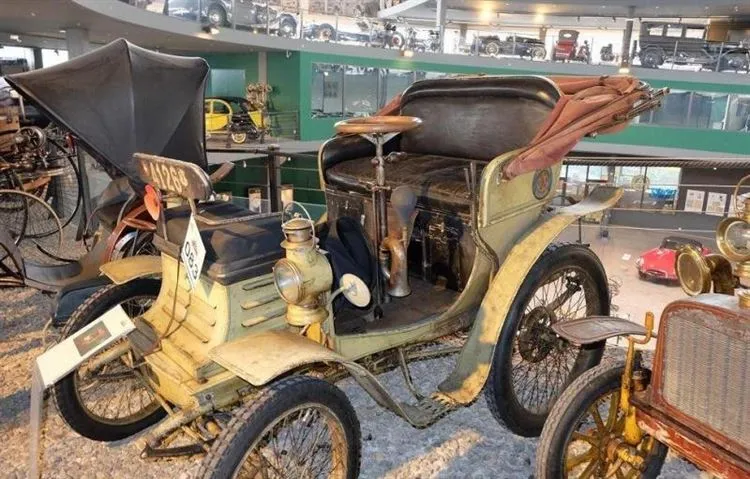
Photo of the first model, fortunately, survived. The double motorized stroller had a short wheelbase and a high awning roof, which created the impression of a disproportionate design. An innovation was the use of a large sheet windshield and three powerful headlights. The vehicle was driven by a frontal horizontal double engine with sliding clutches and a belt drive.
On the way to speed
Although the company initially used Bolle engines, all other parts of the Lauren Dietrich cars were manufactured in-house according to the original design. Before the first civilian model left the factory, Jean de Dietrich ordered to assemble a car for auto racing. She was named Torpilleur (Torpedo). The design used a 4-cylinder engine and front independent suspension.
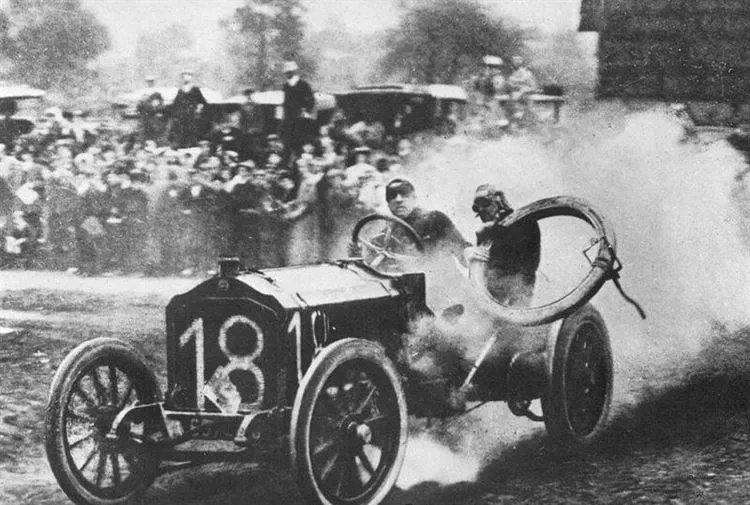
In 1898, Torpedo took part in the Paris-Amsterdam rally under the control of Gaudi. Despite the accident, the team took third place and received a prize of 1 million gold francs – a great result!
A year later, the company decided to build on its success by participating in the prestigious Tour de France Automobile rally. A number of progressive changes were made to the design of the Lauren Dietrich Torpedo racing car. The engine is made by casting using a new monoblock technology. To reduce drag, the ground clearance has been reduced. But due to poor preparation, none of Dietrich's cars could complete the race.
Search for the ideal
Motor transport developed so rapidly that the first motorized vehicles seemed already archaic against the background of new models. By the beginning of the 20th century (and only a few years had passed), the Bolle engine had become inefficient. In 1901, a French company acquired a license from Belgian colleagues to use the Vivinus engine in Lauren Dietrich cars.
At the same time, attempts were made to create their own power unit. In 1902, the brilliant engineer Ettore Bugatti, who at that time was only 21 years old, was hired for this purpose. He developed a 24-horsepower engine with an overhead valve system, paired with a 4-speed manual transmission. Before leaving for rival Mathis, the young Ettore created the famous 30/35 series engine, which was used in future models.
Company emblem
Until 1904, Lauren Dietrich cars were produced at factories in Niederbronn and Luneville. However, due to logistical problems, production was split. The production of equipment in Alsace was managed by Turcat-Mery, and in Lorraine by De Dietrich.
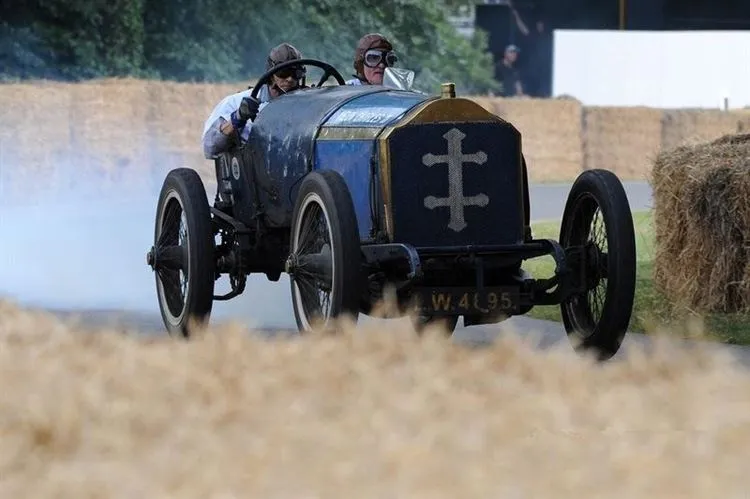
In order for the products to somehow differ (and the models to be of the same type), a new logo was developed. It is a double cross in a circle similar to the coat of arms of Lorraine.
Reputation
French engineers at the beginning of the 20th century occupied leading positions in the automotive industry. Many of their ideas were subsequently applied in Italy, Germany, Belgium, Great Britain, and the USA. Lorraine Dietrich was no exception. She stood at the top of the industry along with British firms Crossley Motors and D. Napier & Son Limited, Italian Itala, German Mercedes.
Fame was largely due to active participation in motorsport. Race cars “Lauren Dietrich” has always been the main contenders for victory. Among the most striking achievements are the 3rd place of the racer Charles Jarrot in the Paris-Madrid rally (1903), victory in the Circuit des Ardennes race led by Arthur Dure (1906). By the way, the crew under the control of the Frenchman Duret in 1907 became the winner of the Moscow-St. Petersburg rally. Under the hood of the champion “worked” a 60-horsepower 13-liter engine designed by Lorraine Dietrich.
All this made it possible to occupy its niche in the premium car segment and even aim at the superlux class. First, in 1905, and later in 1908, small-scale assembly was carried out under the order of luxurious six-wheeled De voyage limousines.
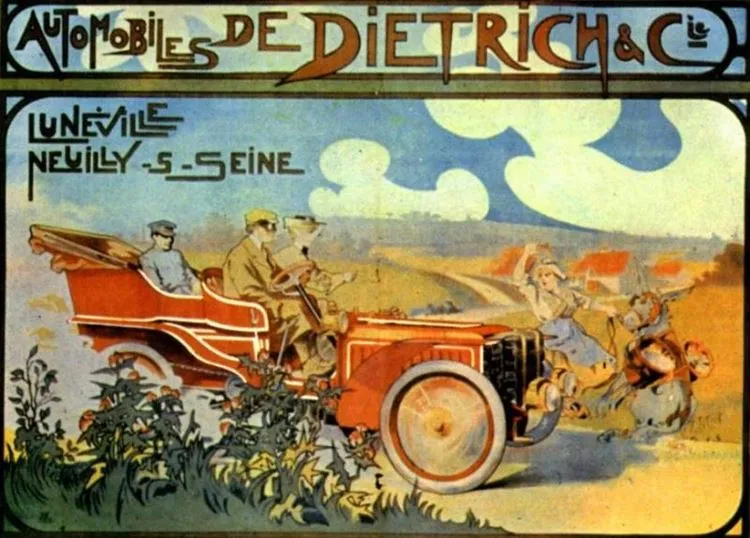
Pre-war years
Although relations between world powers were deteriorating, this did not affect the activities of Lorraine Dietrich in any way. On the contrary, international cooperation developed. In 1907, Dietrich bought the Italian motor brand Isotta Fraschini. Based on their developments, an inexpensive OHC car with a capacity of 10 liters was produced. with.
More worthy were the characteristics of the Lauren Dietrich machine, designed on the basis of the developments of the English bureau Ariel Mors Limited. It was presented in 1908 at the Olympia International Motor Show and produced twice as much power – 20 hp. Mulliner and Salmons & Sons premium convertibles were produced on its chassis.
In 1908, Dietrich introduced a whole line of chain-driven road cars:
- 18/28 l. with. and 28/38 l. with.
- 40/45 l. with. and 60/80 l. with.
- 70/80 l. with.
The most striking model was the 1912 HP Torpedo. The same period includes the company's entry into the aviation market with its own line of power units. World War I brought the main production to a halt.
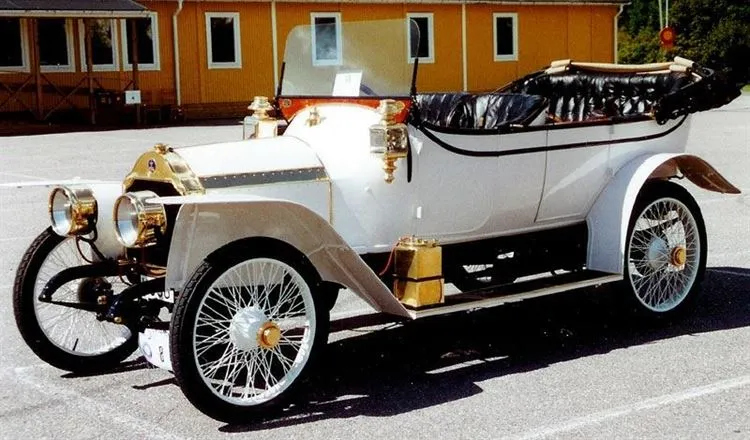
post-war period
The year 1919 was marked by the resumption of production of Lauren Dietrich cars. Photos of new products B2-6 and A1-6 on an extended and shortened wheelbase flew around Europe. Everyone started talking about the revival of the famous brand. In confirmation of hopes, the company in 1922 presented the B3-6 model, which embodied the latest engineering achievements of that time. The power plant was a 6-cylinder 3.5-liter engine of the 15 CV series with a capacity of 15 liters. with. In its design were used:
- crankshaft on four bearings;
- aluminum pistons;
- hemispherical cylinder heads;
- overhead valving and other innovations.
In 1924, the racing model 15 Sport saw the light of day. Dewandre-Reprusseau brake servos, enlarged valves, dual carburetion scheme should have fueled interest in the new product. In 1925-1926, the sports car won the Le Mans race more than once, demonstrating an enviable average speed of 106 km / h. Automaker Lauren Dietrich became the first team to win the most prestigious circuit racing tournament for two years in a row.
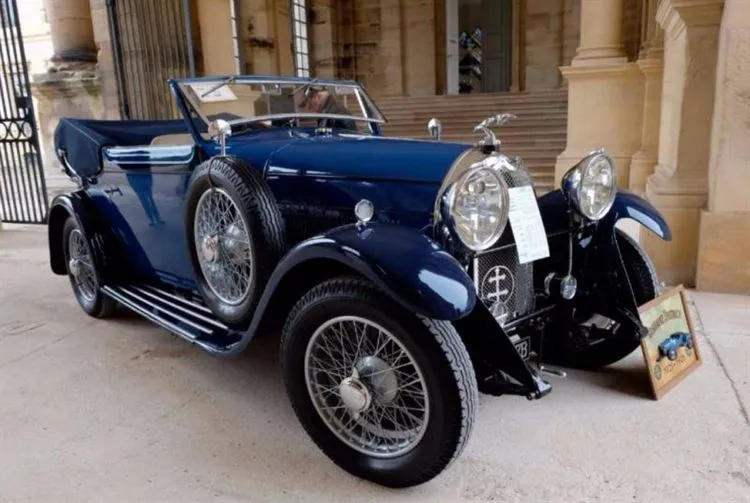
Sunset
Despite sporting successes, the company's financial situation worsened. In 1928, Dietrich's heirs sold their share and retired. The brand became simply Lorraine. In 1930, the aircraft engine division was bought out by the financial conglomerate Societe Generale.
The automotive segment was in stagnation. The once popular 15 CV model was replaced by a successor with a more powerful 4-liter 20 CV engine, but the novelty was a failure. Only a few hundred units were sold. It became clear that the time of the eminent brand had passed. In 1935, the production of cars was finally stopped. The plant returned to the production of products with which production began – to railway transport, which is what it does to this day.
