
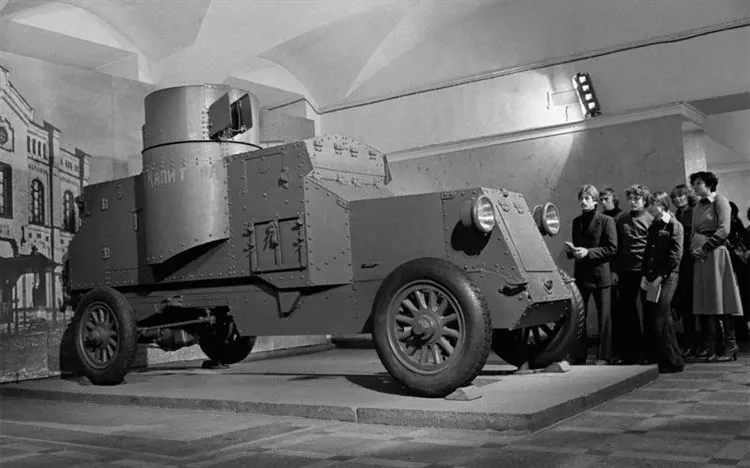
Cars in uniform: from “Austin-Putilovets” to “mess”
When the car was still an extremely imperfect “primus stove” and was perceived by many as a technical curiosity, the military of many countries were able to appreciate its potential. And very quickly, cars began to be massively called for service.
Photo: Nikolay Naumenkov/TASS
“Austin-Putilovets” for the Russian army
With the outbreak of the First World War, a lot of cars from different manufacturers were called up to the current Imperial Army, from domestic Russo-Balts to Renaults and Fiats. But the most protected was offered to the current government by the English company Austin, which began the production of armored vehicles in 1914. Since nothing like this had been produced recently at that time, they took advantage of the British offer and soon the first to start producing armored cars, Austin armored cars arrived in parts.
On the chassis of an Austin truck with a carrying capacity of three tons, a cab was installed from armor plates 4 mm thick, which housed two armored machine-gun turrets, each of which was equipped with a 7.62-mm machine gun designed by H. Maximo. The four-speed manual transmission and the 30-horsepower (later 50-horsepower) petrol engine were removed from the truck. A car weighing from 2.6 to 3.5 tons could accelerate on the highway up to 40 km / h, but due to the lack of all-wheel drive, it was of little use on the highway.
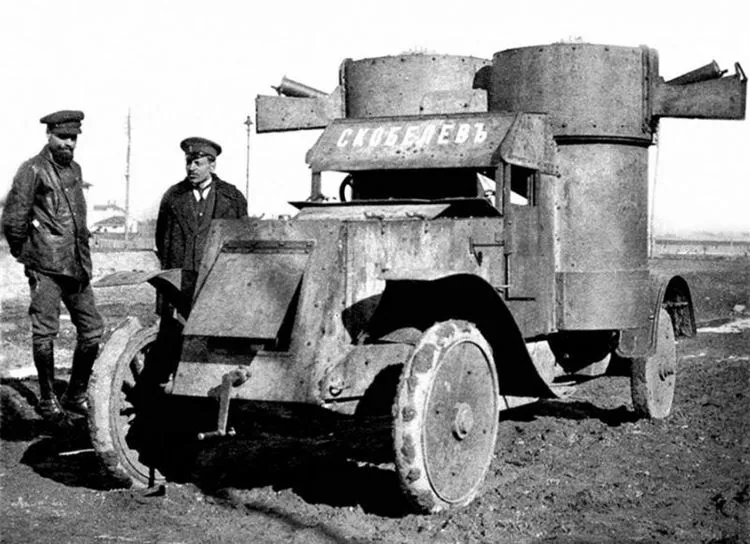
Photo: autowp.ru
About one and a half hundred armored vehicles were sent from England to the market, but due to the increasing workload of Austin and Vickers (armor plate) firms with military orders, the British offered to send only the chassis to the market. Also in 1916, a domestic version of an armored car was designed at the Petrograd Putilov Plant, which was called the Austin-Putilovets. The armored car differed from its British counterpart in the diagonal arrangement of machine-gun turrets, which made it possible to fire “from anywhere”. In addition, Russian engineers improved the chassis of the armored car, which had a positive effect on the cross-country ability.
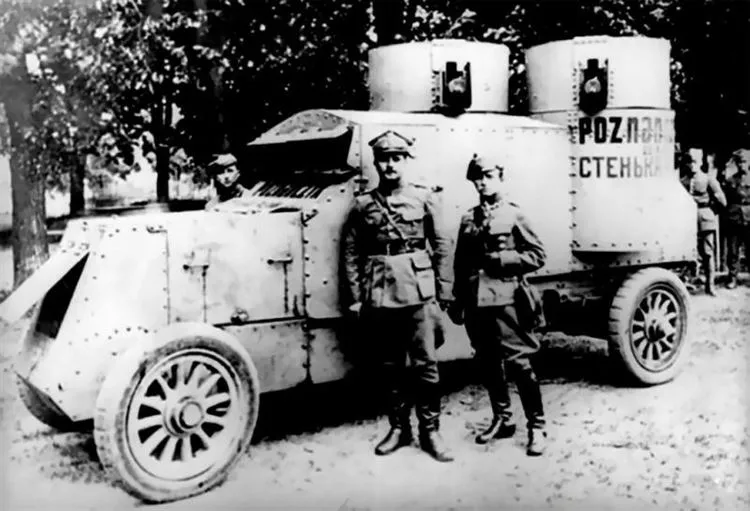
Photo: autowp.ru
But due to the collapse of the state empire, and then the October Revolution, the British were in no hurry to ship vehicle kits, and the Austin-Putilovets turned out to be a small-circulation armored car. From March 1918 to 1920, only 33 wheeled and 12 half-tracked vehicles were produced, which received the name Austin-Putilovets-Kegress. These vehicles took an active part in the Civil War and the Soviet-Polish War and remained in service until the early 1930s, like the British-made Austin armored cars. The British-made armored car with the pathetic name “Enemy of Capital” became famous for the fact that it was from him on April 16, 1917 V.I. Lenin delivered a fiery speech about the coming and inevitable victory of the proletariat.
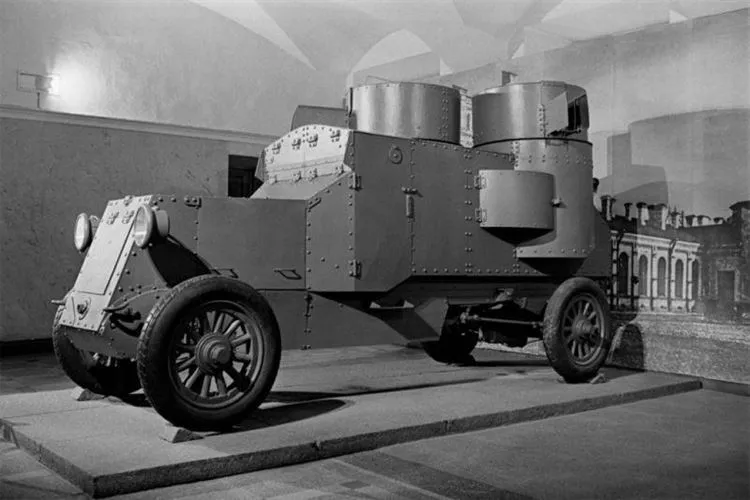
Photo: Nikolay Naumenkov/TASS
BA-10
In the Soviet Union, great influence has always been given to the development of armored vehicles and armored vehicles. In 1938, the Izhora plant began producing the BA-10 armored car, which at the time of its creation was one of the most durable armored vehicles in the world.
The armored car was built on the basis of a three-axle GAZ-AAA truck, equipped with an 85-horsepower gasoline engine and, despite its weight of 7.5 tons, accelerated on the highway to 90 km / h. Also, the armored car could overcome a ford 0.6 meters wide and a ditch of the same width. The armored car featured heavy armament, similar to Soviet light tanks, and consisted of a 45 mm cannon and a 7.62 mm machine gun. 10 mm armor protected the front of the hull and turret, as well as the sides.
This armored car took part in all military conflicts of the late thirties, but the moment of truth for him came in June 1941. For some reason, it is customary to scold Soviet armored vehicles, although few people pay attention to the fact that in the tragic summer and autumn of 1941 they were used for other purposes. They literally plugged all the holes, often throwing them into battle with tanks for which these reconnaissance and patrol vehicles were not intended at all.
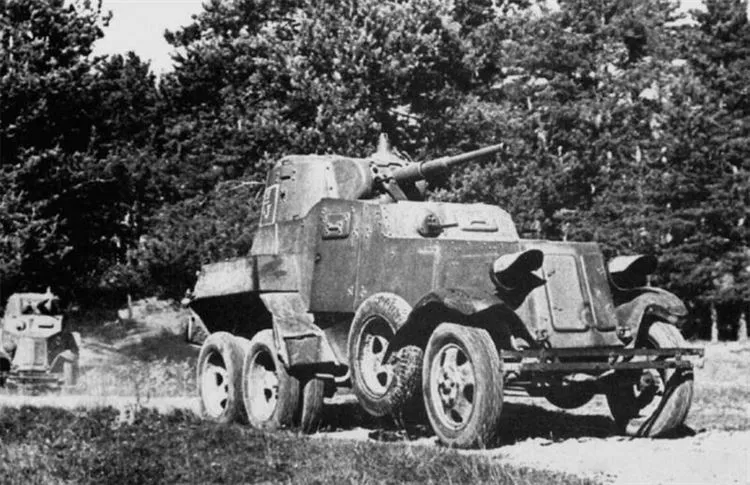
Photo: Warriors.fandom.com
Of course, they suffered huge losses, mainly due to illiterate use. However, when used for its intended purpose, the results have always been pretty good. So, in mid-July 1941, a reconnaissance company of the 63rd Rifle Corps of the 21st Army of the Central Front, armed, among other things, with two BA-10 armored vehicles, attacked from an ambush in the Bobruisk region and completely defeated the German convoy. As a result of the skillful use of two BA-10s by cannon and machine-gun fire, three tanks were destroyed and inflicted heavy losses on the Germans. At the same time, a staff car was seized, in which valuable documents of the killed German officers were seized.
This episode shows that, with skillful and competent use, the BA-10 could effectively fight the enemy and inflict significant damage. However, in the first months of the war, a large number of BA-10s were lost, and in 1944-1945 they were kept mainly in the divisions of the Far East. Which in August 1945 successfully used them in battles against the Kwantung Army, after which all the remaining BA-10s were withdrawn from service.
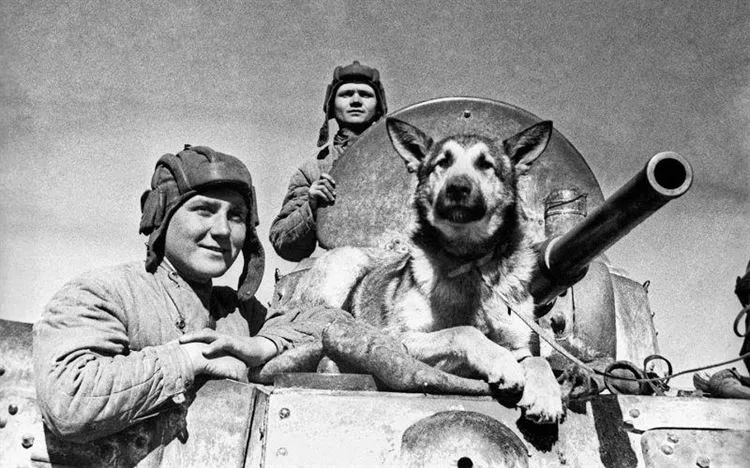
Southern Front of the Great Patriotic War. The crew of the Soviet armored car BA-10: Sergeant E. P. Endrekson, Sergeant V. P. Porshakov and others Derenko and Pastor Dzhulbars. (Photo: Emmanuil Evzerikhin/TASS Chronicle))
BA-64
The most massive armored vehicle of the Red Army during the Great Patriotic War was the BA-64 armored car, developed in Gorky at the end of 1941. The vehicle was built on the chassis of a GAZ-64 off-road army vehicle and, in fact, an armored capsule made of armor plates 6-12 mm thick, mounted on a GAZ-64 chassis and armed with a 7.62 mm DT machine gun.
The armored car weighed 2.3 tons, was equipped with a 50 hp gasoline engine and could accelerate on the highway up to 80 km/h. The crew consisted of two people: the driver and the gunner. The main advantages of the armored car were its low cost, mass character and maintainability. Car production began at GAZ in the spring of 1942, and soon armored vehicles appeared in almost all parts of the Red Army.
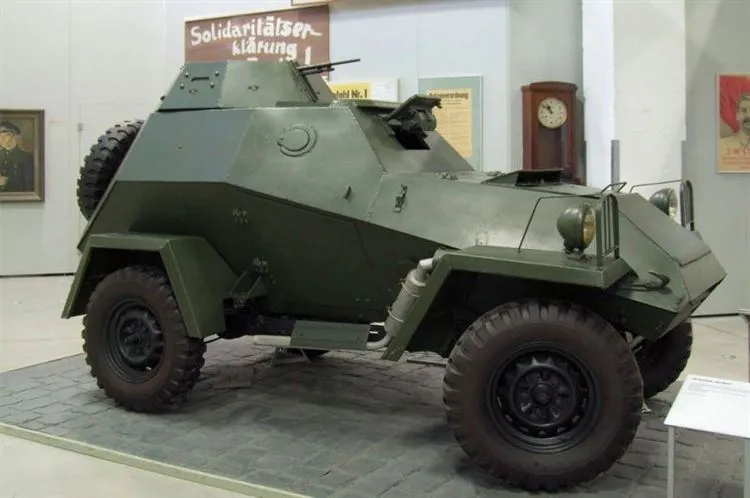
Photo: commons.wikimedia.org
Unlike in 1941, they did not try to patch holes in the front with an armored car and used it strictly for its intended purpose: as a reconnaissance vehicle and a highly mobile firing point capable of supporting scouts or infantrymen with machine-gun fire and quickly leaving the danger zone. The BA-64 was easy to drive and almost any rookie with a driver's license mastered the intricacies of control in the shortest possible time. This armored vehicle became one of the symbols of the Victory, passing all front-line roads from Stalingrad to Berlin without exception and was discontinued in 1946, having sold over 9,000 copies around the world.
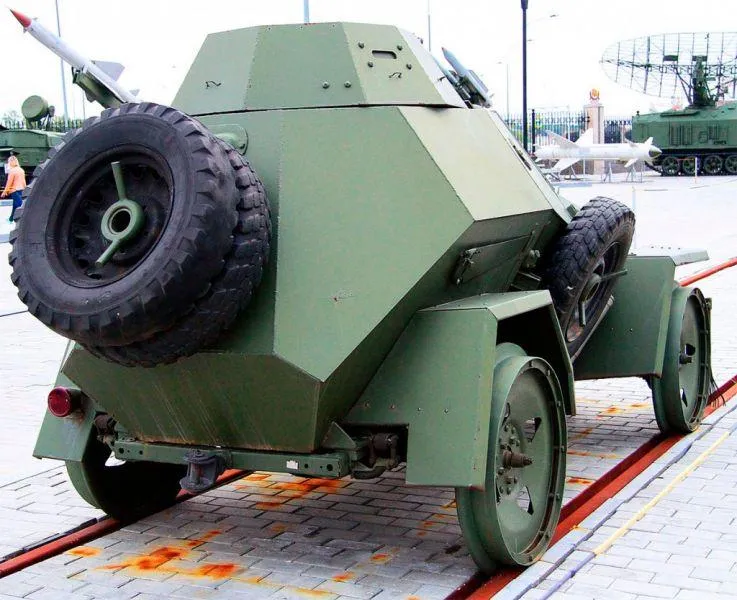
Photo: commons.wikimedia.org
“Mess” for the USSR
There was no more beloved and popular armored car in the Soviet Army than the famous “porridge” – BRDM. The combat reconnaissance and patrol vehicle was developed in the mid-fifties, and in 1957 the production of the BRDM-1 began at the Gorky Automobile Plant.
The main advantage of the car was its fantastic cross-country ability, because in addition to all-wheel drive it had four chain-driven lower wheels and, in theory, could go where only tanks went. But due to a weak 85-horsepower engine, a 5.6-ton armored car could not always fulfill the cross-country ability set by the designers. And the armament of the 7.62-mm machine gun was clearly weak. It would hardly be possible to injure the enemy with such weapons, but until 1966 GAZ produced more than 10 thousand BRDM-1.
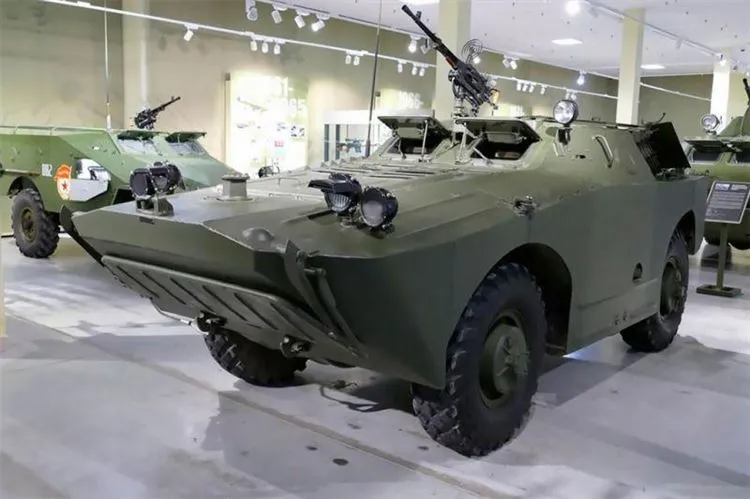
Photo: commons.wikimedia.org
Despite the armor with a thickness of 7-11 mm, which was considered good in the fifties, the ability to swim at a speed of 9 km / h and land three people, already at the end of the fifties gas designers began to develop an improved version of the machine. Which was called BRDM-2, its serial production began at GAZ in 1963.
Gorky's team improved absolutely all the key parameters of the vehicle: the thickness of the frontal armor increased to 14 mm, and now it was almost impossible to hit it in the forehead with conventional small arms. Engine power was 140 hp, and the maximum speed increased to 95 km / h and 10 km / h afloat. But most importantly, the BRDM received a turret with a 14.5 mm Vladimirov heavy machine gun.
This most powerful machine gun in the world was guaranteed to hit lightly armored targets at a distance of up to 2 km and destroy enemy manpower at a distance of up to 4 km. It is no coincidence that all the armored vehicles of the NATO countries of the 70-80s were designed taking into account the ability to withstand the armor-piercing bullets of the Vladimirov machine gun.
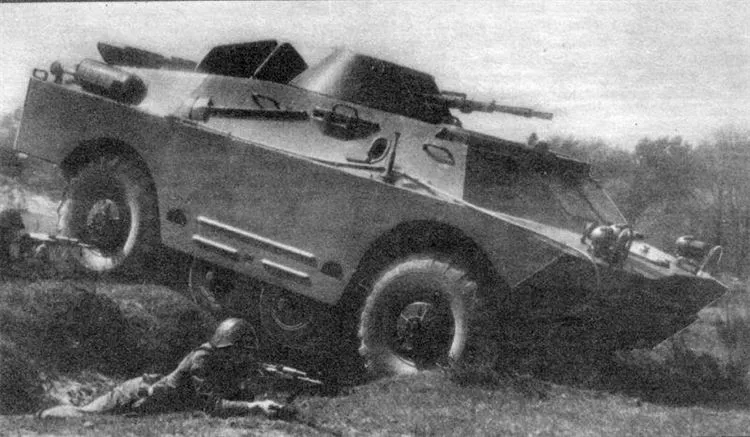
Photo: commons.wikimedia.org
“Lamb” of both generations, thanks to their massive deliveries to other countries, took part in almost all military conflicts that have taken place from the sixties to the present day. Unfortunately, the car had to fight in the expanses of the former USSR.
Recently, although the machine remains in service at the moment, it is already being replaced by more modern technology. But in the armies of other countries, he will serve for a long time. Because we have yet to look for a worthy alternative, just as cheap and easy to operate, on the arms market. So the “mess” may well survive in some countries until its centenary. Which once again speaks of how exceptional and timeless the combat vehicle was created by GAZ designers in the mid-50s.
