Daimler has certified the world’s first production Level 3 autopilot, but there are nuances
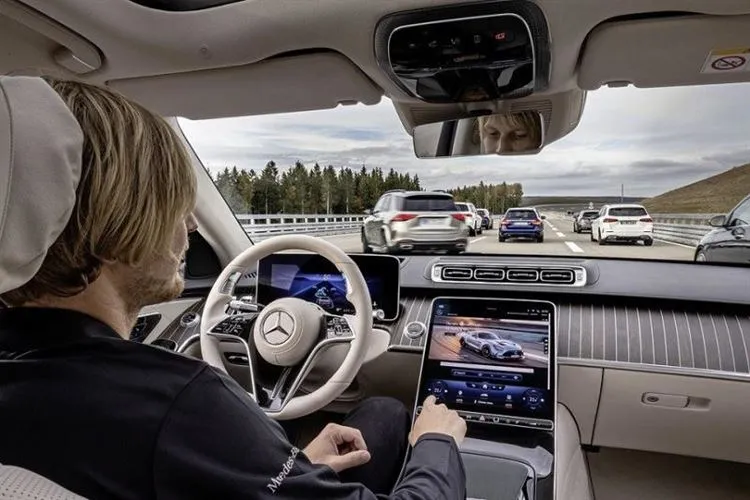
This heading must be accompanied by a three-volume commentary and a disclaimer. First of all: Daimler has actually received approval from the German federal transport agency KBA for the Drive Pilot system, which allows the driver not only to take their hands off the wheel, but also to switch to “minor activities”, as the company points out, for example, for “shopping online or email management” via the car's center display. That is, this is the world's first officially approved large-scale autopilot of the third level. The current Drive Pilot will begin to be fitted to the S-Class and EQS EVs in the first half of 2022.
Now about the nuances.
Firstly, the Honda Legend sedan for the Japanese market already in the spring of 2021 became the first subcompact car with Level 3 autopilot, but Honda has only produced 100 of these cars, so Mercedes has every reason to claim the world championship on a true industrial scale.
Secondly, Mercedes Drive Pilot has the right to work only at speeds up to 60 km / h and on specially designated road sections. Mercedes says there are 13,191 km of roads in Germany today that will be operated on autopilot. These are motorways without intersections with a dividing barrier between oncoming watercourses, along which the movement of pedestrians and motorcyclists is prohibited.
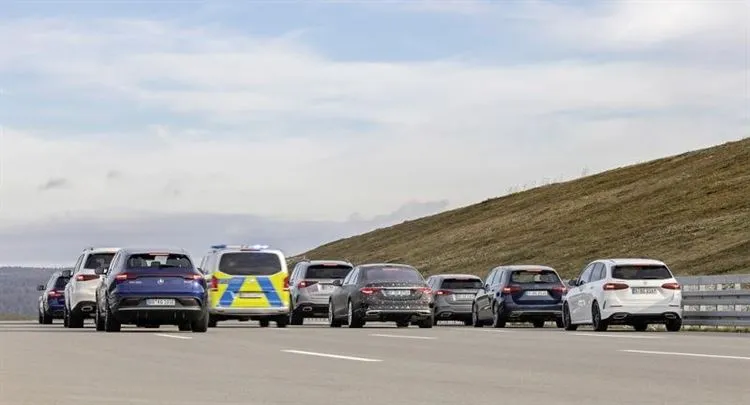
Translated into ordinary language, this means – only in traffic jams on the highway. And only in your lane, because Drive Pilot is certified according to UN Regulation No. 157 and belongs to the category ALKS (automated lane keeping systems), that is, systems for automatically maintaining traffic in your lane. This document describes the requirements and functionality of these kits in sufficient detail. For example, the distance from the vehicle in front, even in a traffic jam, must be at least two meters, and at a speed of 30 km / h, ALKS systems must maintain a distance of at least 10.8 m, which is the equivalent of almost two Class S bodies. At maximum speed 60 km / h this standard is 26.7 meters. It's not hard to imagine that the Mercedes autopilot will be similar to the most attentive and unhurried road users. That's probably how it should be.
The ALKS cannot reverse-engineer and overtake independently: at best, it avoids a collision within its lane or emergency braking to a complete stop.
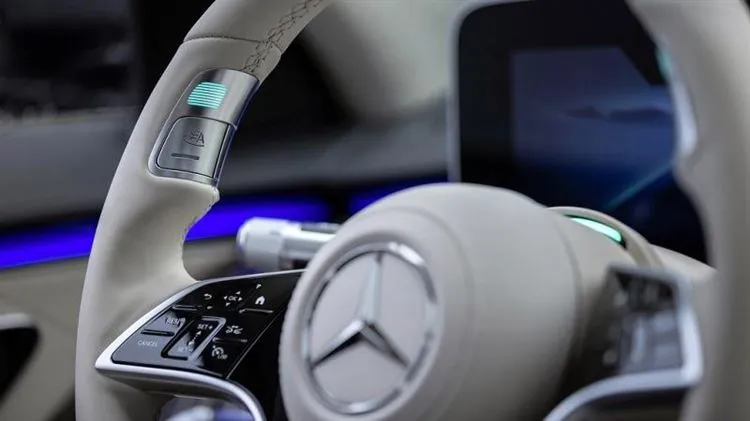
And one more important point: the driver must remain in his seat, be fastened and be ready to return to driving at the first request of the system. If this is not done within ten seconds, Drive Pilot initiates an MRM (Minimum Risk Maneuver) – turns on the hazard warning light and stops smoothly without changing lanes.
Third nuance. More precisely a question. Why did Mercedes with such a modest set of features become the first of the autonomous vehicles of the third level, and Tesla with its almost full-fledged autopilot, right? It seems to be a matter of bureaucracy and politics. Last year, a German court banned Tesla from using the word “autopilot” as misleading, because the FSD (Full Self Driving) complex is only certified at the second level of autonomy, and the description of the system states that it does not display an autonomous car and that the driver is obliged ” actively follow the management process.
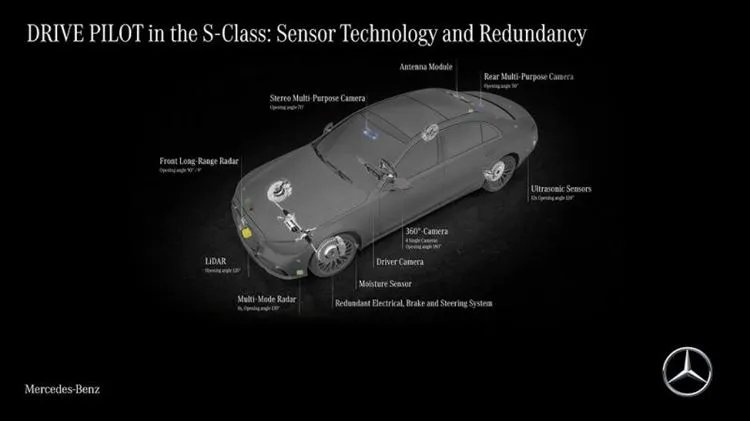
But, perhaps, the question is in the hardware. Daimler uses cameras, radars, lidars and even microphones (to recognize signals from special vehicles), and supplier Mercedes Valeo says level-three range is only possible with second-generation lidars. The S-Class was the first to get this: it scans space at a speed of 25 times per second, equipped with a washing machine and heating to work in any weather. Tesla, on the other hand, is rejecting expensive lidar by relying on cameras, but has so far failed to certify its system for Level 3, and a Model Y SUV with Luminar lidar was tested in Florida in late spring 2021.
Finally, nuance number four is responsibility. Something Daimler isn't talking about yet. In 2017, Germany updated the liability laws for drivers, owners and manufacturers of autonomous vehicles. Since the driver is not officially involved in driving while the Drive Pilot system is operating, the question arises: who is responsible for accidents if they occur due to the failure of the “autopilot”? German law basically assigns it to the car owner. But responsibility also falls on car manufacturers if it is proven that the system has failed and violated the parameters of safe algorithms. To do this, autonomous vehicles must have a “black box”.
In addition, for road traffic accidents involving autonomous vehicles, there are double limits on compensation for victims: ten million euros in case of death and two million in case of property damage. All this, of course, will also affect insurance rates. And by potential demand from private clients.
it is possible that a Mercedes with Drive Pilot system will be rented first, as Honda did with its Legend flagship in Japan. However, Daimler has not yet commented on these details. But in any case, he went down in history – albeit with reservations – first.
