
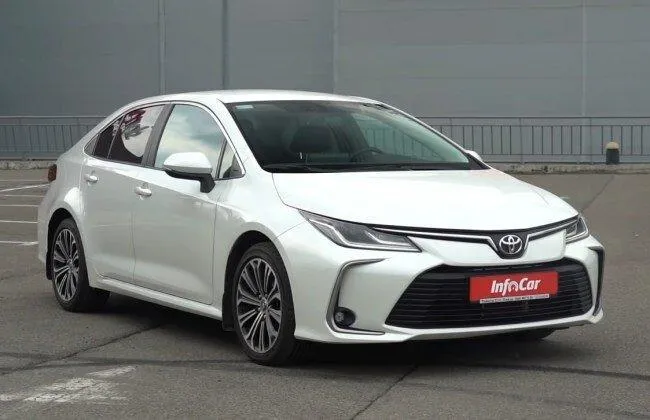
Toyota Corolla: is it worth overpaying?
The Corolla model has always occupied the top lines of sales ratings in our country. The current generation is no exception. Now it's time to figure out what this Corolla is. True, it should immediately be noted that in our country this – the twelfth – generation of the Japanese sedan appeared about a year ago. Why haven't we tested the Corolla yet? The thing is that only a hybrid version was presented in the test park. And while I was impressed with the hybrid Camry at the time, I wasn't prepared to talk about a $28,000 C-Class. Namely, this is how much the Corolla with a hybrid power plant cost.
Today we have a Toyota Corolla with a 1.6-liter naturally aspirated engine on the test. Given the popularity of this model, we can assume that many of you are already very familiar with it. Therefore, for more information, I will compare Corolla with its competitors. The most suitable, in my opinion, are the outgoing generation Skoda Octavia (this car is also a bestseller in our market) and the current generation Hyundai Elantra (which is in third position in sales in this class), which will soon also receive a successor.
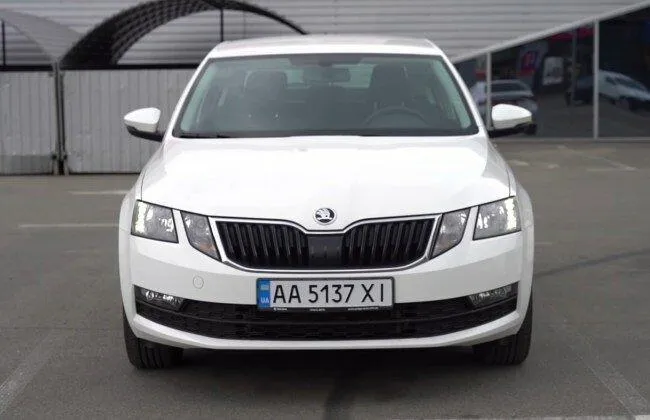
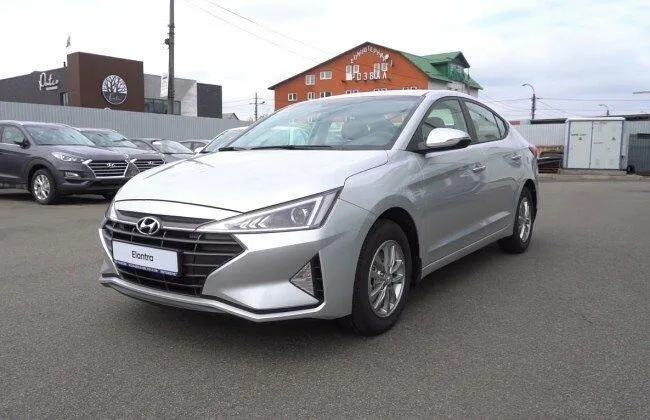
Of course, here one could safely add a few more worthy cars: Renault Megane, Ford Focus, Honda Civic or Mazda3. Some of them can be really close to the Corolla in terms of the balance of qualities. But the most important comparison factor in our history is the engines. All competitors presented today have 1.6-liter naturally aspirated engines that are paired with automatic transmissions. In addition, all three models are leaders in sales in their segment. That is why it seems to me that it would be most correct to compare these models.

We divided the entire test into disciplines, for each of which a score will be given (from 1 to 3 points). Summing up, we will calculate the points received by competitors. In order to make the comparison more objective, we will go through all the main criteria that buyers consider when choosing a future car.
Appearance
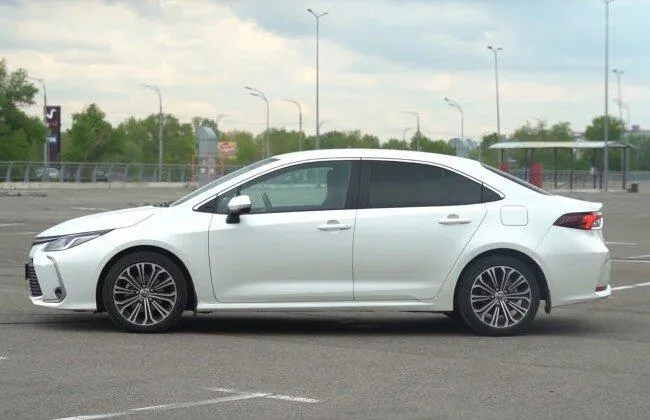
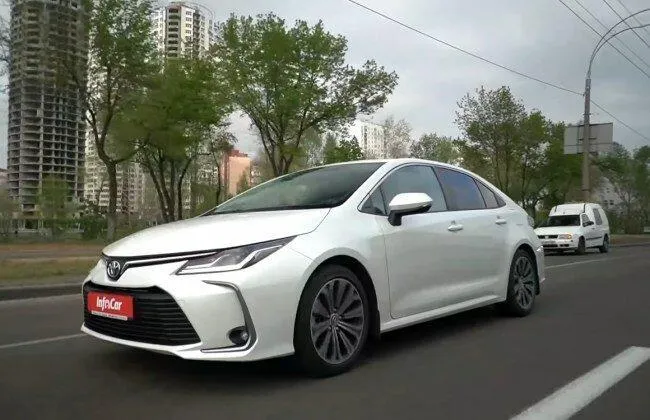
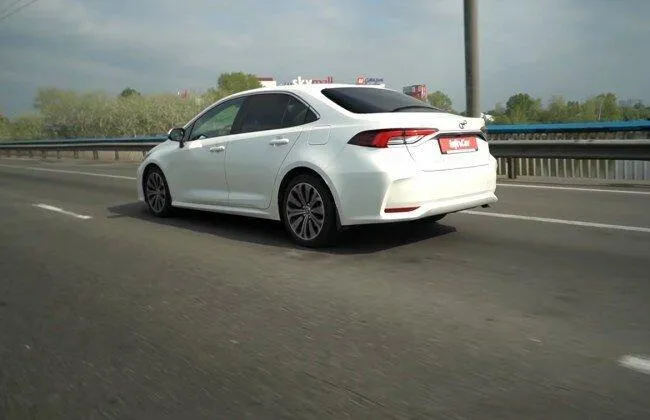
Toyota Corolla is a model with a rich history that goes back more than fifty years. During all this time, twelve generations were created, which turned into fifty million copies sold. The current Corolla, as for me (and I'm sure many will agree with me), has the most attractive appearance. At the same time, the appearance of the car looks restrained, and there are no unnecessary attempts to stand out due to non-trivial solutions.
But with the Elantra, things are different: the restrained and in many ways elegant appearance of the pre-styling model was replaced by experiments and then still “raw” notes of the modern design concept of the entire Hyundai brand. The result is a continued good level of sales and an increased number of disputes about appearance. In my opinion, Elantra turned out not very attractive. But soon there will be a new generation of models with a completely different design.
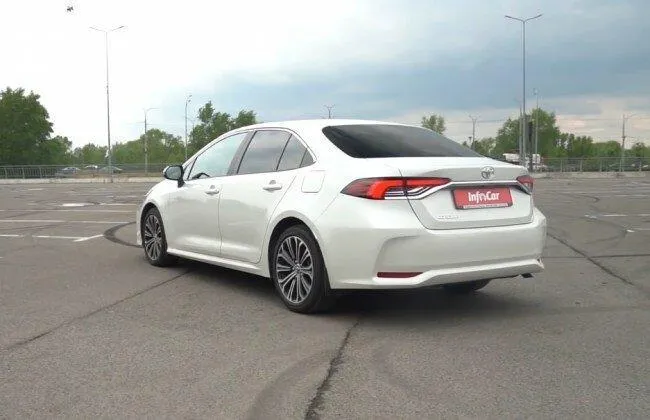
Octavia is an example of a completely different approach. The appearance of this popular model has become so standard and already familiar that you simply will not hear criticism of it. Octavia is… “just Octavia”.
As a result, according to the criterion of appearance, I am ready to rate Corolla by 3 points, Octavia – by 2, and Elantra received only 1 point from me (so to speak, for participation).
Optics
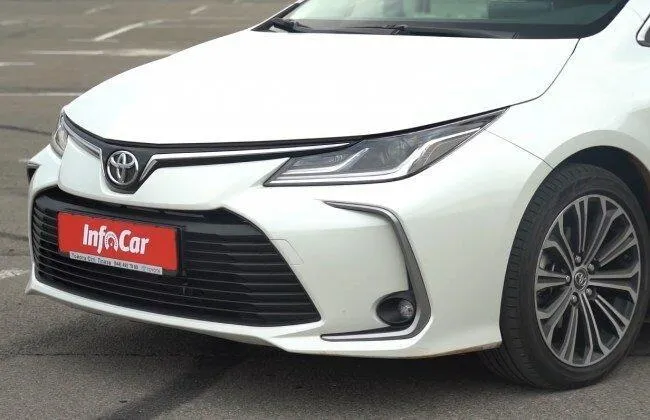
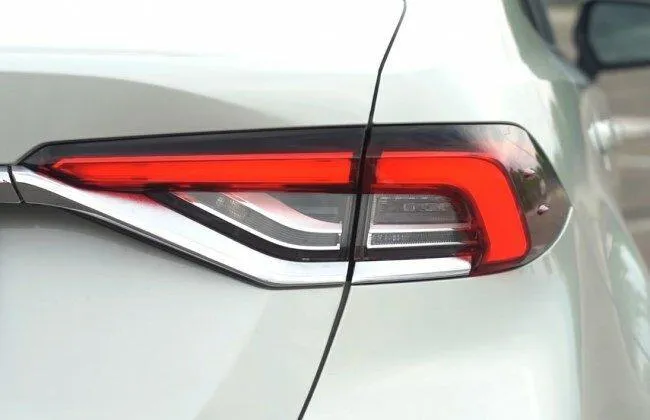
All presented cars offer LED optics, but not in the basic versions. But Elantra in the maximum configuration is equipped with an adaptive head light. Otherwise, the lighting equipment of all competitors is at a relatively equal (good) level. In this discipline, all applicants receive 2 points from me, which, it seems to me, is quite fair.
Paintwork
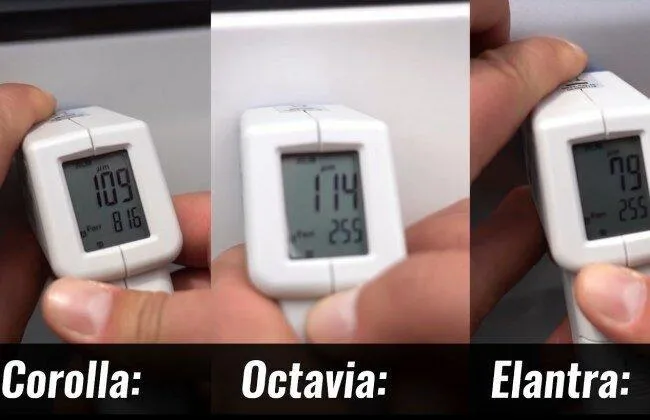
We measured the thickness of the varnish on each of the cars and got results that, while slightly different from each other, are still within tolerance. Skoda and Toyota get 2 points each, but Elantra gets 1 point: it has a slightly thinner varnish thickness.
driving position
Salon Corolla has changed significantly, and now it guesses the design solutions of the “classic Japanese sedan” from the late 90s or early “zero”. Similar decisions in the architecture of the front panel were used in the Camry XV30, and in the sixth and seventh generation Honda Civic, for example. I do not consider this approach a design flaw: I even like it. I also note that there is enough space in the cabin, but not in excess. The driving position is moderately comfortable, primarily due to good seats. True, I would like a large range of steering adjustment.
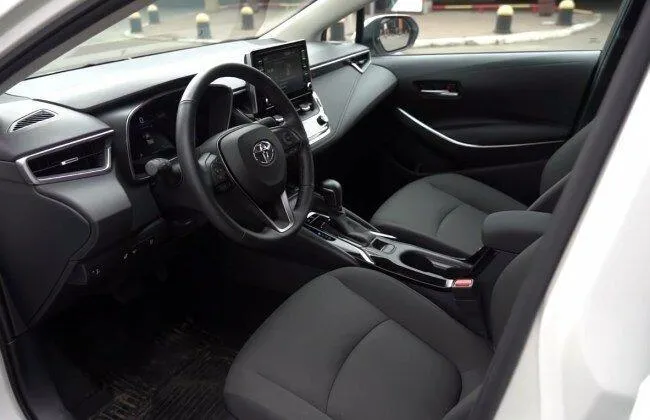
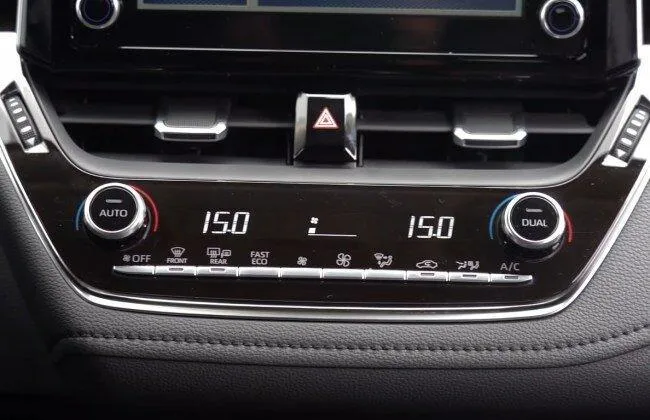
The front panel looks good, but the main thing is that the functionality of all the controls located on it is on top. The climate control buttons are “classic” rather than touch-sensitive, so they are very convenient to use. The eye is pleased with both the conciseness of the design and the pleasant blue illumination of the “climate”.
The Czech competitor offers noticeably more space up front. In addition, I like the landing in the Skoda more than in the Corolla. On the other hand, the interior of the Octavia no longer looks as modern as the interior of the Japanese sedan. However, the A7 generation is already leaving the market, and we are about to have its successor.
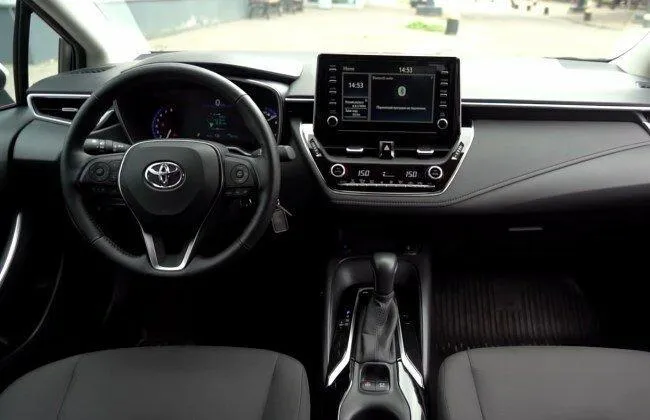
I have no complaints about the quality of materials and assembly at Toyota – everything is done at a high level. But in Octavia, this same high level is complemented by the fact that the plastics on the door cards, as well as on the front panel, are soft. It's not entirely clear to me why the Japanese decided to save on this: Corolla is not a cheap car at all, but the plastic on the doors turned out to be hard.
The same situation with the design of door cards and Elantra. The interior of the Korean sedan also does not “hold out” to Skoda, but it is on the same level with Toyota. That is, the driving comfort here is slightly better than that of the Japanese model (especially for tall people), but the combination of finishing materials is somewhat worse. The design of the front panel Elantra is not new, but there is nothing to reproach him with.
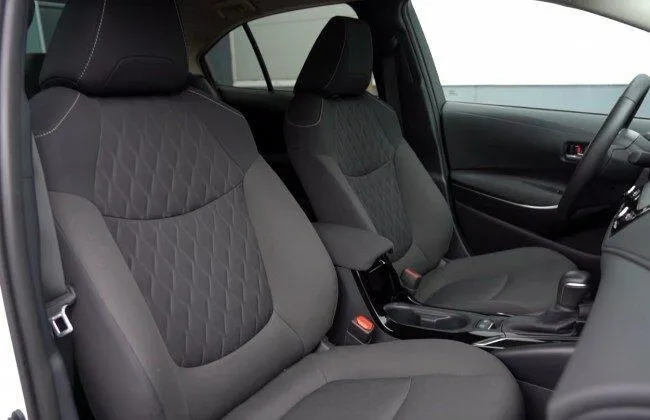
As a result, for the driver's seat, steering wheel, finishing materials and general approach, the Corolla and Elantra get 2 points from me, but the Octavia performed better in this discipline, so it gets 3 points. Still, this is a European car, created by Europeans for Europeans.
Multimedia
Everything is ambiguous here. The fact is that the Corolla multimedia system cannot boast of having Apple CarPlay and Android Auto. In our time, as for me, this is the main omission in terms of multimedia capabilities.
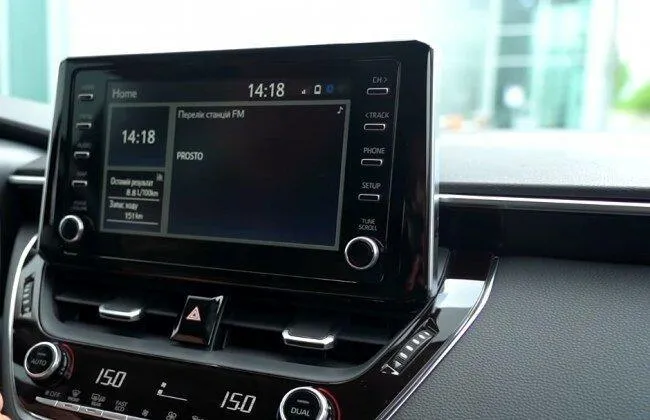
If we do not take this fact into account, we can say that the functionality of the systems of all three cars is approximately at the same level. But, nevertheless, I will add a point to competitors for having these modern features, so Skoda and Hyundai get 3 points each, and Toyota only 2.
back row
Despite the considerable size of the Toyota wheelbase (2.7 m, which is a good indicator), there is not much space in the rear row of the car. In addition, in comparison with its predecessor, this Corolla model has become lower, which is not an advantage for me. So although there is enough legroom now, a tall passenger has to slide down a little so as not to prop up the ceiling with his head.
I find myself in a similar situation when sitting in the back of an Elantra. This is not to say that there is plenty of free space here, and besides, the ceiling is even lower than in Toyota.

But the situation with Skoda surprised me a little. I was expecting the Octavia to lead the way in rear passenger space, but that wasn't quite the case. Places on the legs – obviously no more, the reason for this was a shorter base. But there is a small margin of headroom.
As a result, for the convenience of placing passengers in the back row, everyone gets 2 points. But I will not hide the fact that the Czech liftback surprised me. I expected the Octavia to be more spacious than the competition, but, unfortunately, there is not much legroom here, and even the high tunnel interferes with the average passenger. This is one of those situations where it seems that you already know the features of the presented cars very well, but when comparing them face-to-face, everything turns out to be a little different.
Trunk
The trunk volume of the Corolla is 471 liters – you can’t call it small. The opening is quite wide and high. The compartment itself is finished well, there is a stowaway under the flimsy floor. When folding the backs of the rear seats, you need to keep in mind that due to the power structure of the body, the inner opening turns out to be small, and a step also appears.
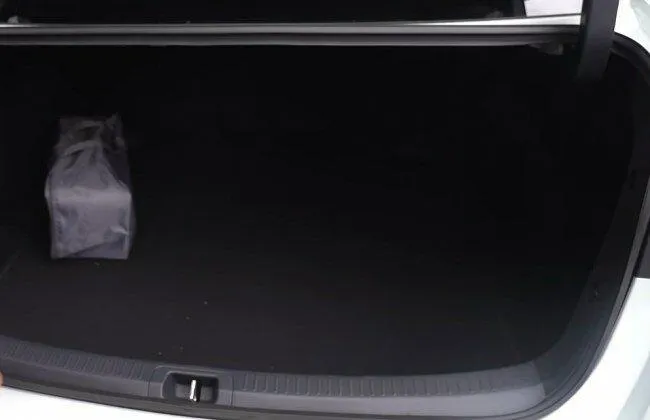
In a Korean car, the situation with the luggage compartment is very similar, although the compartment itself has a slightly smaller volume (458 l), the same with the opening. But Octavia has an incredible trunk. With its 590 liters of volume, this model simply tears its competitors to shreds. I think that the dimensions of the Skoda trunk are even redundant. Nevertheless, the Czech car gets the maximum score from me for ease of loading / unloading and size. The result is as follows: Octavia gets 3 points, Corolla – 2, and Elantra is content with 1 point.
Clearance
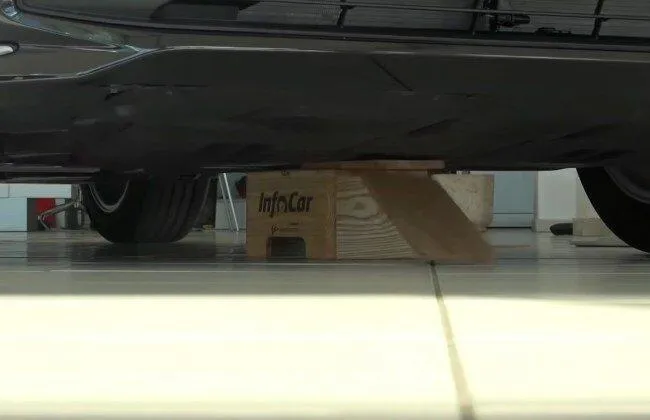
Corolla was able to confirm the 13 cm of ground clearance declared by the manufacturer, but this indicator itself is undoubtedly small. Octavia can pass under the bottom of an obstacle a little more than 14 cm high. For this class of car, this figure is already normal. And the leader in this discipline is Elantra with a real ground clearance slightly exceeding 15 cm. As a result, Corolla gets 1 point, Octavia – 2, and Elantra – 3 points.
Engines and dynamics
Now we can move on to one of the most interesting disciplines – dynamic characteristics. The engine volumes of all rivals are the same – 1.6 liters. But Corolla is equipped with the most modern unit for the entire trio. There is a system for changing the valve timing, and in terms of return, this engine shows the best performance among competitors – 132 hp. with. and 160 Nm of torque. Corolla is followed by Elantra with 128 hp. with. and a moment of 155 Nm, closes the top three Octavia, the output of the motor is only 110 forces and 150 Nm of torque.
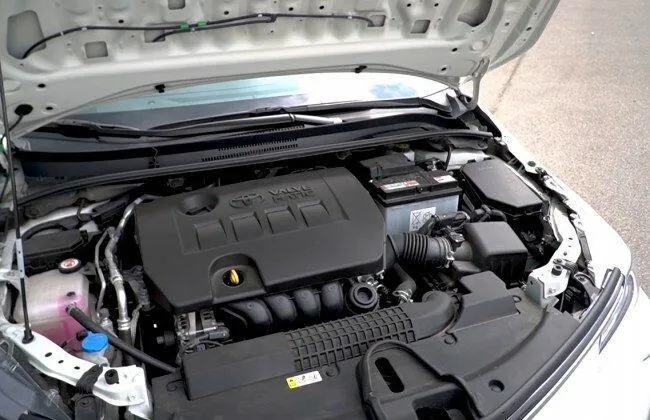
Indeed, in terms of engine performance, Toyota is ahead of both Skoda and Hyundai. Does this mean the Corolla is the fastest? Not everything is so clear. Claimed acceleration to 100 km / h in Octavia is 12 seconds, and let's face it, it's slow. The Korean sedan – in theory – should be a little more dynamic – 11.6 s. Corolla's official figures promise 10.2 seconds of acceleration. Considering that the declared characteristics often differ from the real ones, we checked the dynamics of the Corolla ourselves.
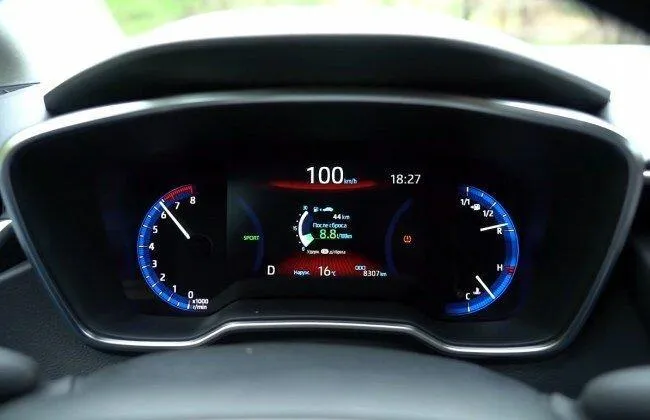
As a result, Corolla could not meet the passport data: the best acceleration to 100 km/h took 11.2 s, while the rest of the results are at the level of 11.6-11.7 s.
By and large, I would have to rate the dynamics of each of the competitors at 1 point: acceleration in both 11.6 s and 12 are too slow in 2020. But in fairness it should be noted that Corolla accelerated to 100 km / h faster than its competitors. Therefore, the Japanese sedan gets 2 points (in advance), the Korean sedan and the Czech liftback – 1 point each.
In this context, it is worth mentioning that if we laugh at the dynamics of the Mazda3, then the criticism of the dynamic performance of these cars is more than fair for today's test subjects.
Gearboxes
From a formal point of view, all of today's competitors are equipped with automatic transmissions. But the fact is that Elantra and Octavia are equipped with hydromechanical “automatic machines”. The Korean car has a box developed by Hyundai, and the Japanese Aisin unit is installed in the Skoda. I have no comments on the operation of these automatic transmissions: the Elantra and Octavia “automatic machines” are set up perfectly.
But the CVT is installed in Toyota, and its operation makes me feel ambivalent. On the one hand, it is difficult to find true fans of this type of gearbox. On the other hand, in the case of Corolla, I can say with confidence: Japanese engineers have learned how to make sure that no one has any complaints. True, up to a certain point – until you start to press the accelerator pedal to the floor. At such moments, the imitation of switching immediately disappears somewhere, and the variator begins to “bite” the speed. As a result, those shortcomings for which CVTs were criticized do not appear during normal driving. But when you try to drive dynamically, you understand that the problems have not disappeared anywhere.
Nevertheless, the engine and the variator are not bad “noisy”: they do not transmit extra sounds to the cabin. So during a measured movement, such a tandem works quite well. And even though this is a controversial case, I will rate the Elantra and Octavia automatics at 3 points, and the Corolla variator gets 2.
Suspension
From the comparison of our cars in this particular discipline, I learned one of the main revelations of our test. If earlier I doubted the high smoothness of the Corolla, then after some time behind the wheel I am forced to state the opposite. So “adult” behavior of the Japanese sedan on the road really surprised me.
In this generation, the Corolla's rear suspension received an independent design. That is, traditional MacPherson struts are installed in front, while an independent circuit with a stabilizer is installed in the back. The smoothness of the course from this has increased significantly, and the stability of behavior has also increased. The words said by someone that “Corolla is a small Camry” can be considered quite fair: the car reacts to bumps with good energy intensity, and some “breed” can be considered in the suspension settings.
The Octavia and Elantra also ride well, despite the rear-mounted beam. But, of course, a little more rigidity in their behavior is still present. Therefore, I give the Japanese car 3 points, and the rest – 2 each. They don’t get 1 point only because the beam is cheaper to maintain and, as for me, it is less afraid of our roads.
Steering
The Corolla steering also deserves the highest rating, but, unfortunately, it does not deserve the maximum score. The steering wheel is too light, it does not transmit all the necessary information, and the effort does not increase in proportion to the set speed. In a broad sense, the level of steering adjustment is average, but this is only when compared with those competitors that we have today. If a Honda Civic or a Ford Focus were on this list, Toyota's steering setup would be nothing compared to them.
In general, each helmsman can be considered only “normal”, nothing more. Therefore, all participants in the comparison receive 2 points.
Noise isolation
“Shumka” is a collective concept, and it consists directly of sound insulation, as well as vibration isolation, which affects the perception of silence on the go no less. And here everything is ambiguous. The “Shumka” in the Corolla can hardly be called the best, but at the same time, the vibration isolation had a positive effect on the general feeling of isolation of the cabin from unnecessary sounds. It turns out that in a Japanese car at high speed there is more noise in the cabin, but up to 80 km / h, on the contrary, it is less than in the salons of competitors. Therefore, in this discipline, each of the cars receives 2 points.
Fuel consumption
Toyota Corolla consumes about 8.5 liters of gasoline per 100 km in the city, which is fully consistent with the consumption of Octavia with a naturally aspirated engine (based on owner reviews). But the Elantra has a little less appetite: the engine of the pre-styling version in the city used less than 8 liters per “hundred”. But even half a liter of difference means an overpayment of only $ 500 per 100 thousand kilometers. Therefore, the fuel consumption of these cars can be considered parity. Accordingly, in this discipline, all cars receive 2 points.
Prices
When buying a new car, many future owners are interested in its country of origin. Of course, we will not rate this discipline, but for general development it is worth noting that Corolla, as before, is produced in Turkey, Elantra still comes from Korea, and Octavia comes from the Czech Republic (but is assembled in Ukraine).
Prices for a Toyota Corolla with a 1.6-liter engine and a CVT start at a little less than $20,000 and end at $26,000. This is significantly more expensive than competitors. For example, an Elantra with a naturally aspirated engine and an automatic transmission as standard can be obtained for almost $18,000. And for 25 thousand you can buy Elantra in the maximum configuration, and buy another 3000 liters of fuel for rent, which will last you for two years of operation. The 1.6-liter Skoda Octavia with automatic transmission is now available in just one (but far from poor) Ambition package for $20,500.
findings
Let's sum up the points. The Toyota Corolla scored 29, the Skoda Octavia 31 and the Hyundai Elantra came in third with 27 points. The result of the Corolla once again confirmed that this is a good car. We knew about this before, but such as now, the form of the test made it possible to see in what it is better than its competitors, and in what it is inferior to them. After all, everyone has their own priorities. It is more important for someone to have a large trunk, and I understand such Octavia owners. And owners of Hyundai Elantra will say that they do not want to overpay for the imaginary benefits of Toyota. And I am also ready to accept this opinion.
But still, Corolla in some small things can be considered a little stronger than the rivals presented on the test. Probably the most tangible advantage is a very comfortable suspension, the settings of which you will surely appreciate on our roads. And she has a fresh appearance and a pleasant interior. Of the obvious disadvantages, one can note a small ground clearance and limited capabilities of the multimedia system. Also, not everyone will like the landing.
But the most important thing is the price. Toyota Corolla is the newest model compared today, and it is significantly more expensive. Of course, this is a good car, but it is not cheap. If this sedan cost at least two thousand dollars less, it would be much easier to compare.
In the same state of affairs, it would probably be fair to compare this version of the Corolla with the Elantra, equipped with a 2.0-liter engine. In this case, the Korean car would be noticeably more dynamic, because that engine already produces 155 hp. A big plus of this version is the ability to easily install HBO, since the 2.0-liter engine is equipped with hydraulic lifters. And in general, the difference in price between versions of Elantra with different motors is only a thousand dollars, which is not so much.
C Octavia is still ambiguous. Again, for a little extra, you can get a liftback with a 1.4-liter TSI and a DSG “robot”, and in this configuration, the Octavia will be significantly more pleasant on the go. On the other hand, Toyota “covers” all these claims to the initial price with a very significant argument – better liquidity in the secondary market.
There is no doubt that the current Toyota Corolla is a good car. There is also no doubt that this model will be bought. Everything is natural here: the car is valued for its legendary reliability, which is joined by the “magic” of the Toyota brand and the trendiness of the new generation. The sum of these factors makes the overpayment (compared to competitors) quite acceptable. But here everyone must make their own decision.
