
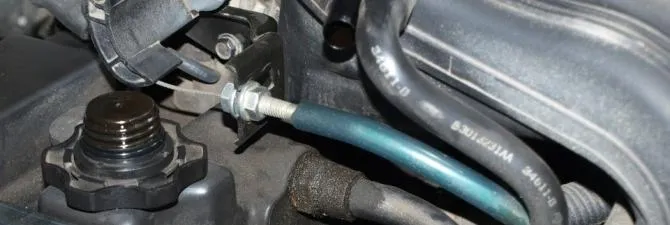
Gasoline vapor recovery system – check and clean
When operating a car with a gasoline engine, fuel vapors are formed, the emission of which becomes very dangerous for the environment. To prevent this from happening, modern manufacturers equip cars with EVAP systems – Evaporative Emission Control. Their main task is to capture gasoline vapors and then burn them in the engine.
1 History of the modern EVAP system
The first gasoline vapor recovery system appeared on Toyota cars in the 60s of the last century. Then it included a fuel tank, a filler cap with a check valve and an adsorber with a set of vacuum check valves. Despite the complex design for those times, the first EVAP systems did not cope with their task. Gasoline vapors continued to enter the atmosphere, the car had an unbearable smell of gasoline.
In order to somehow solve the problem with the emission of harmful gasoline vapors into the air, in the early 1990s, American manufacturers conducted a series of tests: they placed activated carbon inside the adsorber to quickly absorb fuel vapors. This is how modern EVAP systems appeared, which today are used by all automotive companies in the world.
2 How an EVAP system works
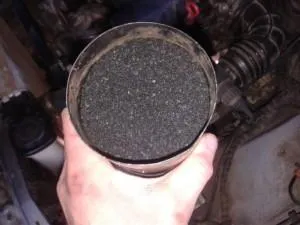
The basis of this system is an adsorber that absorbs gasoline vapors from the fuel tank. The walls of the adsorber are filled with activated carbon granules, which prevent fuel vapor molecules from entering the atmosphere. Outside, the adsorber is connected to the following parts:
- an intake manifold designed to purge the vapor recovery system;
- a power supply system from which vapors enter the adsorber;
- air filter. Generates the differential pressure required for efficient purge.
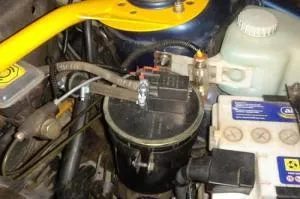
Purging is designed to free the adsorber from the accumulation of gasoline vapors. The cleaning process of the EVAP system is controlled by a special solenoid valve located between the canister and the intake manifold.
Bleeding the EVAP system is possible under certain engine loads, as well as with increased rotation of the crankshaft.
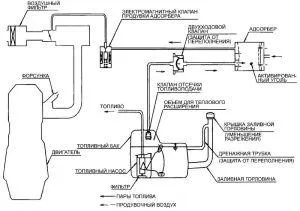
With significant loads on the car engine, the ECU automatically opens the solenoid valve. From the valve, the exhaust air enters the adsorber, after which it absorbs gasoline vapors and is sent to the internal combustion chamber. At the same time, the ratio of fuel and air, optimal for operation, is maintained in the car engine.
Turbocharged engines do not experience air pressure. Therefore, manufacturers include additional two-way valves in the fuel vapor recovery system. When activated, these elements push gasoline vapors into the intake manifold, after which they burn out in the engine chamber.
3 Self-cleaning EVAP system components
Due to the regular load on the EVAP system, its components must be checked periodically. A signal for urgent disassembly and cleaning of the adsorber or valves is the appearance of a sharp smell of gasoline in the car. Another reason to check the EVAP system is engine instability at idle. In such a situation, the first step is to check the delimiter.
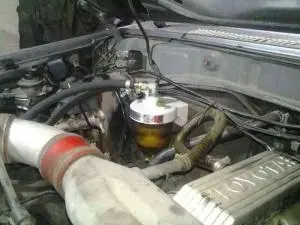
Work on the dismantling of this part should be carried out according to the following algorithm:
- To access the separator, disconnect the wire from the “-” terminal of the battery.
- Next, put the car on a lift and remove the left rear wheel. While tightening the connector lock, disassemble the separator, then disconnect the fuel drain line from the gas tank fitting.
- Then we put a screwdriver under the barrel support and remove it. Unscrew the fixing nut of the steam hose holder. Then unscrew the 2 fasteners of the divider bracket.
- We remove the entire structure from the separator, bracket, pipes and gravity valve. We carefully check the parts for clogging. Soiled items can be cleaned with a vacuum cleaner. Before this, you should make sure that there are no small parts and fasteners left in the structure. After cleaning, replace the separator and reassemble the system in reverse order.
Another element highly prone to contamination is the adsorber. It is located in the engine compartment of the car. To disassemble this part, tighten the connector retainer and remove the gasoline vapor lines to the exhaust valve. Having received direct access to the adsorber, we proceed to clean it. To do this, gently clean the dirt with a brush, then assemble the system in reverse order.
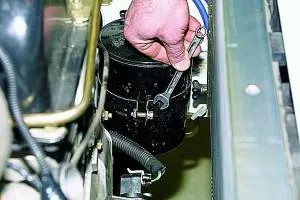
For more efficient operation of the EVAP system, experts recommend purchasing a replacement separator and adsorber. Thus, you can combine factory parts with purchased ones. In the event of a permanent failure of the adsorber or separator, the part can be immediately replaced and the vehicle can continue to operate.
