

🚗 Stage 4 Autonomous Autopilots: A New Horizon of Technology 🌐
Today we are revealing the world of fourth-stage autopilots – this is not just a technology of the future, it is a reality that will change our understanding of driving. On the site here you will find accessories for driving automation and you will be able to learn more about the latest innovations in this field.
🤖 What is a fourth stage autopilot?
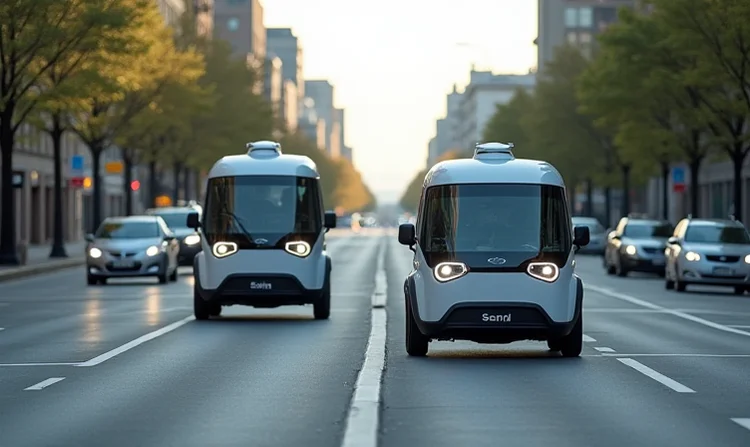
These systems are capable of fully controlling the vehicle under certain conditions, without driver intervention. They represent a significant step forward compared to previous levels of autonomy.
Main characteristics:
- Full Autonomy: In certain scenarios, such as city or highway traffic, these autopilots can take full control of the vehicle's movements.
- Safety: The systems are designed to reduce human error, one of the main causes of road accidents.
🌍 Impact on the world
Stage 4 autopilots have the potential to radically change our approach to driving and transportation systems:
Advantages:
- Environmental friendliness: Reduced emissions through optimized driving.
- Efficiency: Improved traffic flow and reduced travel times.
Challenges:
- Legislation: The need to develop new laws and standards.
- Data Security: Protect against cyber attacks and maintain privacy.
🌐 Technological innovations
The development of fourth-stage autopilots requires advanced technologies:
- Artificial Intelligence: AI plays a key role in decision making and processing data from sensors.
- Vehicle -to-vehicle communication: Share information with other vehicles for safer and more efficient driving.
🚀 Integration with city infrastructure
Stage four autopilots involve close interaction with the city infrastructure :
Key aspects:
- Smart Roads: Implementation of sensors and communication systems on roads to collect data and interact with vehicles.
- Adapting Cities: Reimagining Urban Environments for Autonomous Vehicles.
🚗 Impact on society
Stage 4 autopilots offer new opportunities for society:
Positive aspects:
- Accessibility: Improving transport accessibility for people with disabilities.
- Comfort: Free up time on the road for work, relaxation or socialising.
Potential risks:
- Employment: Impact on driving occupations.
- Ethical Dilemmas: AI Decisions in Critical Traffic Situations.

🌐 The Future of Autonomous Driving
The development prospects for stage four autopilots promise significant changes:
Prospects:
- Full Autonomy: The transition to fully autonomous transport systems.
- Integration with IT infrastructure: Interaction with city information systems to optimize traffic.
📊 Statistics and forecasts
Let's look at the statistics and forecasts related to the introduction of fourth-stage autopilots:
Current status:
- Research and Development: Major car companies and tech startups are working hard on autonomous technologies.
- Pilot projects: Many countries have already launched test zones for testing autonomous vehicles.
Forecasts for the future:
- Mass adoption: Stage 4 autopilots are expected to become commonplace by 2030-2040.
- Economic effect: A significant reduction in transport costs and a reduction in accidents is expected.
🌍 Impact on the environment
Autonomous cars could have a significant impact on the environment:
Environmental aspects:
- Reducing emissions: More efficient use of fuel and a shift to electric vehicles.
- Traffic optimization: Reduce congestion and associated emissions.

🏁 Conclusion
Level 4 autonomy is not just a technological breakthrough, but also a catalyst for social, economic and environmental change. It promises to make transportation more accessible, safe and efficient. It is important to consider the potential challenges associated with the implementation of such technologies, including safety, ethics and the impact on employment.
