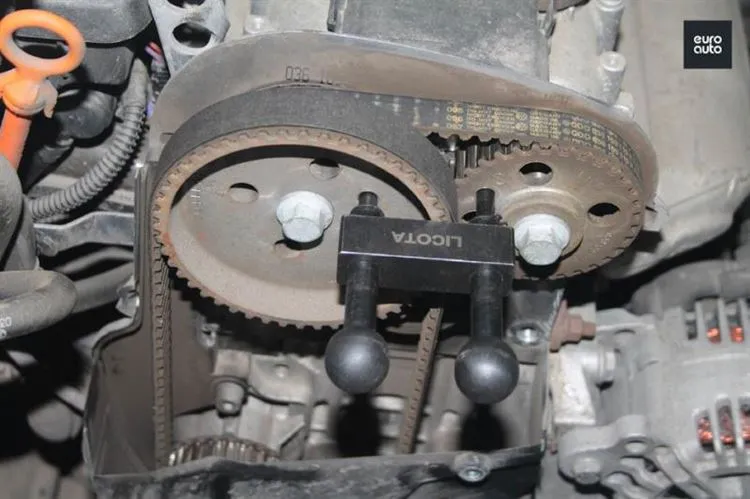
Why do timing belts break?
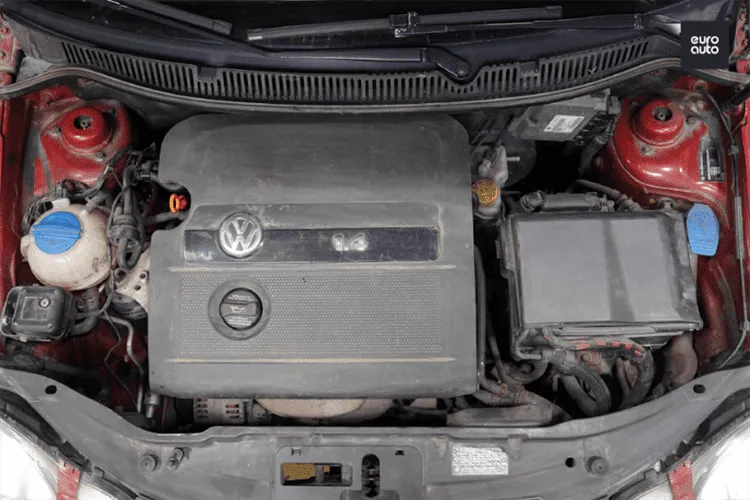
Replacing the timing belt on VAG with motors 1.4 16V
Motor 1.4 16V, Full size
I am sure that the look of these motors is familiar to many VAG-gadflies. For it has been installed since 1997 under the hoods of many, many models. I can offhand list models such as APQ, APE, AXP, BCA, BCB and others. And he became famous not for reliability, simplicity or cheapness in maintenance and not for traction characteristics. I would say – on the contrary, all this is not even in sight. He gained fame thanks to the sad statistics on the most frequent cases of timing belt breakage. And I can even point my finger: the top one always breaks out of two belts:
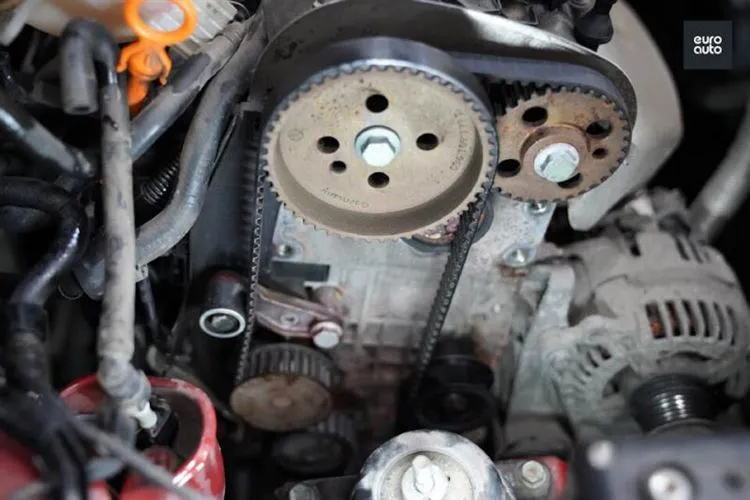
Why does the timing belt break?
There are many reasons for this, and an entire article could be devoted to this topic. However, all this has long been done and colorfully painted by the belt manufacturers themselves on the pages of their technical resources. Why is it torn on this motor and exactly the upper one?
Personally, I know three reasons:
— Malfunction of the tensioner roller. The first acquaintance with bent valves was due to a burst clip:
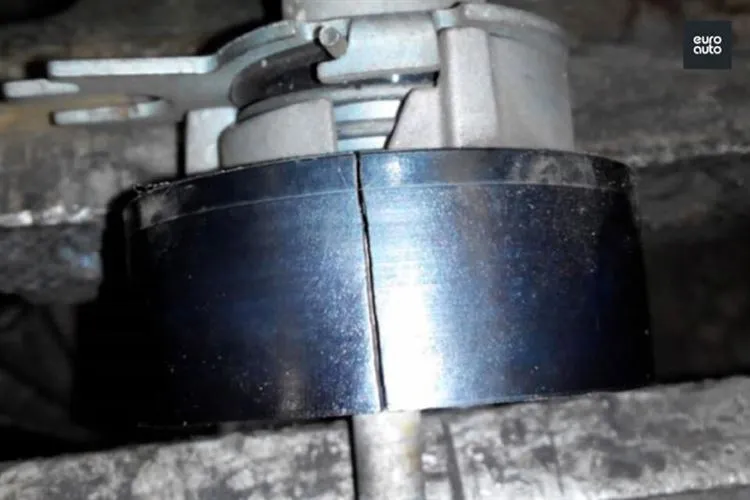
Because of what, the belt sagged sharply, jump – and bend. More than once or twice, making the first scheduled replacement of belts at 80,000 km, I removed a roller from the head, on the clip of which cracks were clearly visible:
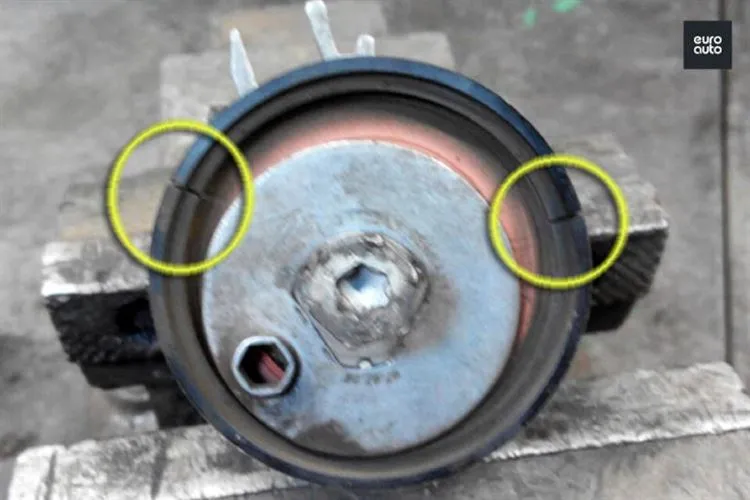
But that was a long time ago, videos began to be made more reliable. However, the belts still break. Why?
– wear of toothed gears:
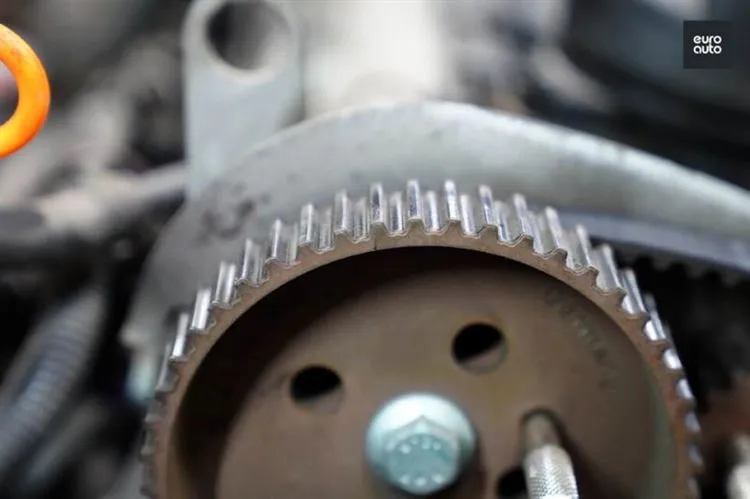
Due to the sagging of the belt, it begins to move back and forth, as a result, it itself is erased strongly, and the gear is slowly grinding off. This is not always obvious, but by 200,000 gears must be changed for almost 100% of similar motors. Proof of? A little bit later.
The third reason:
– installation errors. Personally, I do not know the precedents of a broken belt on new motors, that is, those that were put on the conveyor. But after the first or second replacement – a lot. They sin on quality, on external factors, but in fact, often the reason lies in the details, and mistakes that are not obvious at first glance come around as a decrease in resource.
Applicable to this motor, the most common errors are:
– Incorrect installation of the tension roller. The tail bent for fixation does not fall into the recess with the technological plug;
– Failure to comply with tightening torques. By tightening the bolt “with a margin”, you can pull the thread in the aluminum head of the block, and, as a result, the unscrewed roller after 30,000 kilometers.
However, there is another important factor: foreign objects or technical liquids getting on / under the belt:
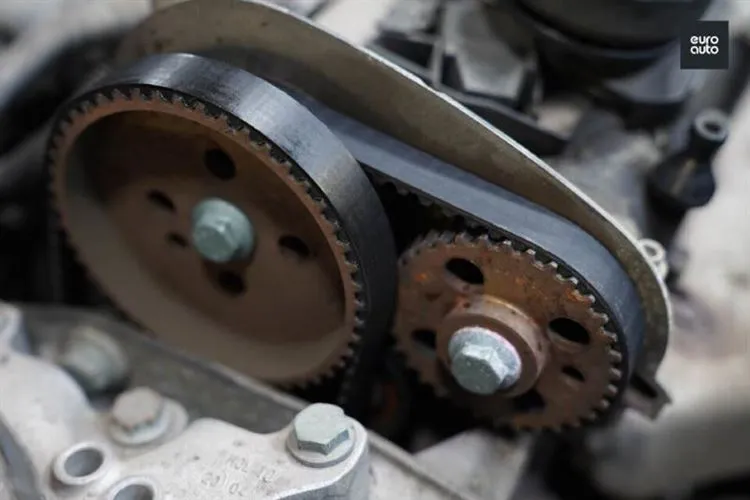
Today's “patient” will be VW POLO:
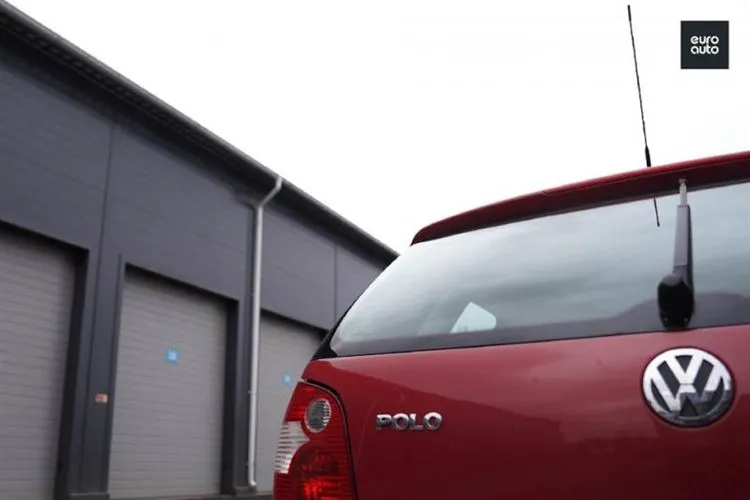
And it will serve as a very good visual example on two counts!
1) On this little car, the timing belt changed only 23,000 km ago. Only the belt and rollers, the pump was not touched, because it did not show any external signs of a malfunction. She held on for a whole 23,000 km, puffing out her cheeks, and then she decided that enough was enough, and everything she kept in herself spilled onto the ground, generously irrigating both belts and rollers along the way, thereby condemning them to re-replacement.
2) Suppose that 23,000 km ago, the belts were replaced in accordance with all the rules and in compliance with the necessary requirements. Then how to explain that the tension of the small belt is already far from ideal?
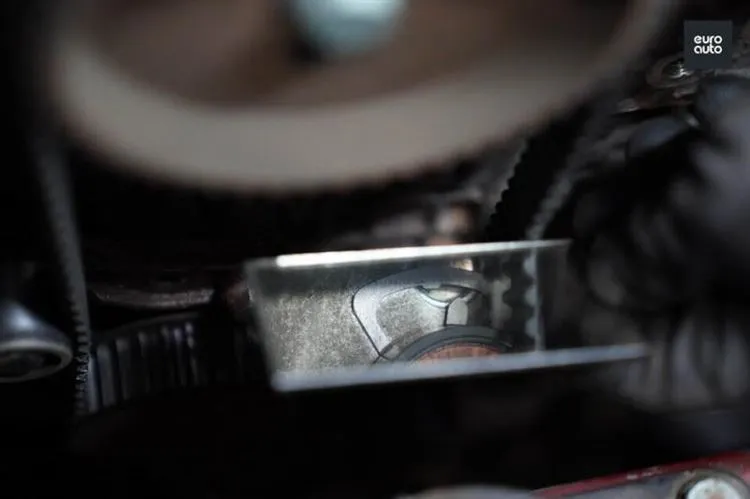
Moreover, the tension of the large belt is normal:
So draw your own conclusions…
If you are really interested in how to replace the belts correctly, taking into account all the nuances and little things, do not be too lazy to click on the link to the source. I tried to state them in as much detail as possible in the instructions, which are located on the blog on the EuroAuto website.
It turned out a lot of letters, numbers and more than 50 photos.