
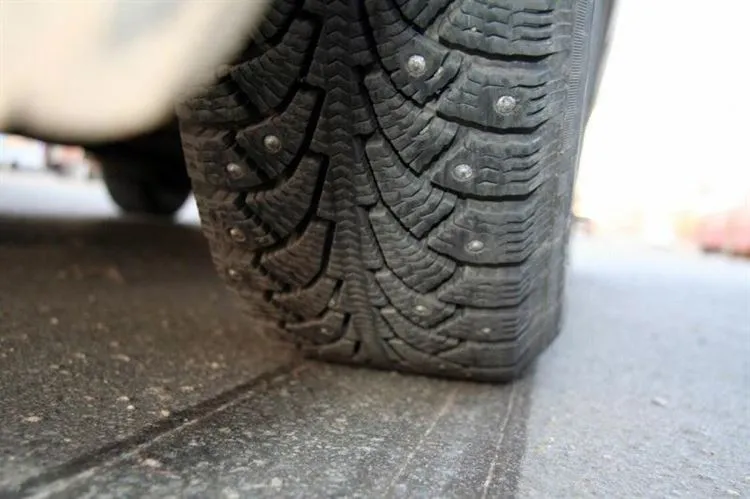
Don’t drive with winter tires in summer
Many car owners sin to operate winter tires even in summer.
Such motorists explain their act simply: it ‘s a pity or no money for summer tires, so it’s better to finish the winter one, and purchase a new set for the next cold period. Moreover, when it comes to buying a winter kit, then drivers, as a rule, have no doubts. I propose to find out whether such savings are justified.
Product material
I'll start with the mixture from which tires are made. For winter, a larger amount of rubber is used, so the slopes are softer. This mixture is designed for the fact that the tires will be operated at minus or close to zero temperatures. And when the street is at, say, 25 ° C, and the asphalt surface, by the way, is hotter than the air masses, then winter tires become too plastic. And even in the summer, the heat and the sun's rays “dry out” the winter slopes faster and, as a result, their destruction occurs faster.
Tread pattern
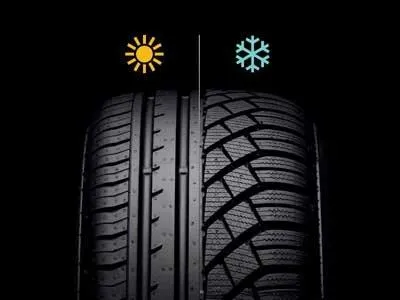
Manufacturers regularly improve patterns, sipes and blocks that provide reliable grip on ice and snow surfaces. However, on asphalt melted from the heat, all these improvements lose their effectiveness – rubber breaks occur in corners, and the tread cannot confidently hold on to the roadway. In automotive jargon, tires float. Consequently, the car slows down longer and turns worse.
Braking distances
It rises, and quite significantly. On a dry paved road, when braking at a speed of about 80 km / h, a car on winter tires may need 7-10 m more! If you move more slowly, in the range of 50-60 km / h, then the difference in braking distance compared to summer tires will be about 5 m. Is this a lot or a little? I will say this – this is the length of the D-category sedan. But sometimes you can prevent an accident even thanks to 1 extra meter. If the asphalt is wet, then the situation is more critical – vehicles on winter slopes will need 1.5 times more distance than a car on summer slopes.
Degree of controllability
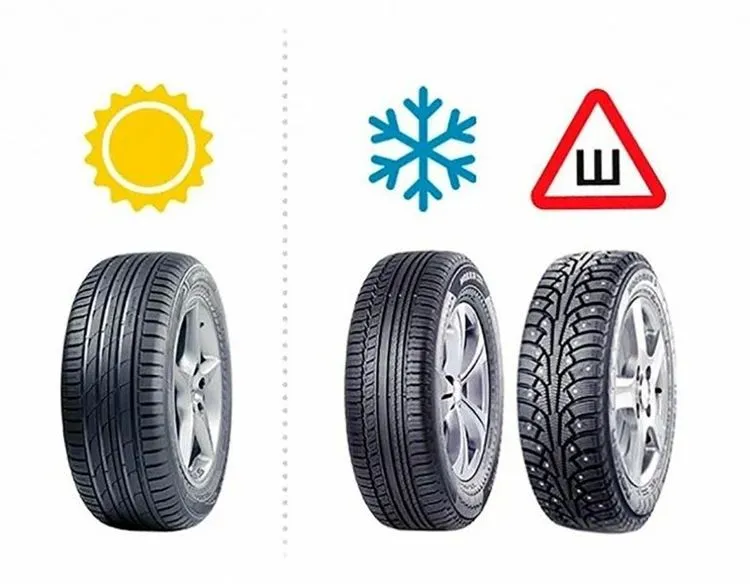
Significantly worse and driving. For example, if an obstacle suddenly arises, then it will be possible to go around it at a higher speed if summer tires are used. If we talk about the difference, then this is approximately 10 km / h. Thus, if you move at a speed of 70 km / h, then you will still become in control of the car and will be able to safely complete the maneuver. And at the same speed, but on winter tires, the control is noticeably worse and it is much more difficult to complete the same maneuver.
Now think about how the car will behave on the highway after a long drive at high speeds, if you need to brake quickly.
And a few more words about economy
This is an important point that motorists who use winter tires in the summer in order to save money should pay attention to.
So, since the composition of winter tires is soft, wear occurs much faster in summer than in winter. Therefore, their use all year round is impractical. Already with the onset of the autumn season, their appearance may noticeably deteriorate.
So don't even try to deceive the laws of physics. Do not expose yourself and your passengers to unnecessary danger.
