

In a report on the site, a used car found a body repair: why it’s not always bad and when it’s very good
In an era of high demand for cars, it is difficult to find a good car in the secondary market. And, oddly enough, it can be difficult to find some very good things: reports that can be found on all message boards. After all, many do not want to buy a car, in the history of which there is a repair in a relationship. Like, everything: this is broken garbage, why is it needed? However, not all repair history entries in the reports are negative. Often they should not become a reason for not buying a used car. The main thing here is to correctly understand where these records come from and what they mean.
How it works?
To begin with, let us briefly recall where all these stories with accidents and terrible repairs come from in the reports.
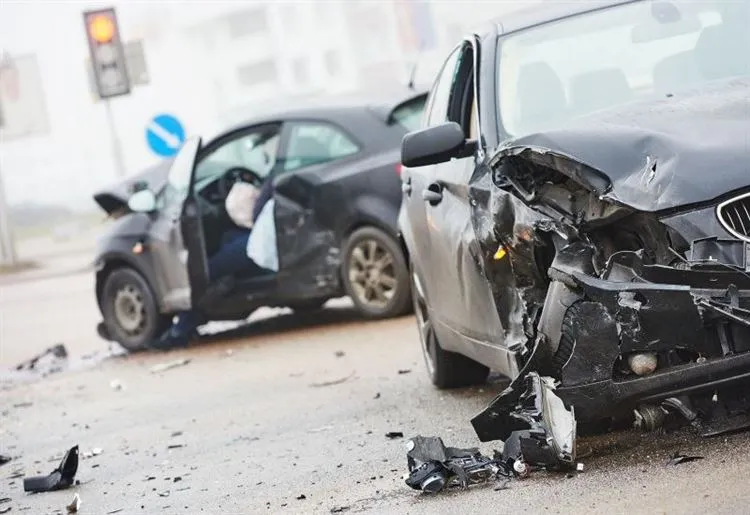
They appear either in the traffic police databases or in insurance companies that have calculated the cost of repairs. It's easier with the basics of the traffic police: there is just a fixation and an insignificant inscription from the category of “minor breakdowns” or “hitting a car”. What exactly they mean is difficult to understand. “Crash with a stationary vehicle” can mean both bumps on the bumper, which are not always visible to the eye, or worn after landing in a KamAZ vehicle standing on the side of the road. Therefore, these records are not very informative, although in some cases there is a damage diagram that allows you to find something more specific: perhaps there was an angle contact with the bumper, or there may be permanent damage to the entire side of the car with the body geometry possibly disappeared (note the geometry damage if the accident was really serious). Of course better, if the incident history is clean, and without even buying the report, you can see that in its free version this field is marked with a green checkmark. And if not? So, let's look at the history of the repair.
And here insurers and car services come to the rescue. There is more important information here, but it needs to be interpreted correctly. It is very important to understand one thing: calculating the cost of repairs and repairs are two different things. In those days, when after an accident the victim received money and did not require repairs, car owners could drive around the city for a long time, choosing a service where repairs would be cheaper. We thought that the owners did not suit the cost and went to look for another service. And this led to the fact that for repairs in the report there may be several calculations of its cost. Therefore, it is imperative to look not only at the fact of the calculation, but also at its nuances: at the list of works and details, and at the date of calculation. It is very unlikely that the same trunk lid will be painted three times in two weeks with the same lining replaced. And in this case, there will be three of them in the history of calculating the cost of repairs, which greatly spoils the impression of the car, and the actual repair will be one. Perhaps there was removed a small scratch, which is not bad at all. So don't get discouraged ahead of time and learn all the details instead.
A trifle, but nice
Insurance is not only OSAGO, but also comprehensive insurance. And there is a very significant difference between them.
Why is there not a single accident in the report, but at the same time there is a body repair or a calculation of its cost? Because new cars were often bought on credit and voluntarily and compulsorily insured for the purchase with full CASCO. For repairs with such insurance, a certificate of an accident is not required, but many wanted to avenge this overpayment imposed on the purchase of a car. And on the helmet, many painted everything that came to hand. Especially in the last year of compulsory insurance. Cars of such owners can be repainted almost everywhere just because of a few scratches, which I basically wanted to remove. This, of course, is excessive: therefore, it will be difficult to sell. But if there is no accident in the report, but there is a repainting of the bumper, then almost always it was painted solely for aesthetic reasons and for the helmet. However, this does not change the rules for checking all iron with a probe.
And another weakness of the insured under the comprehensive insurance policy is the desire to replace windshields. They may have changed after the first chip and more than once. Therefore, if the car had such insurance (which can also be seen in the report) and did not have the original windshield, this is also not a problem. The times when the originality of the windshield was almost a fetish and a sign of the absence or fact of a serious collision are gradually fading into the past. If there are no other signs of a head-on collision (the rest of the hardware and headlights are intact and original, the pillows did not catch fire), you should not worry about non-native glass.
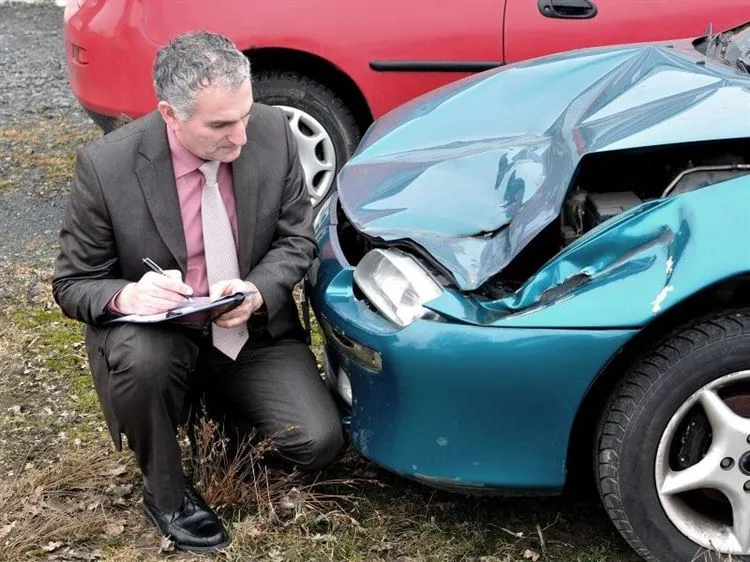
Of course, it is best if there is no repair at all in history. But even if they are, it is not always bad.
Here, first of all, we can recall the many hatchbacks and crossovers that suffer from the problem of a rusty tailgate. If there is information that it was not a new car that was repainted, then there is nothing wrong with that – it is better to get rid of corrosion in time than to wait for a rusty fringe or hole. The main thing is that the coloring is really cosmetic and there is no putty for paint. And of course, it must be of high quality and not too rusty. Therefore, this paragraph of the report is not a sentence, but an occasion to see the car with your own eyes.
The same can be said about any minor body repair. In a city of over a million people, it's nearly impossible to find a car that's been running in its original paint for ten years and is free from blemishes, nicks, or scratches. And if they were eliminated before you, that's fine too.
What to watch in the repair history?
Of course, the details of the repair are of interest. Sometimes it looks abnormally long and intimidating with just one volume. In some cases, this volume should not be intimidating.
To fully appreciate the repair, everything was included in its calculation, including all the little things like disposable plastic clips and electrical tape. As a result, the repair of the same bumper in the report can look not only spectacular, but also dramatic: with a list of removal and installation of all accessories, which can be very numerous on a modern bumper. You look at such a report and understand that the bumper skirt is painted, and the work and consumables are painted on two sheets. Of course, if you do not read carefully, it becomes scary. And if you read it, it's fun.
There is another important position that is not related to body repair, but no less interesting – this is visiting services. Large services (EuroAuto, Fit and some others), which are partners of used car dealerships, transmit information about the work done for reporting. And sometimes you can find interesting details there.
For example, on a 2010 Mondeo diesel engine with 100 thousand mileage, the turbine cartridge was replaced. As a sign of mileage distortion, no – a smooth curved line. But remember that all these reports work with information only from 2015. Repairing a turbine with a mileage of 100,000 is ridiculous. As well as the mileage of an 11-year-old diesel car. In this case, such work can be considered an indirect sign of a twisted race.
There can be many such signs. But to decipher them, it is necessary not only to have a detailed report available, but also to know something about the technique of a particular machine.
however, the reverse situation may also be with mileage – the report says that it could be skewed, but in fact it is not. It's just that some service specialists, during a visit to the service station, mistakenly rewrote the mileage and sent this data to the database. In this case, the report will say something like “carefully, the mileage may have been skewed” and the graph will look strange: 100 thousand, 110, 80, 120, 130… Of course, such a jump should attract attention. Most likely, this is just a mistake of the workshop operator, and in this particular case, the report should not be trusted.
About mentality
During intercourse, you know less and sleep better. Merchants who sell recycled junk probably hate it a lot. It can be useful to the rest, but only with the right understanding. Minor body repairs are not as scary as many people think, and sometimes they should be more fun than disappointing. However, there is a downside: too many people are afraid of him, and therefore the sale of a car with such a history may be delayed. This, of course, is bad, but there is no escape from the mentality: public opinion is such that any car older than ten years should be in its native paint. Unfortunately, this is not the case.

You can't even trust a relationship 100%. As I said above, wrong mileage is pretty common. And even the most dishonest dealers and scammers are engaged in VIN replacement – for the message in the ad, they indicate the VIN of another car with a crystal clear history. Therefore, before buying, be sure to check the VIN that you see on the car and what is indicated in the report. Sometimes they are completely different numbers.
And, of course, the main tool when choosing a car in the secondary market is not a report, but your own eyes, a diagnostic tool or expert advice. That is, the report can act as a filter, but nothing more. And if you do not know how to use it, it does not help, but only complicates an already difficult choice, although this in itself is a very useful thing. Just not everyone understands.
