
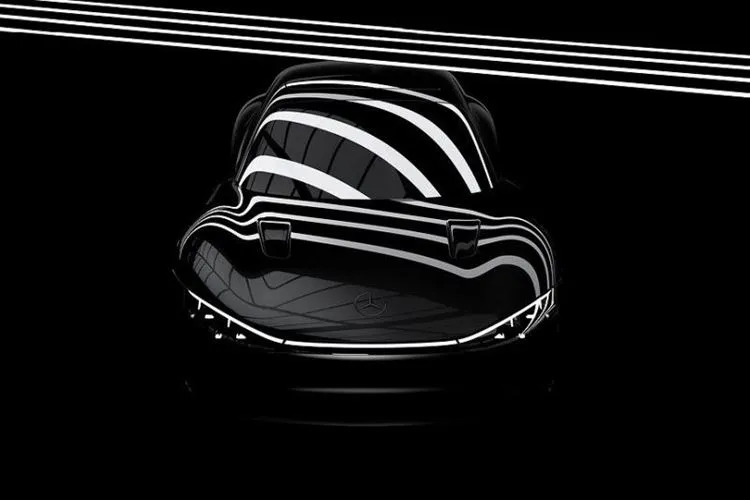
Mercedes EQXX promises record-breaking aerodynamics and 1,000 km range
Information about the strategic project EQXX comes literally drop by drop a year. Last fall, Mercedes first promised a revolutionary electric car with a range of 1200 km. Last summer, they talked about the details of full electrification of the entire company and clarified the goals for EQXX. And now Daimler has revealed the most promising concept teaser and announced the premiere date: January 3, 2022 at CES in Las Vegas. It was also announced that it would be “the most efficient Mercedes ever built”.
The summer project brief set three goals for EQXX. Firstly, a range with a slightly less ambitious, but still four-digit value: 1000 km. Secondly, energy consumption is less than 10 kWh per 100 km. And thirdly, the battery charge density is 20% higher than that of the serial EQS.
Mathematically, this means that a large 108 kWh EQS battery at this speed is capable of a range of 1080 km. But given the higher charge density, it can be assumed that such a reserve of energy will be contained in a battery that is comparable in size and weight to the “small” 90 kWh EQS base battery.
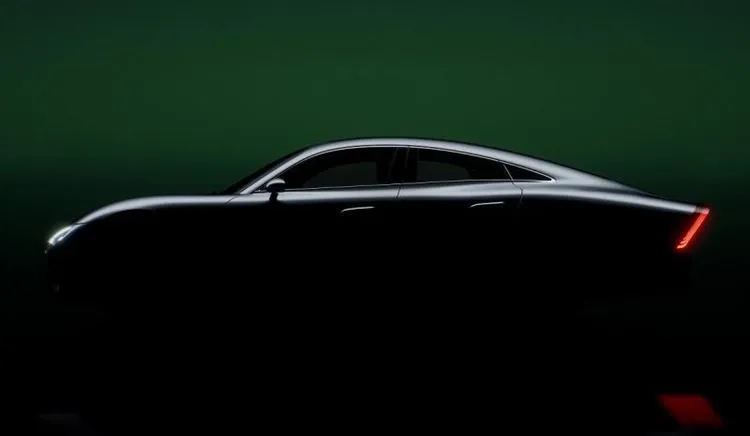
After watching the teaser, you understand how Mercedes intends to achieve such efficiency. The main thing is aerodynamics. The silhouette, with a forward-set inner hood and a long rear tail overhang, serves the purpose of reducing aerodynamic drag. A similar challenge was announced in 2015 by another concept vehicle: the Mercedes Vision IAA (Intelligent Aerodynamic Automobile), which was billed as “intelligent aerodynamic vehicle”. At a speed of 80 km / h, the configuration of the front bumper changed, and on the side of the rear overhang, the “extensions” of the plumage were improved, improving aerodynamics.
Mercedes then announced that the Vision IAA had set the world record for the lowest drag coefficient of 0.19. Although at that time there was already a small-sized Volkswagen XL1 with a coefficient of 0.189. But today, a factor of 0.2 is the bar that the production EQS has taken, which means that the ambitions of the EQXX should increase.
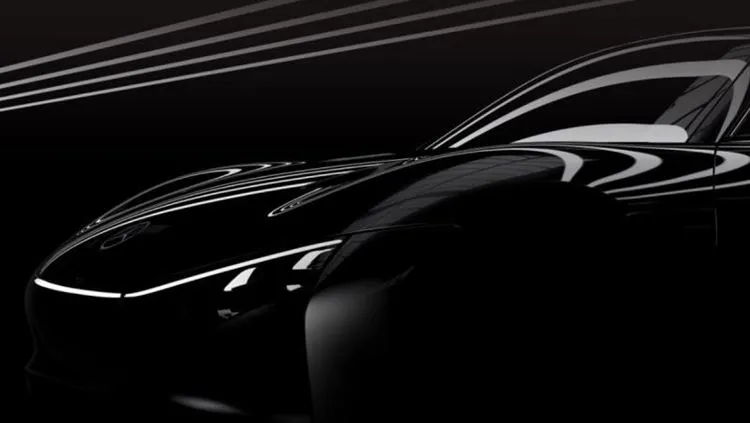
Formula Mercedes-Benz F1 High Performance Powertrain is contributing to this project by sharing its expertise in building electric powertrains for racing. But besides being a breakthrough in energy efficiency, the EQXX also promises innovation in reducing the weight of an electric vehicle and using environmentally friendly materials.
And yet, despite the status of a concept car, the EQXX is very transparent about the possibility of creating such a serial or low-volume car. Too clearly in the teaser are not visible “conceptual” door handles, rear-view mirrors, door connectors and joints of body panels.
In general, the logic of the appearance of a separate halo for the EQ sub-brand lies on the surface. Until recently, the EV lineup mirrored Benz's core range (i.e., traditional Mercedes-Benz-badged models, for those who respect the term's pedantry). But EQS and EQE became independent projects with many differences in design and body structure. The upcoming EQE-based electric crossover will also have little in common with the GLE family. So isn't it time to create a completely unique mobile equalizer? Looks like an AMG GT sports car. In addition, BMW's competitors have adopted exactly this idea, making the i3 and i8 models, which had no analogues in the classic line, and now the iX and XM. The EQXX seems perfect for this type of halo car.”
