
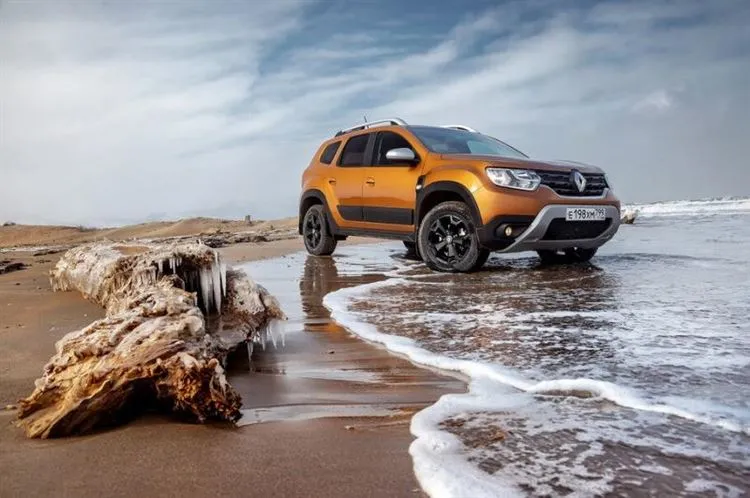
New Renault Duster: test drive of the main premiere of 2021
The first generation Renault Duster has been one of the most popular (and affordable) cars in recent times. And now the Duster II has appeared. It is also relatively inexpensive – the basic version costs less than a million conventional units.
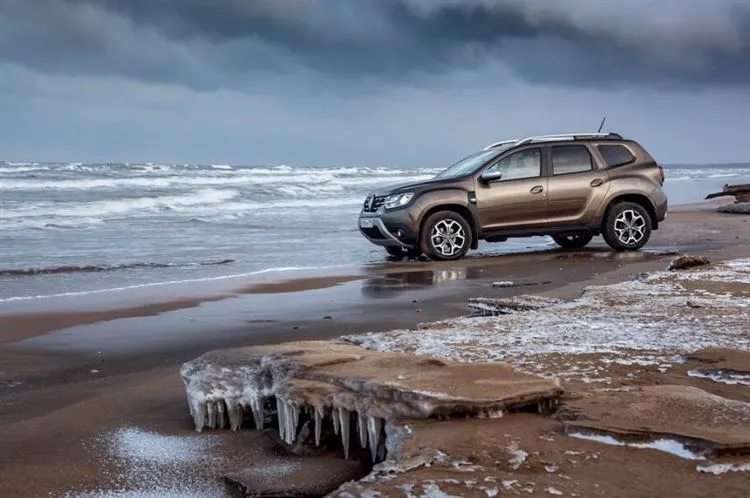
The Duster piggy bank has a good price, reliability and unpretentiousness. To refuse this dividend-paying set would be the height of recklessness. And this, fortunately, did not happen. “Duster” retained, and where required, improved the technique, while taking into account almost all consumer requests in terms of comfort, control and convenience.
What's new in the exterior
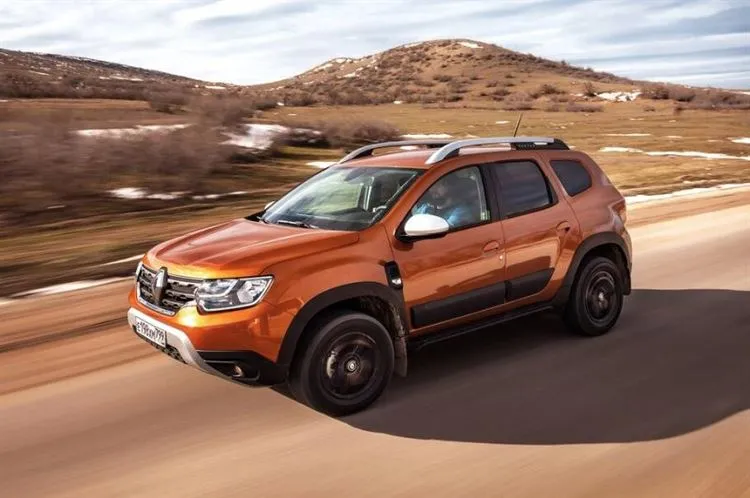
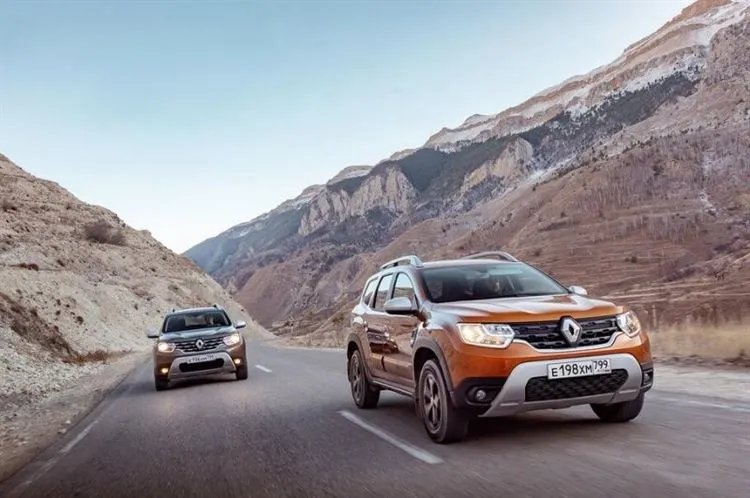
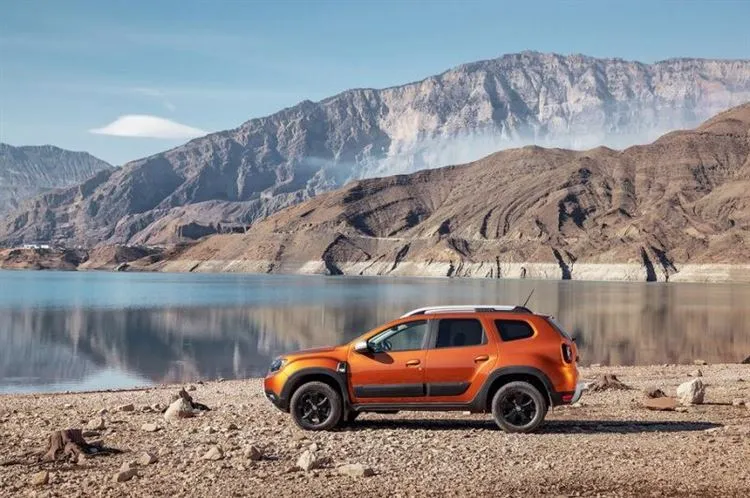
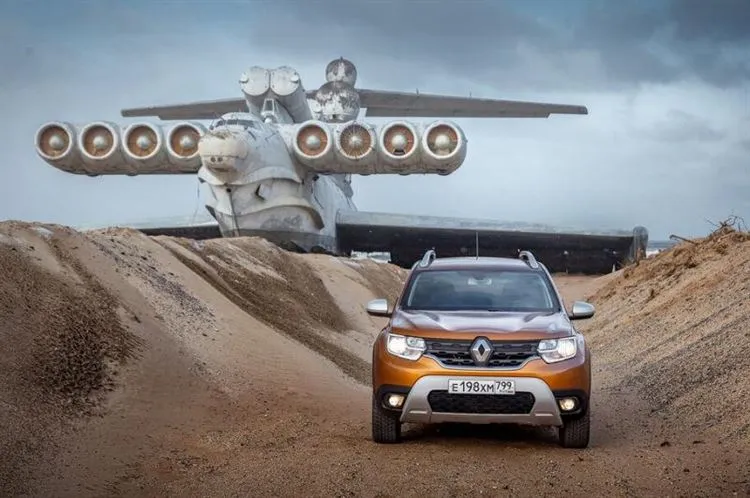
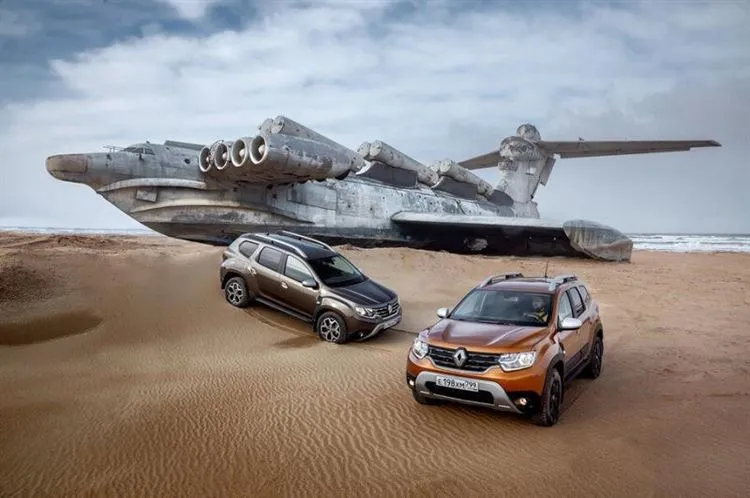
The appearance is almost the same, while not a single body element repeats exactly the pre-styling one. Of the innovations – a different chrome grille, an overlay on the tailgate with the inscription Duster, an antenna in the form of a fin as an additional accessory. The main optics are still reflex with halogen headlights, but LEDs are present in the DRL, and at the back as a stylish fringing of lights. 17-inch alloy wheels appeared, however, they are only available in the top version. As an alternative – 16-inch black wheels, also made of light alloy. New colors in the palette – taupe and metallic orange.
The black door trims and other similar body kit seen on the orange cars are available on the Edition One, which will likely be on the market until May. True, no one bothers to purchase this “off-road decoration” separately (25,000 conditional units). Heated windshield washer nozzles are removed under the hood – here you are not in Brazil, here the climate is different…
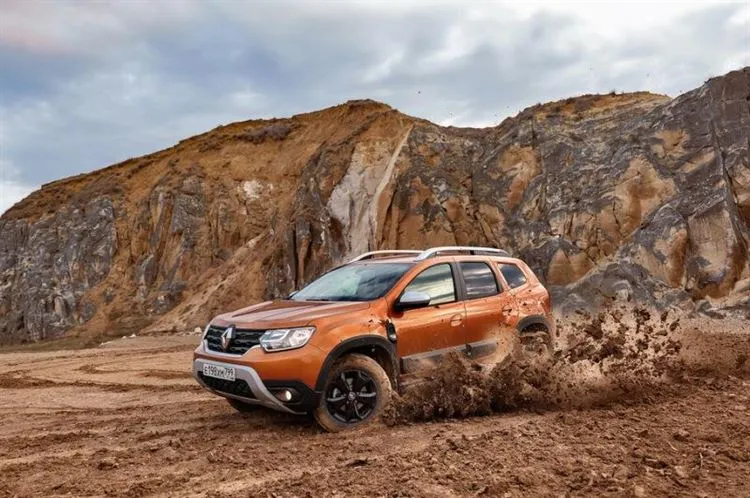
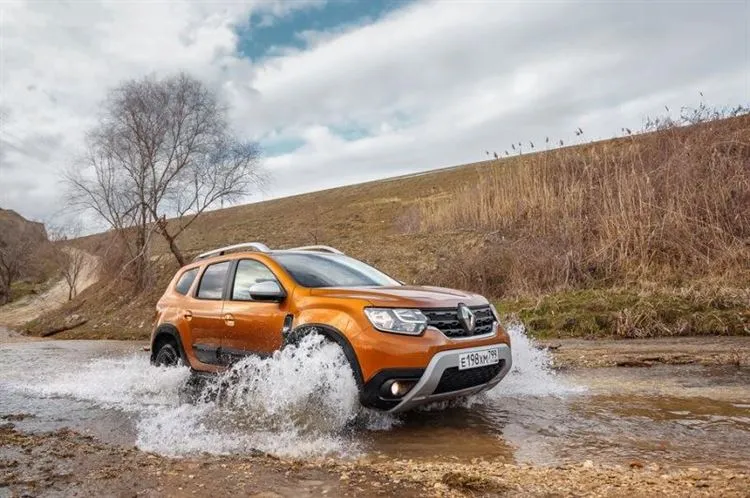
The thresholds are now not so strong, but, as our test drive showed, they are still thrown. In any case, following the results of overcoming the mud baths in the mountains, many of the colleagues then washed the trousers. There is less wing bulging, the wheels are recessed deeper. They decided to leave the drum brakes as they are, they say, none of the owners complained about them. The legendary “Duster” geometry has not been touched: 31 degrees – the angle of entry, 33 degrees – the angle of departure, and despite the fact that the crossover added 26 mm in length (4341 mm instead of 4315 mm). Steel crankcase goes in the “base”, this is sacred.
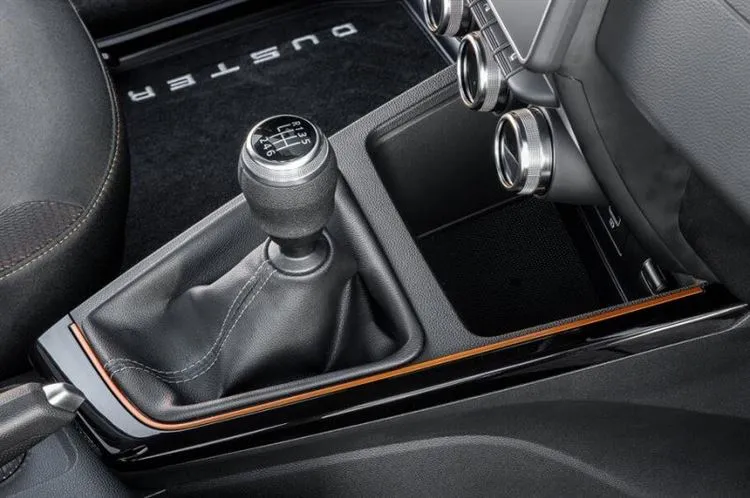
By analogy with “Arkana”
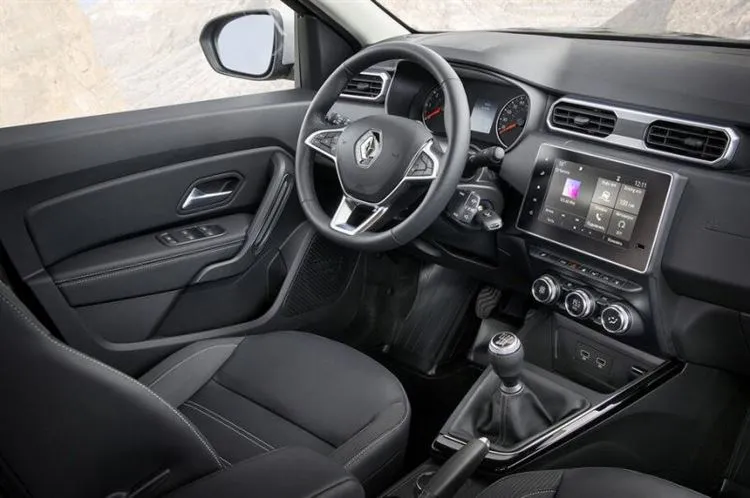
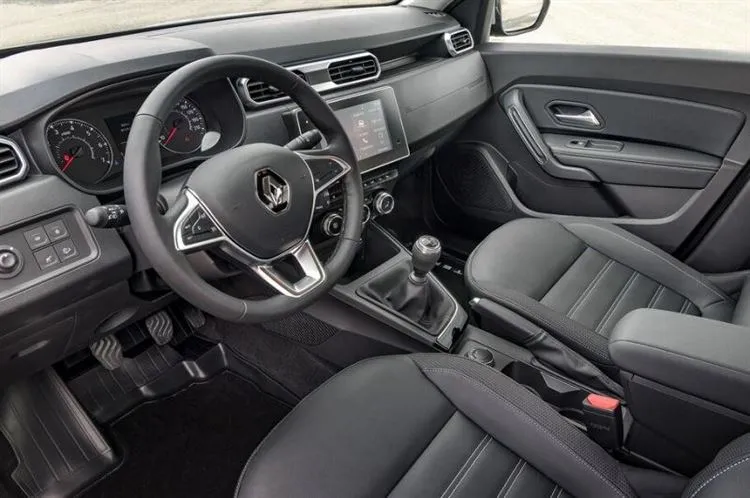
The interior is in many ways similar to the Arcana. The main difference between a colleague is a convenient shelf opposite the front passenger. You can put, say, a phone there, and if you don't drive along the slopes and gullies like crazy, then the rubberized surface will not let it fly out.
What else catches your eye? The new steering wheel, which has not only heating, but also height and reach adjustments (even with a small stroke). A new climate control unit and an 8-inch screen of the Easy Link multimedia system, which is friendly with voice control via Android Auto and Apple CarPlay. There is also another gear lever, slightly reduced in size, and therefore more convenient. Did the customers ask for a center armrest? You are welcome. Need USB jacks? Now there are already 5 of them: 3 in front and 2 in the back. Plus a 12V outlet, heating everything that requires heat and a scattering of all kinds of niches for storing all sorts of things.
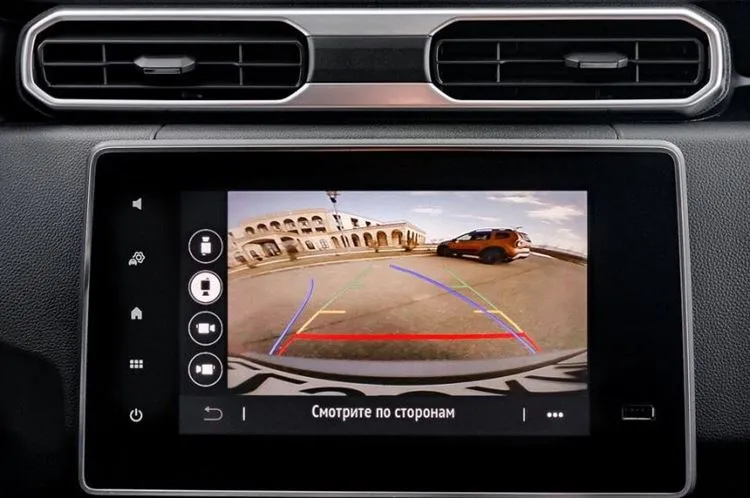
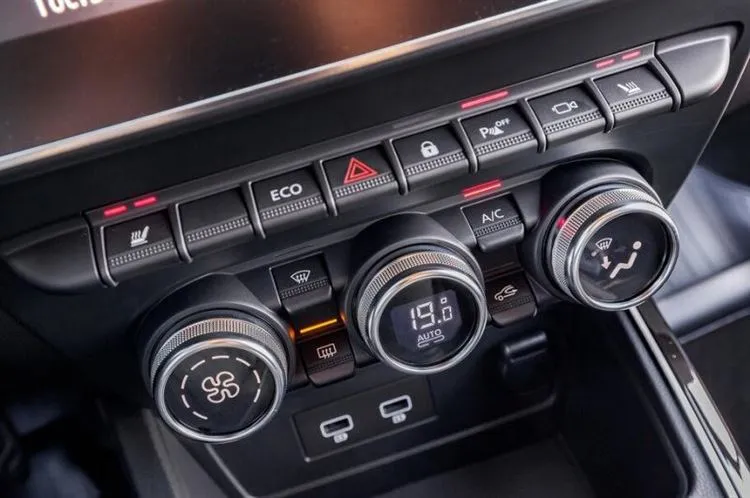
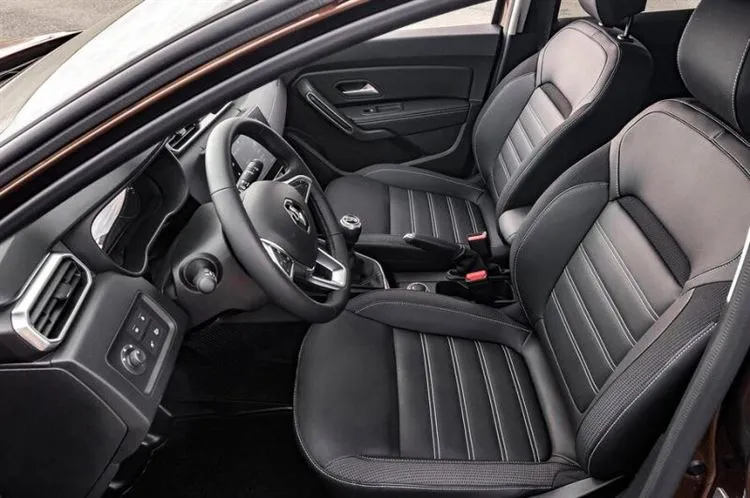
The mirror adjustment joystick is now to the left of the steering wheel, and the all-wheel drive control washer has moved to the center tunnel. In good trim levels, 6 airbags are available, including curtains (previously there were 4 airbags). The chairs turned out to be outwardly beautiful, with eco-leather in the Style version, with stitching and adjustments, including lumbar support, with denser filling, a pillow extended by 20 mm and increased (from 40 to 60 mm) height travel. But there are some questions about the anatomy of the seats. But in any case, the interior of the Duster looks an order of magnitude more interesting than before – it is more stylish, without the previous condoness, albeit with an abundance of hard plastic.
On the highway like a car
Perhaps the main trump card of Duster is the “branch” of motors. No competitor offers such an offer of power units. The base engine is a 1.6-liter H4M localized in Togliatti. It is still available in 114 hp versions. (front-wheel drive and 5MKP) and 117 hp. (all-wheel drive and 6MKP). In the second case, the intake has been slightly changed, as well as the geometry of the nozzles (to optimize the combustion process). Now you can use oil with a lower viscosity. The task was to provide the car with the same traction, elasticity and dynamics as before, because the new Duster has become 50 kg heavier.
They left the old 2-liter F4R in the range, which now comes only with “mechanics”. The 1.5-liter 109-horsepower turbodiesel is offered in the same modification as before. The number of his fans is growing from year to year (share – 20%), so they did not refuse him. In addition, competitors do not have a diesel engine in principle.
A new word in the line of Duster engines is the 1.3-liter TCe 150 turbo engine, the same one that is installed on the Arkana and Captur. It has been adapted for long-term off-road use. This is both the original gas pedal algorithm and the new software for the version with CVT X-Tronic (so that the torque converter is blocked later). We have driven more than one hundred kilometers on the Duster with TCe on the Dagestan off-road and Caspian highways and we can say that the 150-horsepower turbo is the most interesting offer.
You can get a manual gearbox on absolutely all internal combustion engines, and this is no accident – according to Renault, 85% of the Dusters sold are “manual” versions with a reduction gear. Another point is that the gear ratios of the manual gearbox for each of the motors are unique: somewhere shorter, somewhere more authentic. The gearshift mechanism is soft and precise.
The top gears included with the TCe motor are stretched for trail riding. You drive along a good road like in an ordinary passenger car – and overtaking is effortless (the main thing is to switch from 6th to 4th in advance), and the comfort from constant traction pleases. At a speed of 100 km / h in top gear, something like 2000 rpm – when did the gasoline Duster have such a thing?! You can start moving, as before, from 2nd gear – on the odometer a little more than 1200 rpm, while the car does not require special gas. 3rd gear is almost like 2nd – it does not reach 100 km / h. You may notice a slightly dampened response to the accelerator pedal, but here, as usual, a matter of habit. We are pleased with the efficiency of TCe – we got a little less than 9 liters in the mix, and this is the “92nd” (!) Gasoline, which is now recommended by the automaker.
off-road variator
The steering wheel is now “clean”, no road mess is transmitted to it – an electric power with a short rail is on guard (3 turns of the steering wheel “from and to” instead of the old 3.2). With him, of course, it is more convenient in the parking lot and outside the asphalt.
The TCe has a luxurious torque of 250 Nm, which is already available from 1700 rpm. You will spit on the primer on 17 wheels and you will see that life in the “lungs” is enough up to 5300 rpm. The rear multi-link swallows just about anything that gets in its way, the stiffer body takes the hits on its ribs, and the All Mode 4×4-I all-wheel drive system comes to the rescue at the right time. In general, life-tested habits are in the arsenal, and any revelation is simply not required here.
As before, the 2WD mode is suitable for economical highway driving. Auto allows the system to decide on its own when to connect the rear axle and redistribute torque to it. Lock – permanent four-wheel drive with a 50:50 torque distribution. There is a hill descent assist system which is new and available on all 4×4 versions. You activate Lock, press this button – and forward: without touching the brake pedal, the car descends. The default speed is 5 km/h, but the speed can be adjusted if desired.
Branded “Duster” Lock works up to 80 km / h. Off-road modes that allow you to redistribute the moment even with the ESP turned off on one axle, together with the energy intensity and suspension geometry, are the key to high cross-country ability.
In 2WD or Auto modes, the TCe / CVT alliance settings are similar to Arkana and Kaptur (calibrations, however, are made for each car individually). But the behavior of TCe and CVT in Lock mode, according to Anatoly Kalitsev, an expert on the Renault Our Country product, has been improved. First of all, in terms of response to the gas pedal, so that slippage can be controlled, since the TCe is a powerful engine, with more torque than the same diesel (240 Nm). In Lock mode, the torque converter now locks up at speeds up to 45 km/h instead of the previous 12 km/h – this avoids shock loads on the V-belt part of the transmission. In fact, it turned out to be an off-road CVT.
When you drive in Lock mode, ESP is turned off, the gas pedal becomes more damped at the bottom, so as not to break the wheels into slipping so sharply. On the one hand, this is great: you slip less, on the other hand, where it is hard, there is not enough momentum, you have to play with the clutch, otherwise you can stall.
Four configurations, eighteen variations
The minimum requested today for the new Renault Duster is 945,000 conventional units. That is, in the “base” (Access, 1.6 liters, 114 hp, 4 × 2, 5MKP), the car has risen in price by 33,000 conventional units. At the same time, I gained a lot. The choice of equipment is as follows: electric power steering, 12V socket, LED DRL, two-section trunk floor, front power windows, electric central locking, driver's airbag, folding key, electric mirrors, glove box lighting.
The Life version has four variations of motors / transmissions, price: 1,065,000 – 1,230,000 conventional units. Medium Drive – five variations, price range: 1,230,000 – 1,400,000 conventional units. As expected, this will be the best-selling equipment of all. In any case, up to this day, it accounted for up to 65% of all orders.
The top version of Style is the newest and most expensive: 1,350,000 – 1,460,000 conventional units. There are four engine/transmission options, although the base 1.6-liter engine is not available. But the list of equipment is luxurious: steering wheel heating, rain and light sensors, climate control, rear parking sensors, rear view camera, EasyLink multimedia, tinted rear windows, plastic wheel arch protection, 17-inch alloy wheels, armrest, cruise, rear LED lights, fog lights, side airbags, leather steering wheel trim, windshield burnout, etc.
- Test drive of the new Lada Largus: how AVTOVAZ worked on this model
- How much does it cost to make a new Niva: blogger Lisa showed on video how she converted an old SUV into a new one
- How to add another driver to the insurance
