
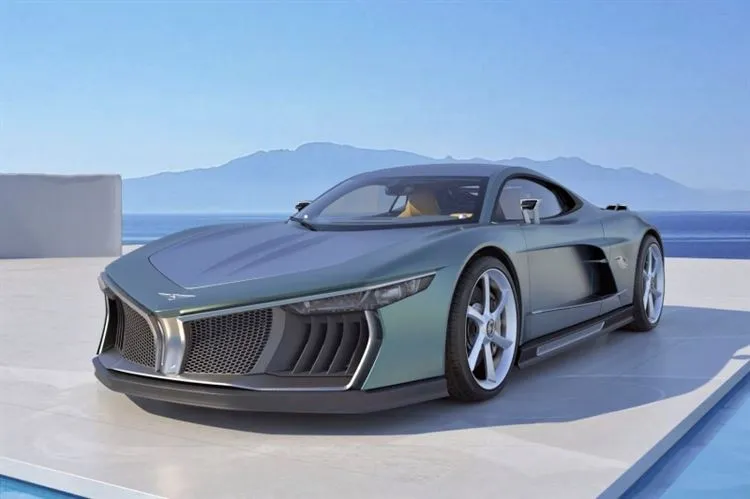
Stork of discord: Swiss supercar Hispano Suiza Maguari HS1 GTS is ready for release
The Swiss company Hispano Suiza Automobilmanufaktur AG announced the start of production of the mid-engined supercar Maguari HS1 GTS, equipped with a 1200-horsepower V10 gasoline engine. In the next six years, 300 copies will be made.
The original Spanish company Hispano Suiza was founded in 1904 and successfully competed with Bentley, Bugatti, Maybach and Rolls-Royce before World War II, and today under the name Hispano Suiza there are two independent companies that cannot share the legendary name.
The modern Spanish Hispano Suiza Cars was created in 2019 by Miguel Mateu, great-grandson of Damian Mateu, one of the co-founders of the company of the same name in the early 20th century. Hispano Suiza Cars is launching the Carmen electric hypercar, which debuted three years ago at the Geneva Motor Show.
Behind the Swiss company Hispano Suiza Automobilmanufaktur AG is the Austrian designer Erwin Leo Himmel, who worked for Audi in the 1990s. In 2010, Himmel acquired the rights to the Hispano Suiza brand and decided to enter the modern luxury car market with it. If we talk about the historical context, then this company focuses on Marc Birkigt, a Swiss engineer and businessman who had the idea of creating the original automobile company Hispano Suiza and who was, in fact, its chief engineer, while the Spanish partners were more responsible for finance and management.
Hispano Suiza Automobilmanufaktur AG showed the concept of a mid-engined supercar of its own design back in 2010, but only in 2019 did the pre-production Maguari HS1 GTC, made using components and assemblies from the Audi R8, arrive on time. After the premiere of the pre-production car, the Swiss company remained silent for three years, and in February last year, there were reports in the media about its bankruptcy. In fact, it was not the Swiss company itself that went bankrupt, but its Austrian subsidiary, Hispano Suiza Engineering GmbH, which oversaw the development of the supercar. It was originally planned to start production in 2020, but due to the COVID-19 pandemic, plans were thwarted and the company's financial position was greatly affected.
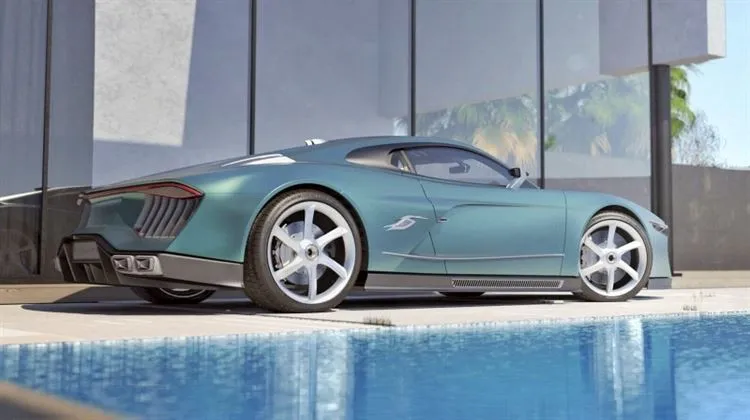
However, parent company Hispano Suiza Automobilmanufaktur AG, based in Zug, Switzerland, lives on and this month announced the start of production of a long-term supercar to be built at its own assembly site in Munich. According to Carscoops magazine, citing a company representative, assembly will begin in April, and towards the end of the year, the Swiss Hispano Suiza will be ready to show cars live at various public events, deliveries to customers will begin in 2023.
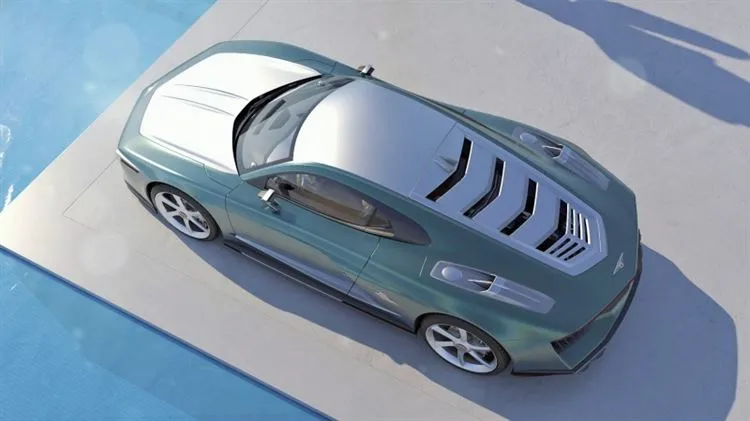
The serial supercar, the renderings of which we present to you, is called the Maguari HS1 GTS, that is, the last letter has been changed compared to the pre-production car. The keyword Maguari has been retained and refers to a species of South African stork, this stork is the historical symbol of the Hispano Suiza brand.
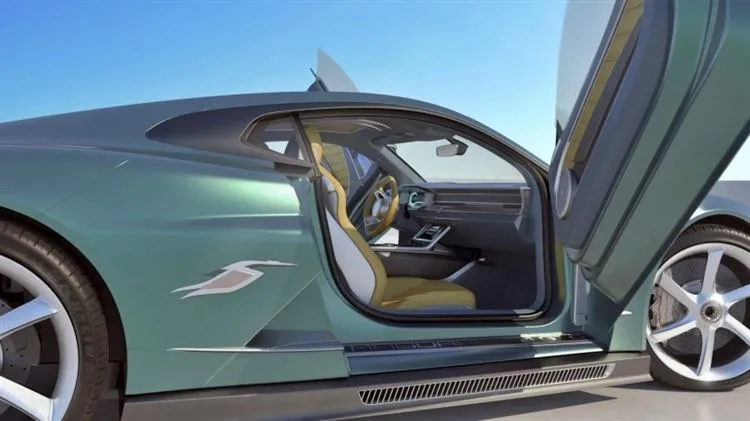
The design of the car was adjusted at the level of nuances for three years. The body (overall length – 5.1 m) has an aluminum electrical structure and carbon fiber outer panels. The engine is more powerful and is a heavily modified naturally aspirated 5.2-liter V10 from Audi. In the Maguari HS1 GTS, displacement has been increased to 5.5 liters, and two turbochargers provide impressive performance: 1200 hp at 8400 rpm and 1100 Nm at 6700 rpm.
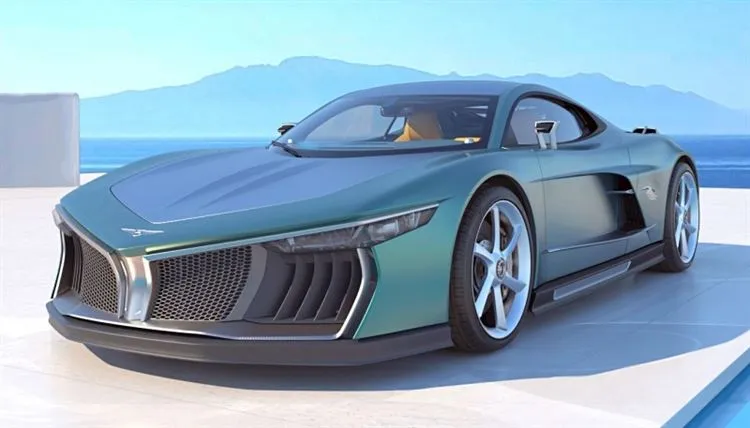
The gearbox is a 7-speed “automatic” type DCT (with two clutches), the drive wheels are rear. To 100 km/h Maguari HS1 GTS accelerates in less than 2.8 seconds. Top speed theoretically exceeds 400 km/h, but in practice it is electronically limited to 360 km/h. The running gear is said to be a sort of active hybrid suspension and carbon-ceramic brakes with 440mm discs and 6-piston calipers. Tire size 285/35 ZR 22 front and 335/30 ZR 23 rear. The curb weight of the car is 1890 kg.
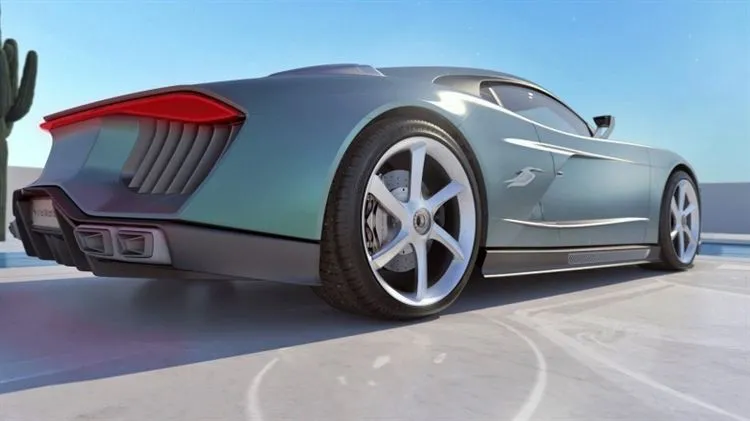
The Swiss company does not name the price of the Maguari HS1 GTS, but three years ago it was reported that each copy would cost at least 2.2 million euros.
