
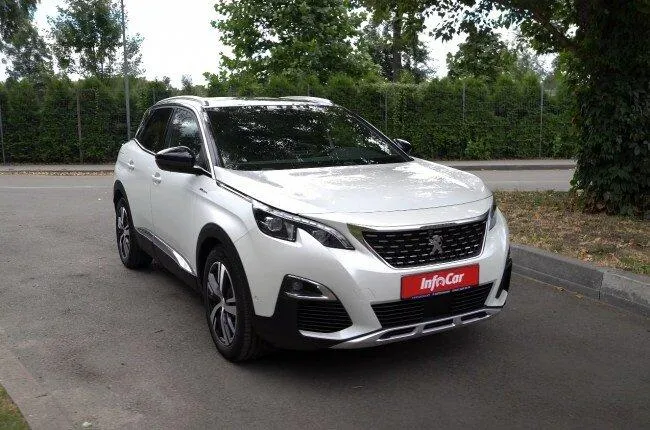
Peugeot 3008 Hybrid4: unexpectedly fast
Crossover Peugeot 3008 Hybrid4 is the only all-wheel drive Peugeot today. The French nevertheless presented a version with four driving wheels, but decided not to bother with the driveshaft and clutches. Instead, a separate electric motor is responsible for traction on the rear axle (there are two in total). The result is a plug-in hybrid (PHEV) with an electric range of almost 50 km.
Too lazy to read? Watch the video test of the Peugeot 3008 hybrid crossover:
Appearance and interior
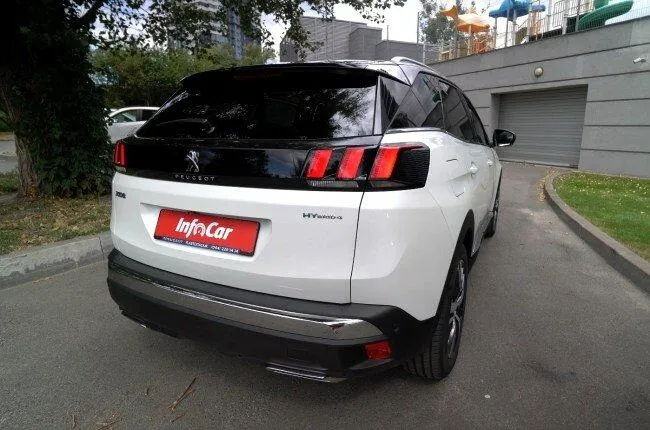
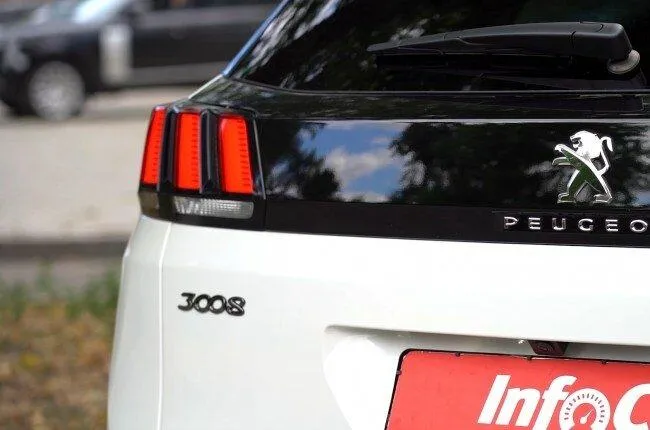
From the outside, the regular version and the hybrid cannot be distinguished. What played a cruel joke with the more expensive 3008. After all, the PHEV version costs about 50 thousand dollars (by the standards of Peugeot – quite a lot)! Perhaps those who buy such a car would like others to know about its greater cost.
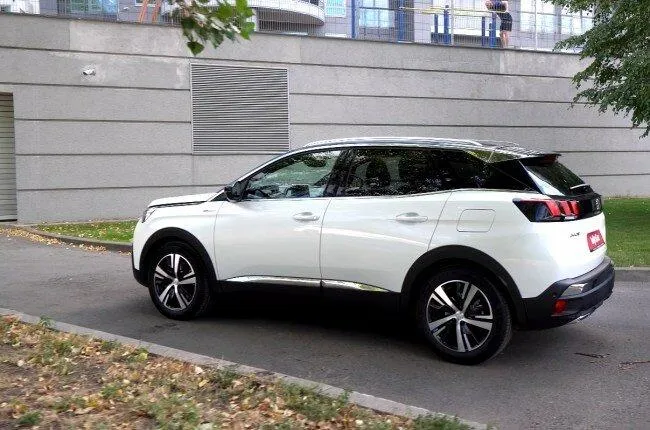
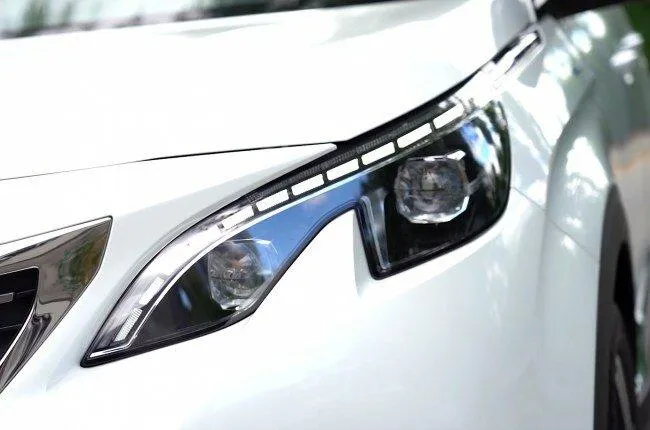
But despite this, even now, when the restyled version is already on the way, against the background of its classmates, the 3008th still looks fresh and interesting. The intricate lines of the headlights, the no less distinctive rear end and the organic and proportional profile easily support the image of a stylish and modern crossover. Of course, someone may not like this Peugeot, but this is a matter of taste. I think that the crossover was drawn extremely well, and, of course, it is easily recognizable. It's basically a GT-Line version, minus the “Hybrid4” badges and an additional hatch above the left rear fender that hides a charging outlet (which often surprises tankers).
At first glance, there seems to be nothing about this Peugeot that justifies its price. And even your desire to save on fuel consumption (taking into account its ridiculous consumption under normal conditions) is not enough. But I am still ready to say that now we are talking about a car that you want to drive exactly what you want to drive. And that I spent a week behind the wheel of a Peugeot 3008 PHEV, I draw such conclusions absolutely consciously.
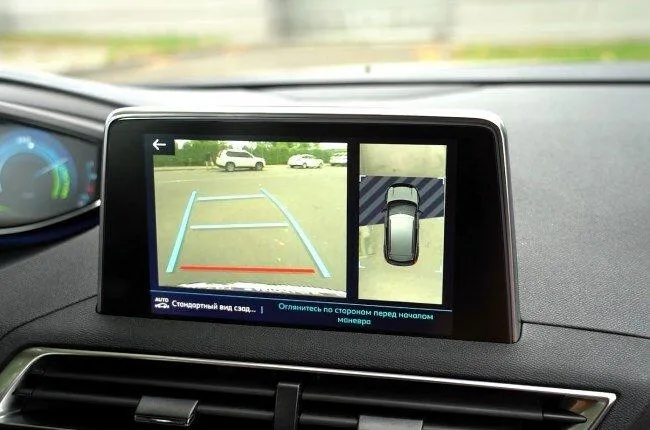
Although the interior is also no different from the interior of a car with an internal combustion engine, there are no special “buns” and no additional options. The rear view camera is also not with the best resolution, the multimedia system is just as slow. But I consider the salon of 3008 to be the standard in the class of modern crossovers. After all, the interior here is drawn much better than that of Japanese competitors from Toyota and Honda. Yes, and the same Mitsubishi Outlander PHEV in terms of interior design is significantly inferior to Peugeot.
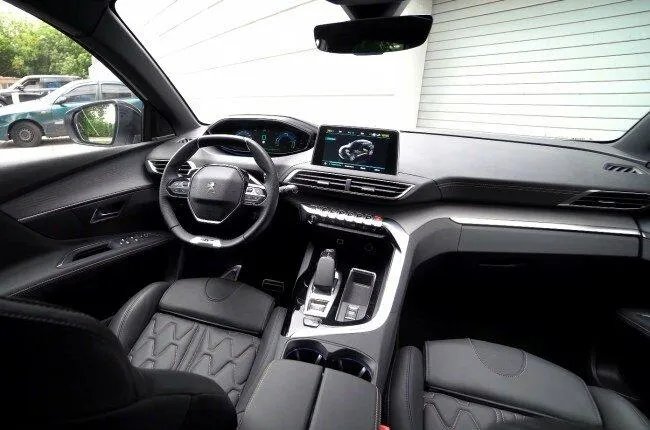
It is very pleasant to be inside the 3008th. Good seats, natural wood decoration, amazing buttons on the center console and double windows that improve sound insulation add even more comfort. A panoramic roof, adaptive light and accurate ambient lighting create a genuine feeling of comfort in the evening.
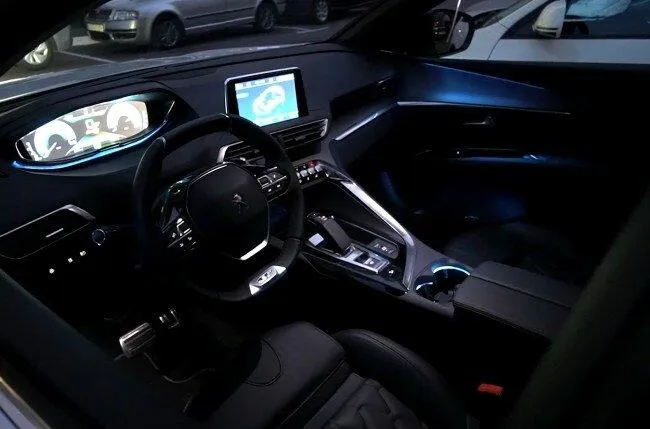
Here, a really ergonomically tailored architecture is the same i-Cockpit. If you have never sat in the cabin of this crossover, I recommend that you definitely do it. Otherwise, you simply will not feel that everything is really different here. And in general, such an approach will definitely be closer to a young audience than what Japanese classmates offer. But! You get all this in the regular ICE version for much less money.
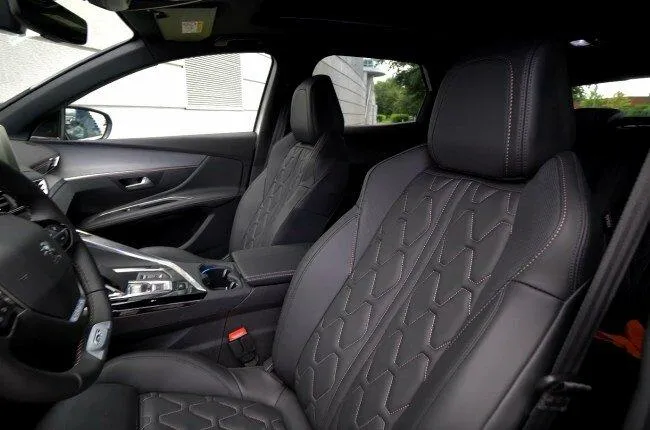
So while it turns out that a pleasant appearance and an excellent interior cannot justify such a high price. And besides, the PHEV version is also less practical: the boot volume is 395 liters versus 520 liters for the standard version. But its height from the floor to the curtain remained unchanged: the volume was reduced due to the lack of a lower compartment. There are only two small niches under the raised floor, so you definitely won't be able to place a spare tire there.
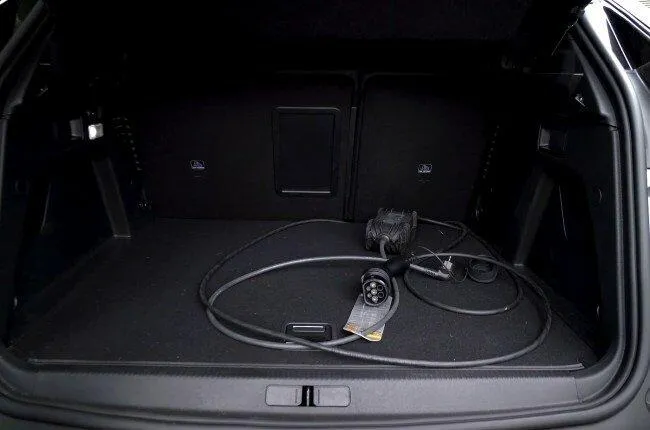
But the reason for such a high price tag is still not in the cabin or in the trunk of the 3008th. It's all about the specific power plant of this hybrid.
Engine and dynamics
Responsiveness to touching the accelerator pedal Peugeot 3008 is almost perfect – the hybrid accelerates instantly. Acceleration dynamics is also impressive. At first glance, it seems that this crossover needs even less time to reach 100 km / h than the 280-horsepower Alfa Romeo Stelvio! (And it turned out to be true.) In a word, the excellent response to the pedal and the truly locomotive traction struck me.
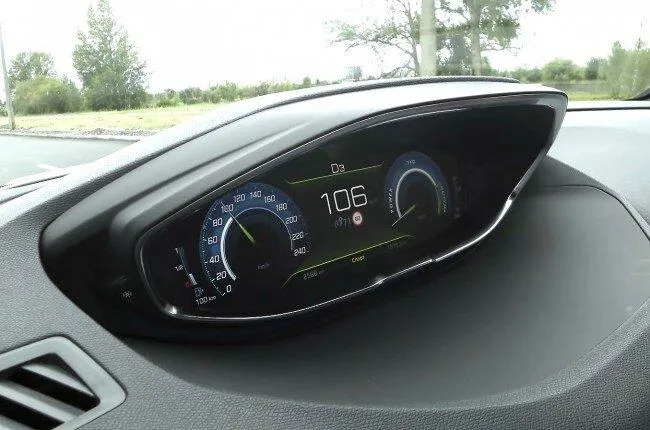
After taking measurements, I only confirmed my guesses. Acceleration to “hundreds” of the hybrid Peugeot 3008 took 5.66 s! Yes, and the sensations of overclocking are amazing, and emotions go wild. But if you leave emotions aside and analyze the “dry” indicators, then this is what happens. The 3008 PHEV accelerates only slightly slower than the 3.0-liter Porsche Macan S (5.3 seconds)!
But even when the mark of 130 km / h is reached, the accelerating dynamics does not go anywhere. True, such a hurricane acceleration is possible only with a fully charged battery. But even with an almost empty battery, this 3008 PHEV surprised us with 6.56 s to 100 km/h. And this is less than the base Porsche Macan (6.7 s).
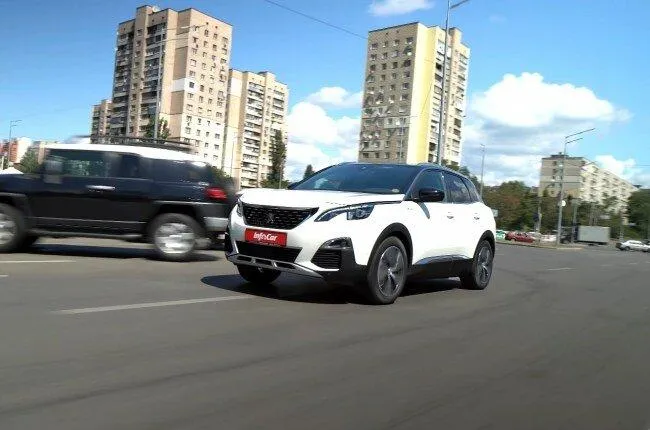
But here's the thing: on the road, no one takes the 3008 seriously, and this, of course, is a minus. But on the other hand, you can really compete with the vast majority of cars on our roads. And this clearly drives drivers of cars of more “status” brands into a stupor, especially when you are confidently ahead of them both at the start and from the coast. The ordinary-looking Peugeot rides more dynamically than the base Cayenne and Range Rover. And certainly faster than all Lexus and Toyota. And all because he is a hybrid.
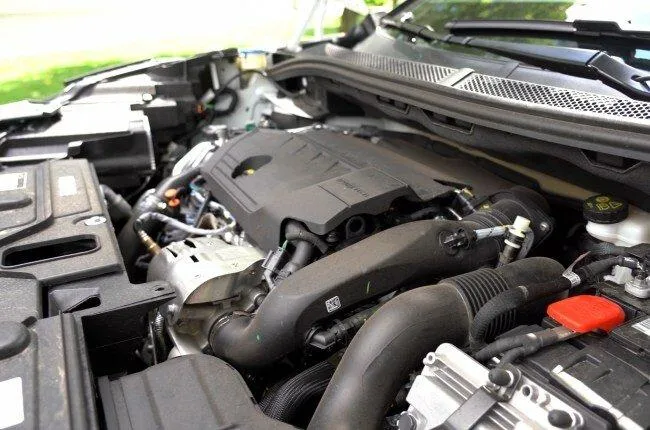
The hybrid system is based here on the basis of a 1.6-liter turbo engine (200 hp and 300 Nm) and two electric motors. The front one (110 hp and 320 Nm) is integrated into an eight-speed Aisin automatic transmission, and another one located behind (112 hp and 166 Nm) pushes the rear wheels. As a result, we have a total return of the system equal to 300 forces and an impressive 520 Nm of torque. It is difficult to achieve such indicators from the more familiar internal combustion engines in this class (of course, if we are not talking about 3.0-liter diesel engines or, for example, BMW M-series gasoline units, but this is a completely different story).
By the way, the 3008 Hybrid4 pleased not only with its acceleration, but also with the efficiency of the braking system. From a speed of 100 km / h, the car was able to stop in 38.33 meters. This is a very good indicator (let me remind you that a braking distance of 40 m is conditionally safe for passenger cars).
Drive
The steering wheel of the crossover is set up perfectly, which is already a rule for the Peugeot brand. There is good feedback, a pleasant effort and a pronounced “zero”. But, unfortunately, due to design features and – probably – the lack of need, this hybrid was taught to drive only straight. Even despite the fact that the design of the rear suspension has been completely changed (instead of a beam – a multi-link scheme), this crossover has not become more sporty in handling.
(The whole bottom is tightly covered with plastic. There is a stabilizer, and the rather thin axle shafts should not suffer from the 166 Nm of the rear electric motor.)
The suspension in normal, everyday operating conditions gives first of all comfort, and I have no complaints about it. But we must remember that the 3008 Hybrid4 is not a sports car at all. During sharp maneuvering, the car rolls heavily, it takes it out, and the stability control system does not allow you to fully use the moment on the rear wheels. As a result, the car quickly falls out of the trajectory – there is understeer. But you need to make allowances for the fact that other cars in this class also have far from the best handling.
As a matter of fact, the Peugeot 3008 drives very well even against the background of competitors in terms of performance (don't forget, I'm talking about a 300 hp car here). At some point, the rear wheels are twisted more strongly, and you still feel the rear axle turning. True, even when this happens, electronics quickly puts everything in its place. So even if it seems to you that you are capable of record-breaking races on this crossover, remember that this car is not designed for this.
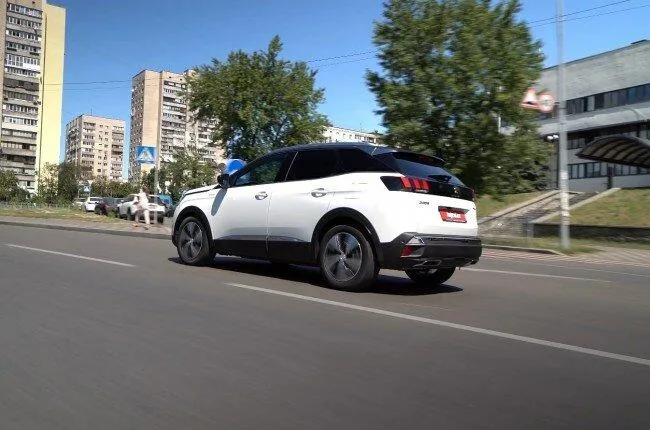
Of course, most buyers of the 3008 won't push it to the limit. You just need to know that this hybrid rides steadily, but at the same time quite inert. After all, the PHEV version is 345 kg heavier than the base one, and this is noticeable. On the track, the crossover sways more strongly, and the amplitude of the buildup is more noticeable. But at the same time, the suspension copes very well with irregularities of small and medium size. But on large chassis, it gives up earlier than we would like. Although everything is within the bounds of decency.
So it's really nice to drive this car either in the city or on the highway. Noise isolation here is not as “anomalous” as in Lexus, but it is of high enough quality – double windows are installed here for good reason. As a result, engine noise and sounds from the oncoming wind flow do not penetrate inside. Although on a bad road, the interior, as they say, begins to “breathe”.
Fuel consumption and charging
Fuel consumption in this hybrid is a completely ambiguous indicator. The manufacturer claims 1.5 l / 100 km. But the point here is primarily in the runs on a single charge. For example, I managed to drive 42 km on a fully charged battery. For many, this will be enough to get from home to office and back. In this case, we can really talk about the expense that matches the declared one.
During the test, I used the “smart” Hybrid mode: first, the car is powered by energy in the battery, and only then the internal combustion engine is turned on. So, I managed to get to the office in the morning toffees in about half an hour. During this time, the on-board computer screen showed me a fuel consumption level of 1 l / 100 km. But you will see such an expense – pleasing to the eye and wallet – only if your battery was fully charged before the start of the movement.
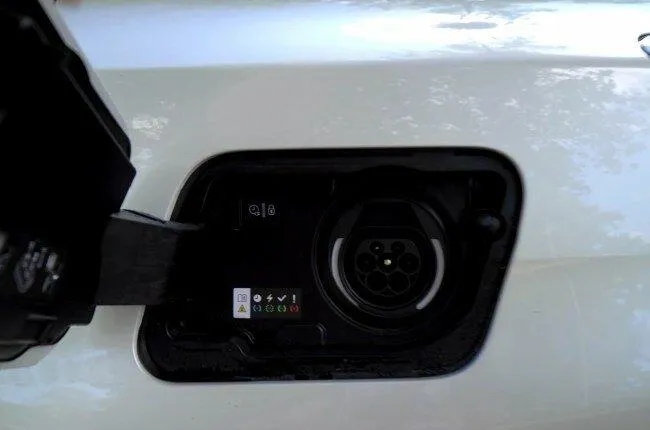
And the battery does not charge so quickly: you can charge from a regular outlet in about 7.5 hours. And then it all depends on the power of the charging station. In any case, the 3008 PHEV will not be able to accept more than 7.4 kW per hour. It turns out that you can charge a battery with a capacity of 13.2 kWh as quickly as possible in about 2 hours.
But if you are moving around the city using only the internal combustion engine, and the battery is discharged, then the consumption will increase inexorably. Because the 1.6-liter turbo loves to eat. And the thought of potential accelerating dynamics is quite capable of inciting you to go more actively, more and more often pushing the pedal to the floor. In this case, fuel consumption will easily reach 9 l / 100 km.
The operation logic of a plug-in hybrid differs significantly from that of a conventional one. In the case of the 3008 Hybrid4, the system is programmed to run as far as possible purely on electricity, and only secondarily is the ICE used. The plug-in hybrid technology means daily replenishment of energy. And if you have the opportunity to charge regularly, it becomes easy and convenient to use all the benefits of PHEV.
But with Toyota hybrid systems, for example, battery charge and fuel are consumed mixed, so you drive into a traffic jam not quite “empty”. In Peugeot, getting stuck in a traffic jam on an empty battery is a common thing. Therefore, if earlier in the tests of Toyota hybrid cars I recommended not to pay attention to the operation of the hybrid system, here I would like to focus on the opposite. In addition, here you have the opportunity to influence the operation of the hybrid system.
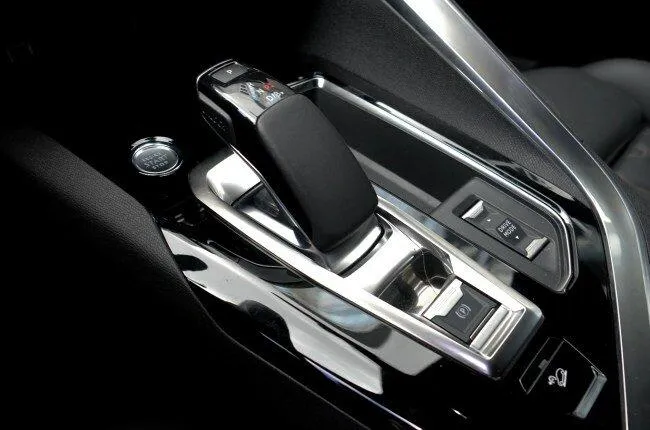
Like electric cars, there is a Brake mode, in which the hybrid will always recover electricity when the accelerator pedal is released. It is also possible to force charge the battery from the internal combustion engine, and for this it is enough just to activate the corresponding function on the central display. In addition, the driver can leave a margin of 10%, 20%, etc. (or all) guaranteed electric mileage for something very important. For example, for driving on rough terrain.
Off-road capability
As I already mentioned, all-wheel drive is implemented in the Peugeot 3008 Hybrid4 by installing an electric motor on the rear axle. That is, in our arsenal there is a direct relationship between the internal combustion engine and the wheels, there is an electric motor on the front axle and one more on the rear. So there shouldn't be any issues with torque.
To test the off-road capabilities of the 3008 PHEV, we went to the forest, where our already familiar “test” hill with loose sandy terrain is located. Let me remind you that not every crossover was able to overcome this obstacle. An important point is that the battery charge before the “assault” of the hill was enough to drive 8 km on electric traction.
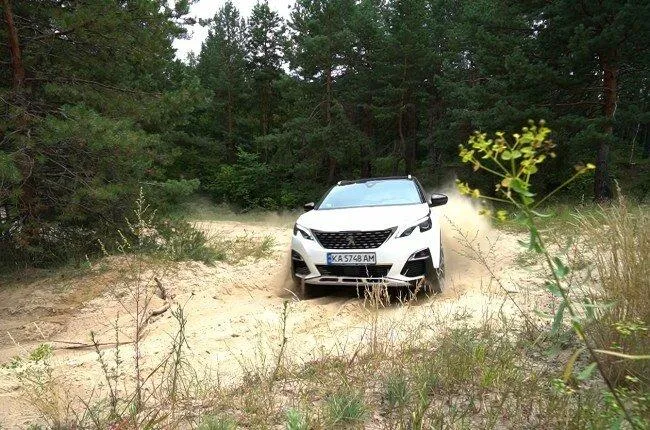
For off-road driving, the Peugeot 3008 is equipped with a 4WD mode. On the sand hill, this hybrid climbed very confidently. Although the logic of responses to the accelerator pedal was not entirely transparent, and from time to time there was a slight delay in turning on the rear axle (when pressed, nothing happened at first, and then the car literally exploded with thrust).
And yet, if the battery is charged, you can be sure that you will overcome even rather difficult sections. But I mean, first of all, the efficiency of the all-wheel drive. The difficulties that are created by the “crossover” geometry of the body have not been canceled. And the suspension is not quite designed for driving over rough terrain: it breaks through on tree roots and on large irregularities.
But if you consider that the 3008 PHEV was created primarily for the city, I am quite satisfied with its capabilities on rough terrain (and even more).
findings
Peugeot 3008 PHEV is still the same 3008, but much more dynamic. Its torque of 520 Nm will constantly spur you on more and more often to push the gas to the floor, and the dynamics even after 130 km / h is simply mesmerizing. General consumer qualities in the form of a clearance of 16 cm can allow you to feel quite comfortable driving this hybrid in almost any conditions. Another car can easily consume only 1 liter per “hundred”, and in cold autumn or hot summer, even in electric mode, an autonomous climate system will create comfortable conditions for you in the cabin.
The French this time thought about many little things. But not about the price. It is too high, and it would be much nicer to see something closer to $40,000, but not $50,000 in the price list. True, the Outlander PHEV also cost a lot at the start of sales – $56,000. But that car is nothing like the Peugeot 3008. The French hybrid is much more modern and very fast.
And you can really want this car for its modest, but at the same time emotional appearance, from which no one expects such a hurricane of dynamics. I would rather name the Volvo XC60 with the T6 engine and the BMW X4 xDrive35i as a competitor of the Hybrid4, because their dynamic performance is quite comparable.
I've always liked the idea of a plug-in hybrid. But now that PHEVs are delivering performance comparable to the “charged” (but ICE) models of some brands, hybrids seem more than ever worthy of attention.
