Euro NCAP winter tests: Renault Zoe has zero stars, while BMW iX and Mercedes EQS are excellent students
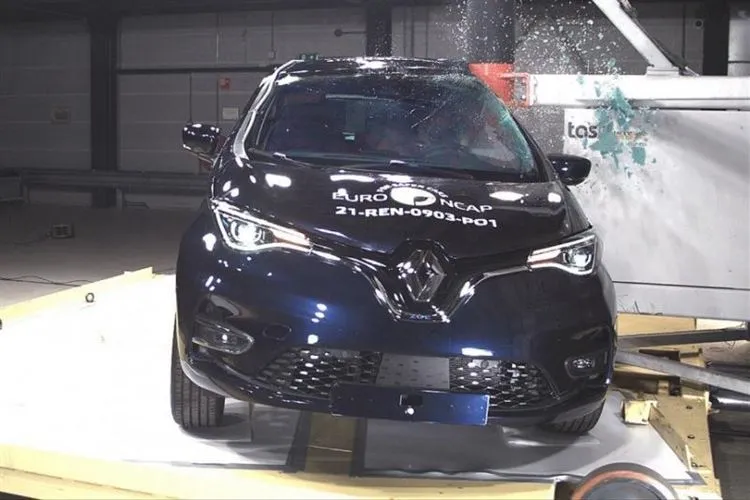
Euro NCAP captioned the results of its latest crash test in 2021 with French death-defying words: “Laguna's heritage destroyed.” The fact is that exactly 20 years ago, in 2001, Renault Laguna II became the first car in the world to receive five stars for passive safety. And now Zoe gets zero for the first time in Renault history. Fiasco. But not everything is so simple. Behind this “donut” is a curious story that says a lot not only about the car, but also about the Euro NCAP rating itself.
Over the past 20 years, there have been only two cases where Renault cars have received less than four stars in Euro NCAP tests. The first exception was Twingo, which received only three stars in 2003. However, the first generation sedan, a car developed in the early 1990s, was tested. And the second misfire happened in 2014 with Megan (three stars), when the French forgot to translate the text of the warning about seat belts in the back into other languages and lost a star for this. True, so Renault quickly corrected the mistake and returned the car to a four-star rating.
In all other cases, the result was four or five stars. Including the 2013 Zoe test. Eight years ago, this electric car had the highest safety rating: 32 out of 36 for protecting adult motorcyclists and five stars. What has changed in these eight years? There isn't much in Zoe. In 2019, the electric car has undergone an upgrade: updated exterior, updated interior and installed a larger battery. But the body and chassis remained unchanged.
But at the same time, the Euro NCAP rating has seriously changed, new attacks have appeared and a lot of fines for the lack of active security systems.
Under normal circumstances, a refurbished EV would not have to be returned for Euro NCAP testing, just as many extended life vehicles were not retested. For example, the current generation Mini Cooper or Porsche Macan has already undergone several updates, but was tested for passive safety under Euro NCAP only once – in 2014. However, it was Zoya who came to the attention of the committee during her participation in the NCAP. Green Electric Vehicle Environmental Assessment Program at the end of 2020, when experts noted that the front passenger side airbag had disappeared from the equipment list. Zoe, on the other hand, only has a side cushion in the seat that protects the chest. This was the reason for the re-invitation to the barriers.
Well, the machine, designed according to the old requirements, performed in all its glory. Zoya received only 16.4 points out of a possible 38 for protecting adult motorcyclists. She was fined for dangerous elements in the front panel, for the low protection of the neck and chest of the driver. And also because of the excessive movement of the head of the rear passengers during a frontal impact on a solid barrier – this test was not in 2013. Also, eight years ago there was no distance side impact test resulting in Zoya's driver nearly hitting his head on the right door.
In addition, in 2013, child protection was assessed on passenger dummies at ages 1.5 and 3, and now at 6 and 10 years. Here Zoya also fails. As for the protection of pedestrians.
But the fatal verdict was still a side blow to the pillar. Without a top side airbag, the driver kissed his head right on that pole – almost certain death. Why did Renault give up air racing? The French portal L'argus reports that this was done to reduce costs, based on the assumption that a serious pole side impact is unlikely for an electric city car. Renault has not yet given an official explanation.
By the way, in addition to the “head” airbag, Zoe also lacks an automatic emergency braking system, a lane departure tracking system, a driver fatigue recognition system, and even roadside sensors. Driver recognition on the driver's seat and behind the seat. All this led to a lack of points and zero finishing stars, worse than the Chinese Landwind CV9 in 2010. Although in terms of passive body safety, this is still a five-star car in terms of the recent past.
By the way, a similar situation was with Fiats. The new Grande Punto received five stars from Euro NCAP in 2005 and zero at the end of its career in 2017. The third generation Panda repeated the feat: four stars in 2011 and zero in 2018. Another reason to reflect on how important this is. Euro NCAP's uncompromising safety vision for fuel-efficient vehicles is to evaluate their equipment with active assistants.
however, in the case of Renault, there is still cause for concern about the company's approach to passive safety. Indeed, in parallel with the Zoe, the Dacia Spring electric car was also tested, made on the basis of the Chinese Renault City K-ZE model, which in turn was born from the Indian Renault Kwid sedan. The result of the spring is poor protection of the chest and thighs of the driver, the head of the rear passenger, children and pedestrians. One star is the worst Euro NCAP rating in the history of the Dacia brand.
And all this against the background of excellent results of the other nine participants of the “winter session” tests. Five Euro NCAP stars were given to vehicles with central airbags for front drivers: Mercedes-Benz EQS, BMW iX, third generation Nissan Qashqai, new Volkswagen Caddy, Genesis G70 and Genesis GV70. Fiat 500e received four stars each (low driver's chest protection), Nissan Townstar heels (no points for driver's chest and pedestrians) and the British-Chinese MG Marvel R electric crossover (low driver's chest and knee protection) front motorcyclist, rear passengers' neck, pedestrians).
